Driving from Greece to Estonia: Our Europe Road Trip via Albania and Italy
Our Europe road trip back from Greece to Estonia began on March 23. We had taken a different route on the way from Estonia to Greece, and from the very beginning of the trip we knew that we wanted to take a different route home and spend a couple of days in Albania along the way.
There were several reasons why we eventually chose Himarë. First, it was a big enough town that even in the off-season, when we were travelling, there were still restaurants and grocery stores open. Secondly, we could get there from Chrani in a single day without spending an unreasonable amount of time on the road.
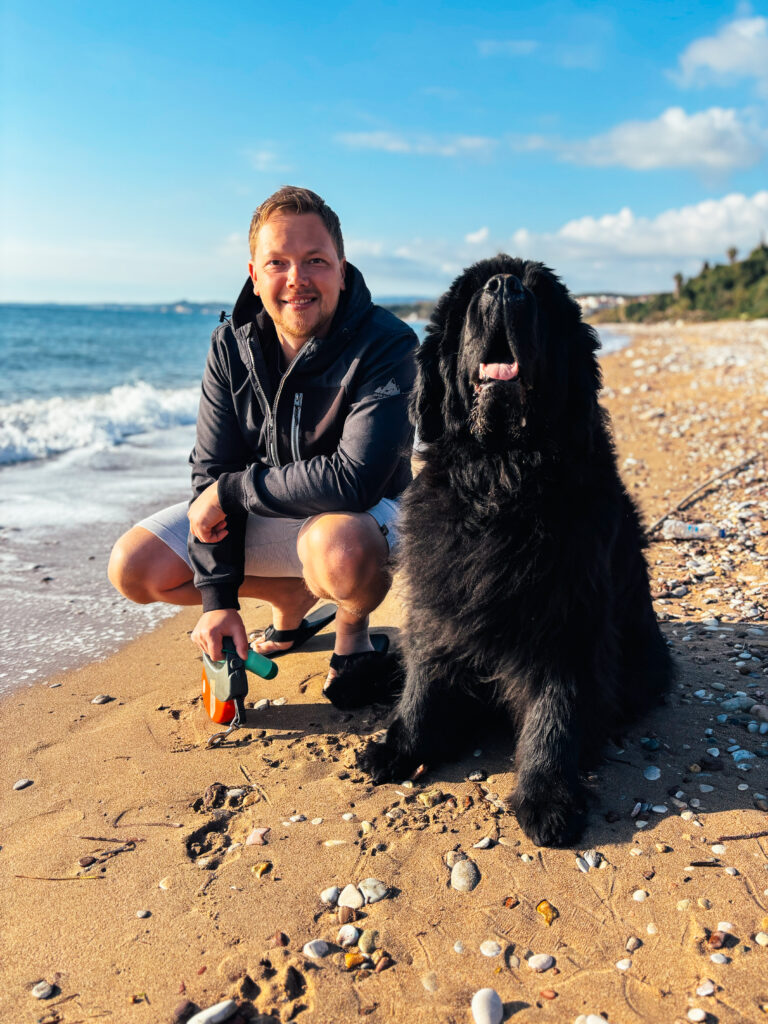
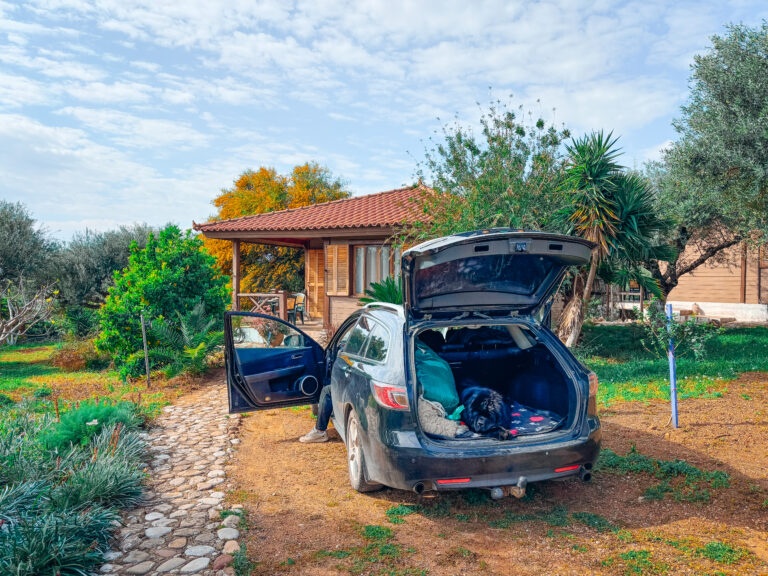
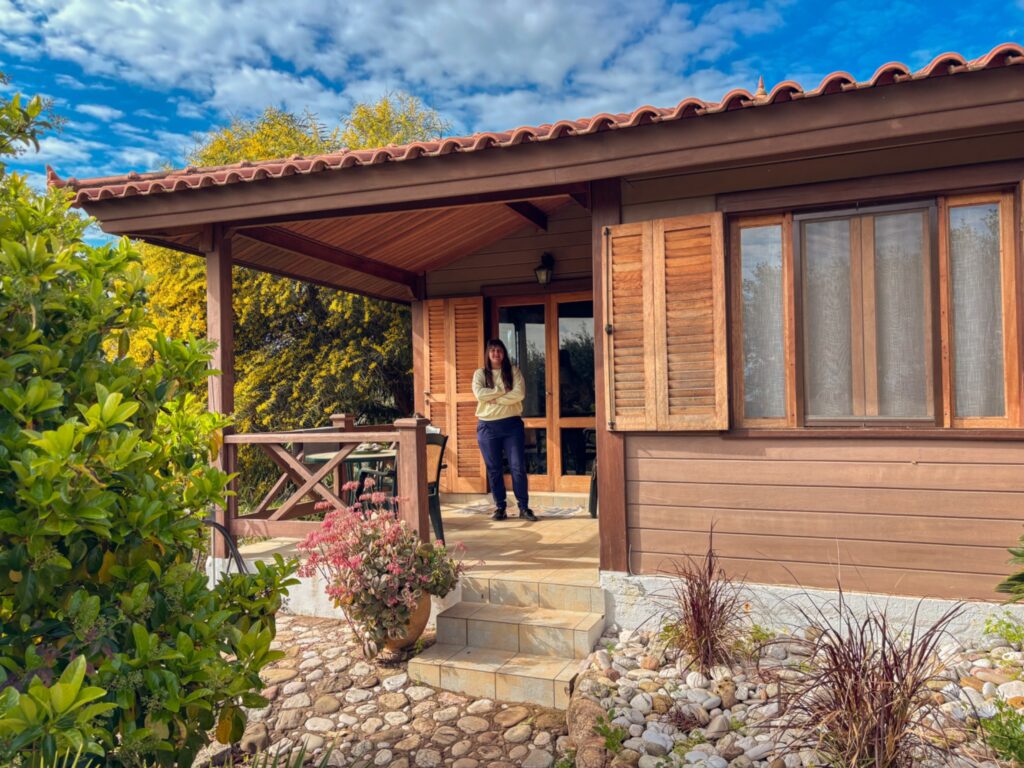
After saying goodbye to all the new friends we had made in Greece, we pointed the car towards Albania and officially started our journey home. After four weeks on the Peloponnese, leaving felt surprisingly sad. The weather in Greece was getting warmer by the day, our bungalow had started to feel like home, and we had such a lovely little community around us that heading back towards chilly Estonia wasn’t particularly tempting.
Those four weeks also completely changed my idea of what the Peloponnese in winter would be like – it turned out to be a much better time for exploring than I had expected.
Our last stop in Greece – Rio Castle and the Rio–Antirrio Bridge
Since we were heading towards Albania, our route took us off the Peloponnese via the Rio–Antirrio Bridge. Mait was driving while I was looking at Google Maps to see whether there was anything interesting along the way that might be worth stopping for.
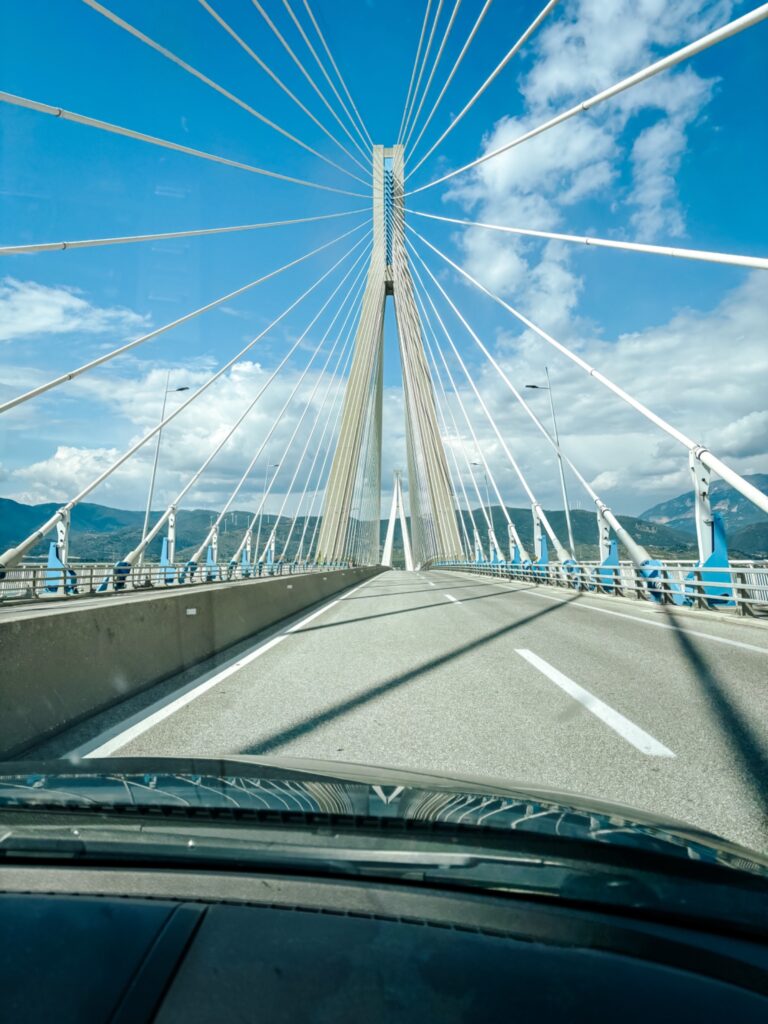
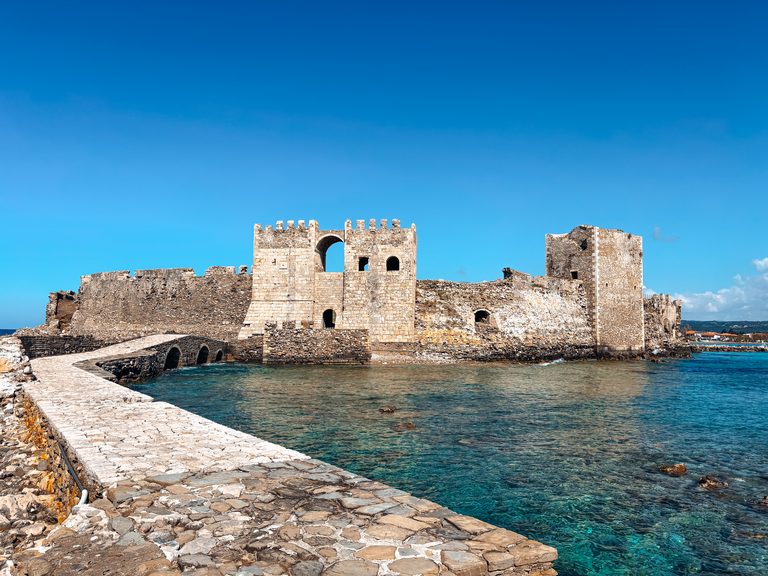
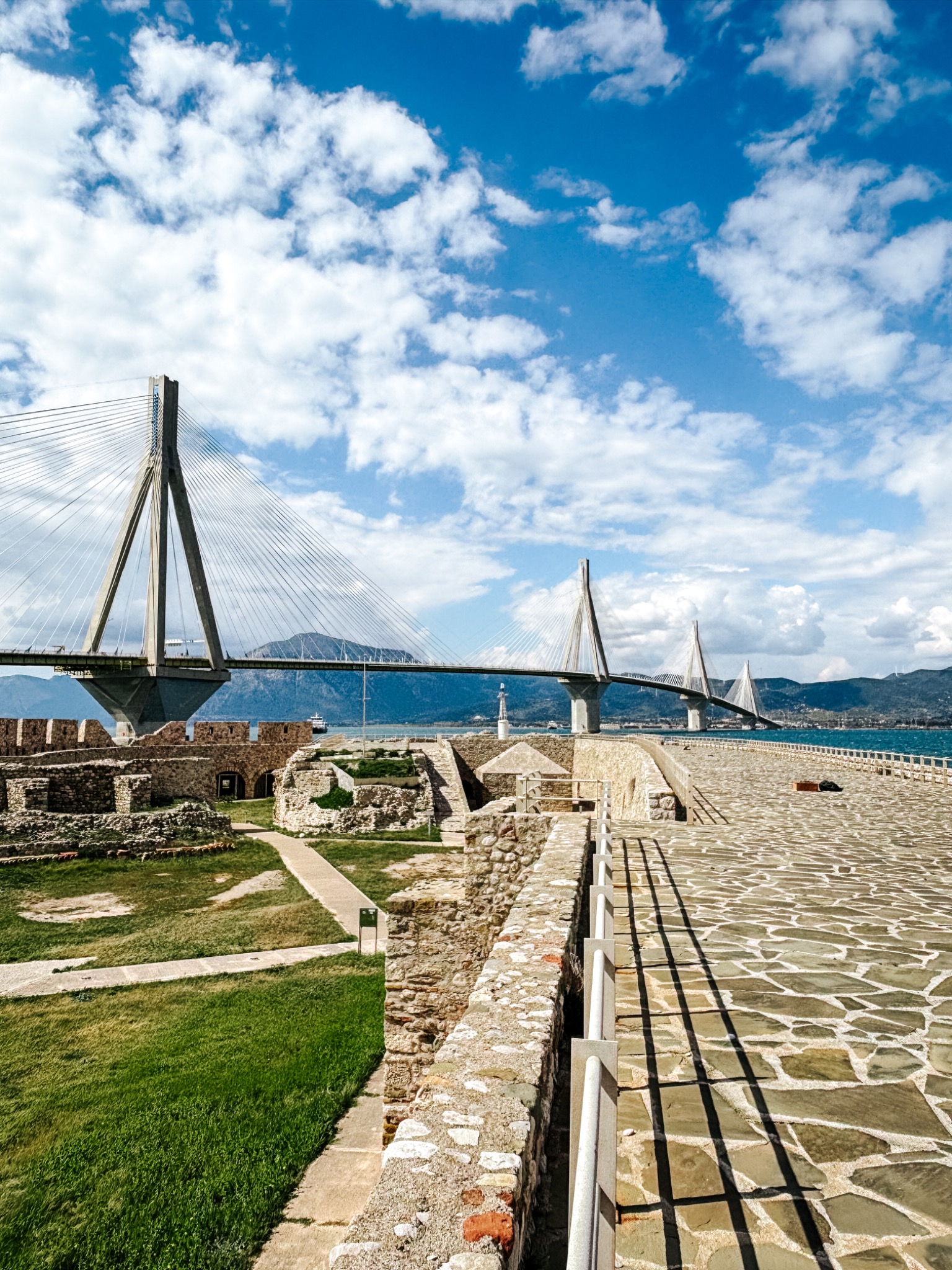
It didn’t take long to discover that the bridge itself was a major attraction. Right next to it is Rio Castle, which also looked well worth visiting, so we decided to stop for a while and have a look around.
We really enjoyed walking around the castle. Parts of it were being renovated and some of the higher towers were inaccessible, but we still managed to get some incredible views and photos of the Rio–Antirrio Bridge.
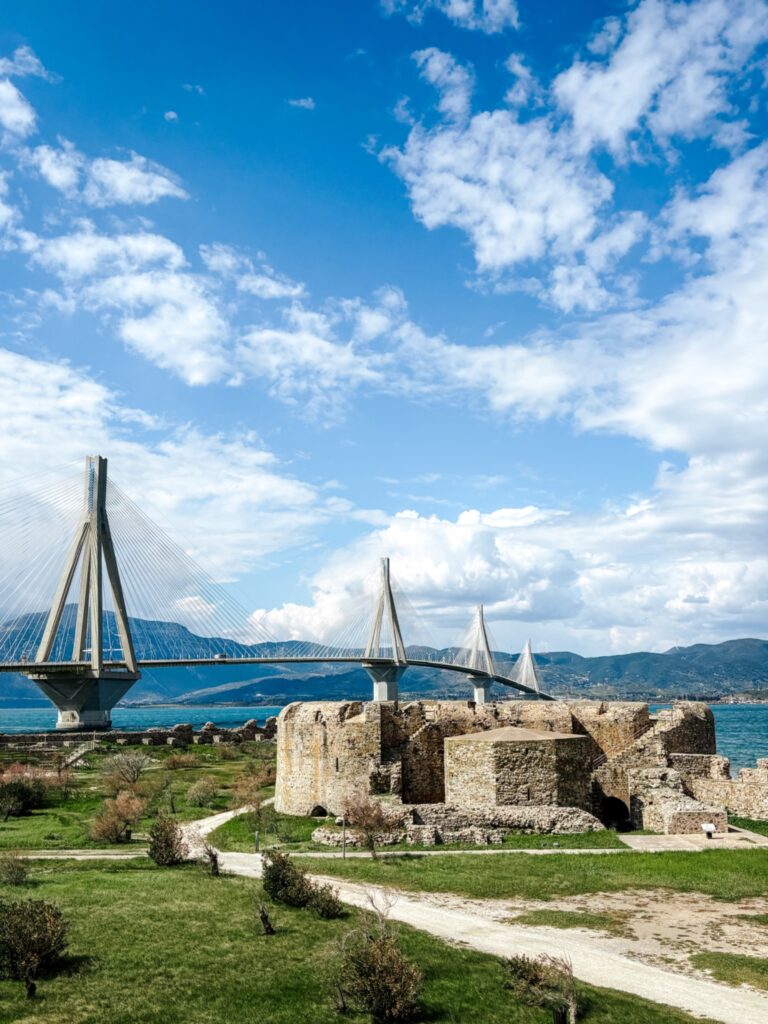
Rio Castle itself is actually much older than we had realised before visiting. It was built in 1499, while Antirrio Castle was constructed on the opposite side of the strait at around the same time. Together, the two fortresses controlled the narrow entrance to the Gulf of Corinth – ships had to pass directly between them. Because of this, the area even became known as the “Little Dardanelles”. Over the centuries, the fortress changed hands several times and was controlled by both the Ottomans and the Venetians. Later, it was even used as a prison and a military camp.
Standing there, it’s pretty amazing to think about how much this place has changed over the past five hundred years. Once, two fortresses stood on opposite sides of the strait, controlling who could pass through. Today, the two shores are connected by the enormous Rio–Antirrio Bridge.
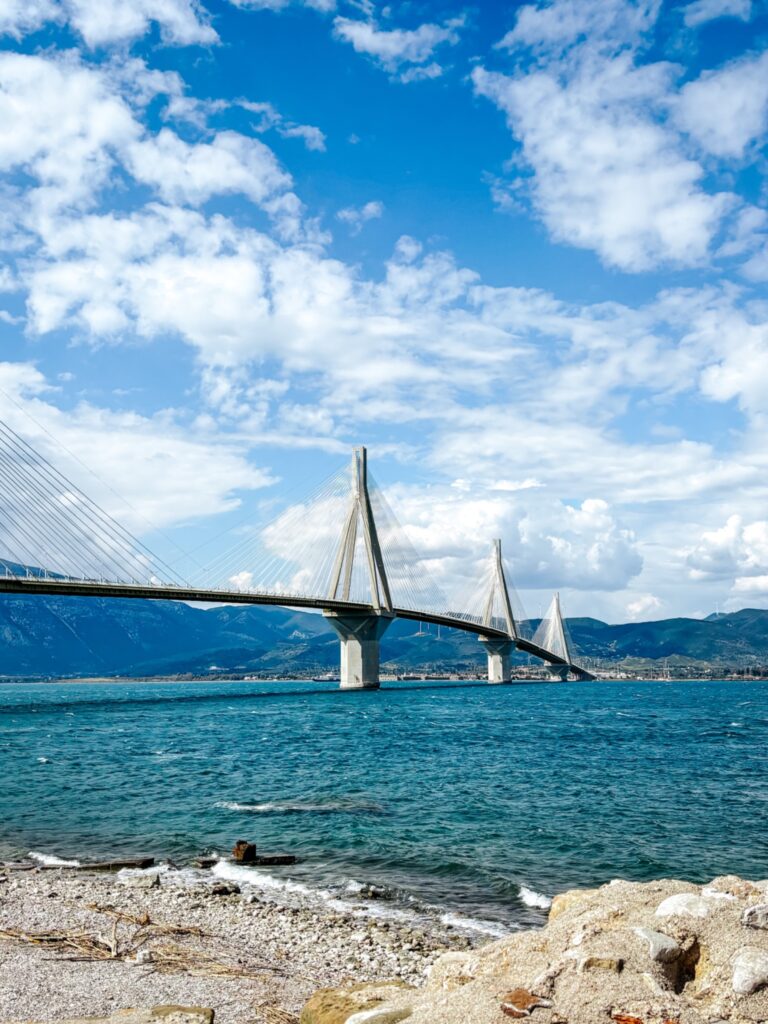
The bridge itself has a pretty impressive story too. The idea of connecting Rio and Antirrio with a bridge was first proposed in the 19th century, but it wasn’t completed until 2004. Once you understand where it was built, it’s easy to see why the idea took so long to become reality. The water reaches depths of around 65 metres, the seabed is soft and the area is prone to earthquakes. On top of that, tectonic activity is slowly pulling the Peloponnese and mainland Greece apart. Building a bridge almost three kilometres long here was definitely not the easiest engineering challenge.
For us, the bridge had another meaning as well. After exploring the castle and photographing the bridge from every possible angle, we got back into the car and finally drove across it. With that, the Peloponnese – our home for the previous four weeks – was officially behind us.
A chaotic border crossing into Albania
We reached the border a little later than planned. Our stop at Rio Castle had taken quite a bit of time.
The whole border crossing was unbelievably chaotic. The queue on the Greek side was enormous, there seemed to be absolutely no order or logic to anything, and cars with Albanian number plates were driving incredibly aggressively, practically bumper to bumper. Nobody was letting anyone merge. I’ve crossed quite a few borders in my life, but I’d never experienced anything quite like it.
Once we finally reached the border officials, though, everything went smoothly. They took a quick look at our passports, glanced at the car documents and wished us a good journey. After waiting for more than an hour on the Greek side, we assumed the Albanian side would take just as long. Luckily, we were through in about five minutes.
And just like when we entered Greece earlier in the trip, nobody seemed remotely interested in Alice or her documents this time either.
Once in Albania, we had only 91 kilometres left to our accommodation in Himarë – but Google Maps estimated the drive at 2 hours and 14 minutes. That’s an average speed of roughly 40 km/h.
We were driving along extremely winding mountain roads, and unfortunately, this was also the fastest route. It was already dark outside, and although ChatGPT and Google claimed we were driving through some of the most beautiful scenery in Europe, I can neither confirm nor deny that. We couldn’t see a thing.
We also noticed pretty quickly that petrol stations and suitable places to stop and let the dog out weren’t exactly plentiful along our route. Eventually, we found a petrol station with a patch of grass about one metre by one metre – and, thankfully, a toilet for humans too.
Alice looked slightly confused about the rather limited amount of grass available, but after some persuasion, she eventually agreed to pee.
The overall evening vibe in Albania felt a little unsettling to me. I can’t say that Albania is unsafe based on our experience of just a couple of days there. I can only describe how I personally felt – and I wouldn’t have felt comfortable going out alone to walk the dog. We saw quite a lot of groups of men outside, while women seemed noticeably less common.
Himarë and life with a dog among the stone streets
Our accommodation in Himarë was a one-bedroom apartment that we had rented through Airbnb. It was in a new building with free garage parking, two large balconies, a washing machine and a proper kitchen.
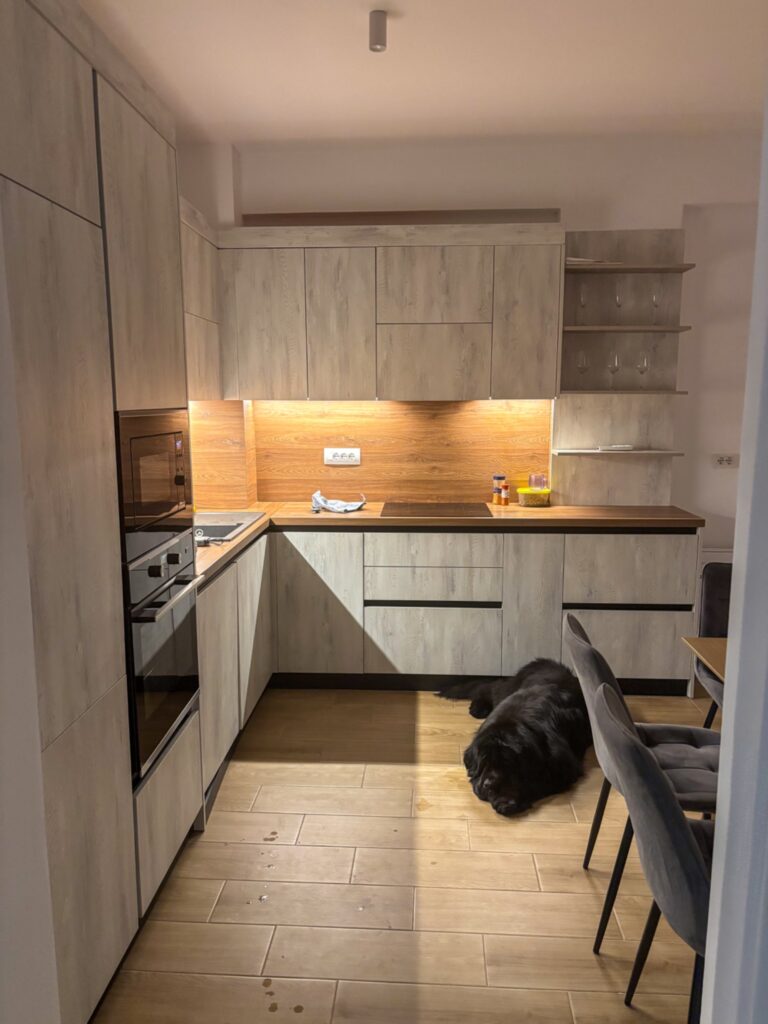
Finding a patch of grass for Alice was another story. Most of the available land seemed to be private property. There was a small overgrown patch next to our building, and eventually we managed to convince her that this was an acceptable place for number two. For the next couple of days, she returned to exactly the same spot every time.
We woke up pretty early on our first morning. Alice had us out of bed at around six because she needed to pee. Looking out of the window, we realised the location was actually really nice. The sea was very close, and in summer it would be a great place to stay – the beach was less than a five-minute walk away.
We went out to explore the neighbourhood. Grass wasn’t something we encountered very often along our route in Albania. It’s the kind of thing I probably wouldn’t even notice as a regular tourist, but when you’re travelling with a dog, it suddenly becomes very important.
At one point, Alice took a couple of steps onto the grass of what appeared to be a paid car park, and I heard someone shouting from a window. A moment later, I realised they were shouting at me because I’d allowed my dog to take two steps onto the grass.
Oh well. It left a slightly bitter taste and reminded me of walking between apartment buildings in Estonia, where you never quite know which window someone might be watching you from.
Based on our experience, Albania is definitely not one of the countries I’d recommend for a road trip with a dog. At least during our short stay, it didn’t feel particularly dog-friendly.
After our walk, we went to a nearby grocery store and then made breakfast. By the time we’d finished eating, it had warmed up nicely outside. We discovered that our balcony was sheltered from the wind, so we decided to spend a couple of hours soaking up the sun.
Meanwhile, I started looking for things to see around Himarë. According to Google reviews, Himarë Castle was one place worth visiting. There was also supposed to be a café with a terrace and beautiful views, although I didn’t really expect it to be open outside the tourist season.
Himarë Castle
That afternoon, we set off on foot for the castle. It was 2.5 kilometres from our accommodation, and about halfway there we came to the conclusion that taking the car would probably have been the smarter choice.
There were hardly any pavements and, unsurprisingly, the castle was on top of a hill. But by then there was no point turning back, so we just kept walking.
When we arrived, we discovered that there was no entrance fee. We wandered around and the views really were spectacular.
To my surprise, the café mentioned in the reviews actually existed – and it was even open. They only accepted cash, and because we hadn’t bothered exchanging any money into Albanian lek for our short stay, they happily accepted euros instead. We bought ourselves cold drinks and sat down to enjoy the view. It really was beautiful and absolutely worth the visit.
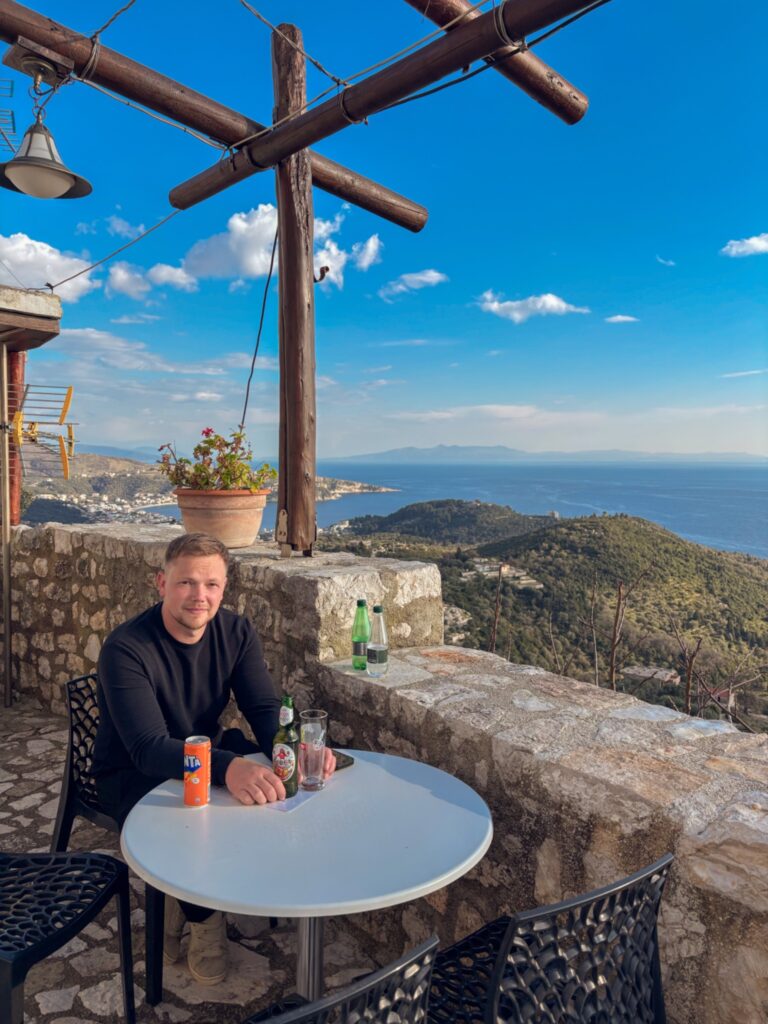
Himarë Castle isn’t actually just one old fortress. It’s an entire historic settlement with a history stretching back thousands of years. A fortified settlement existed on this hill at least as early as the 4th century BC, and in ancient times Himarë was known as Chimera.
Its location wasn’t chosen by accident: from high above the coast, it was possible to control the road running along the shoreline. For visitors today, that strategic location simply means incredible views over the Ionian Sea.
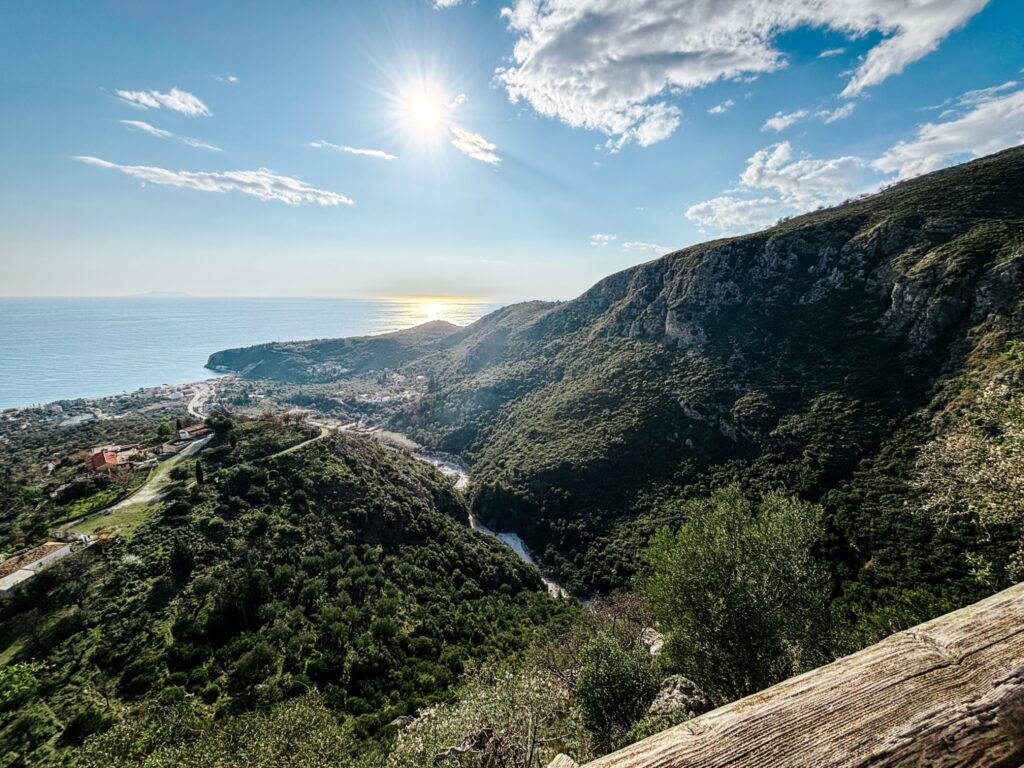
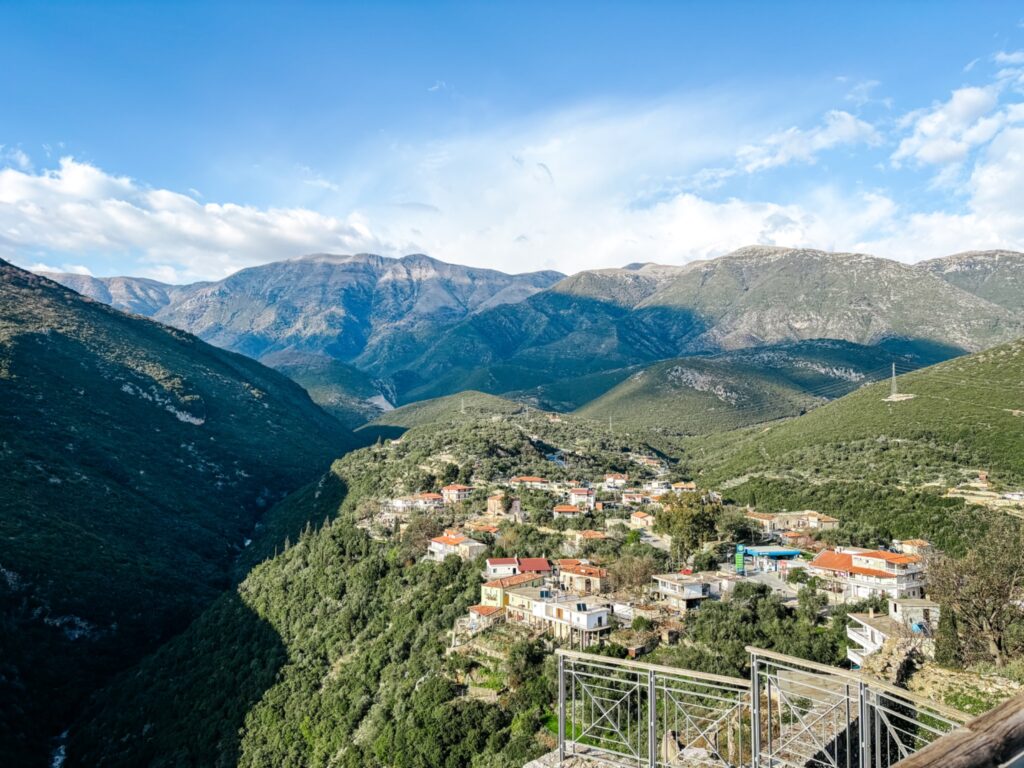
Inside the castle walls, you’ll still find old stone houses, narrow streets and churches. What makes it particularly interesting is that it isn’t simply a collection of ruins – parts of the old town are still inhabited today.
Albania’s scenery is beautiful, and I’d definitely like to return one day and explore the country properly. Next time, though, I’d prefer to fly there and rent a car at the airport. The roads and driving culture take a little getting used to, but nothing felt particularly intimidating. Of course, by that point we’d had plenty of practice on Greek mountain roads.
Why go straight home when you can take the long way around?
We had booked our apartment in Himarë from March 23 to 26, but started discussing the best way to continue our journey home. Albania had already taught us on our first day that a distance can look short in kilometres and still take several hours to drive.
At some point, I noticed that there was a ferry from Durrës to Bari in Italy. So I had an idea: what if we went home via Italy instead?
Neither of us had ever been to Italy before, and it seemed like the perfect opportunity to get a little taste of the country.
Mait liked the idea. There were several advantages to going via Italy. Most importantly, we’d only have one more border crossing. After that, we’d be back inside the European Union and could travel freely between countries.
We’d also avoid driving through half of Albania and all of Montenegro’s mountain roads. The Italian route added a few more kilometres, but the overall travel time was roughly the same.
The only downside was that the ferry left on the evening of March 25 at 11 p.m., which meant sacrificing one night in Albania that we’d already paid for. But it didn’t seem particularly important whether we slept on a ferry or in an apartment. At least on the ferry we’d be moving closer to home while we slept.
So we decided to do it. Why take the direct route when you can take the scenic one?
Taking the Durrës to Bari ferry with a dog
The Durrës to Bari ferry cost €260 for the two of us, and there was no additional charge for Alice. Taking this Albania to Italy ferry meant we could cross the Adriatic overnight instead of continuing north through Albania and Montenegro, and then continue our Europe road trip through Italy.
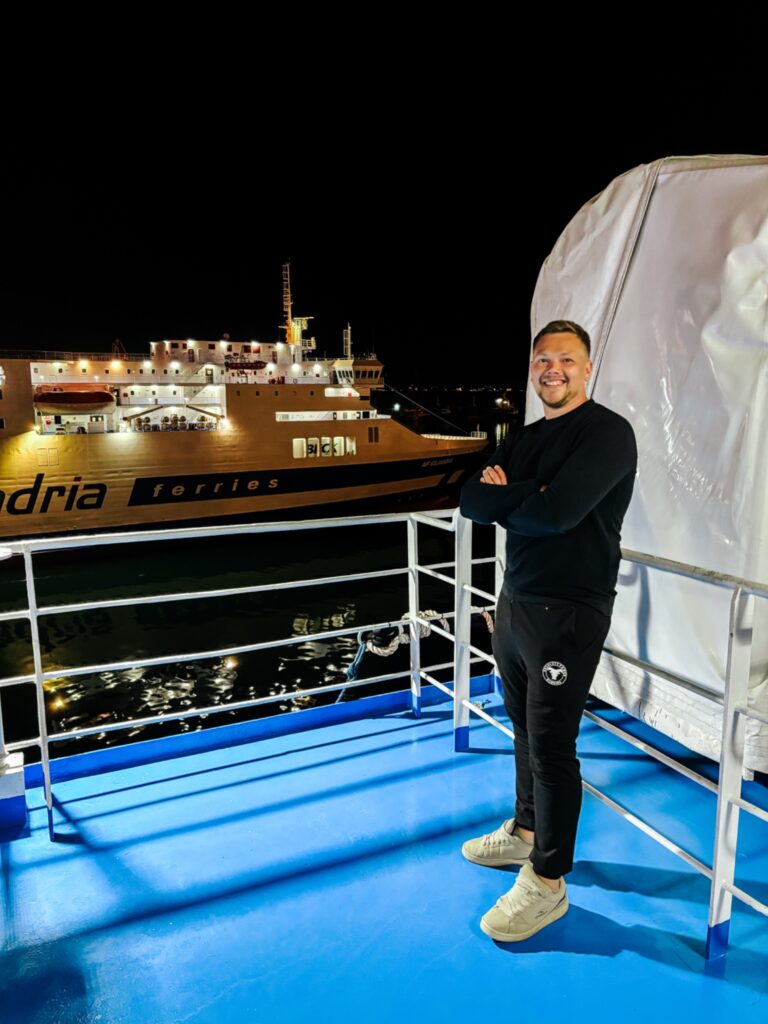
We decided that Alice would stay in the car during the crossing. I know some people may disagree with that decision, but I’m convinced it was the best option for her.
Access to the cabins involved steep stairs, and Alice was already an older dog who struggled with them. At the same time, she was a large dog and carrying her around the ship wasn’t exactly practical either.
She also would have woken us at around six in the morning wanting to go outside. She probably wouldn’t have desperately needed to go yet, but she’d become used to that routine in Greece. On the ferry, however, there wasn’t really anywhere I could have taken her. We didn’t see anything like the designated dog toilets you find on Tallink ferries.
So Alice stayed in the car for the crossing. When we arrived in port the next morning and went back down to the car, she was sleeping peacefully and seemed perfectly happy.
The ferry journey itself was fairly uneventful. The most memorable part was probably the price of our dinner: two meals with fries and drinks cost us €48.50.
Mediterranean departure times also seemed to be more of a suggestion than a rule. The ferry was supposed to leave at 11 p.m., but when we finally gave up and went to our cabin at 12:30 a.m., we still hadn’t left the port.
Somehow the ferry made up a fair amount of time overnight, though, and we arrived in Bari at around nine the next morning.
Italy – the complete opposite of Albania
We went through passport control, drove out of the port and stopped at the first patch of grass we could find so Alice could have breakfast and go to the toilet.
She certainly wasn’t in any rush to pee – she spent quite a while carefully inspecting individual blades of grass before finally squatting.
We didn’t really have a destination in Italy. The plan was simply to drive for as long as we felt like it and find somewhere to stay when we’d had enough.
At some point, I realised that at our current pace we’d reach the Venice area at around 9 p.m. I found suitable dog-friendly accommodation about 20 kilometres outside Venice, and then I had another idea: we could drop Alice and our luggage at the hotel and head into Venice for an evening walk.
We stayed at Hotel Villa Braida, a small manor-style hotel surrounded by a large green park. The room cost €80.97 including breakfast, plus an additional €20 for Alice, but it was genuinely lovely and stylish. Breakfast was also very good, with plenty of choice.
Alice absolutely loved walking there. After the stone streets of Albania, a green park full of trees and bushes must have felt like paradise. I’d happily recommend Hotel Villa Braida both to dog owners and to anyone else who wants to visit Venice without actually staying in Venice itself.
Italy is easily the most dog-friendly country I’ve ever visited. We didn’t come across a single place along our route where dogs appeared to be prohibited. Even motorway service stations had fenced dog exercise areas with taps providing fresh water.
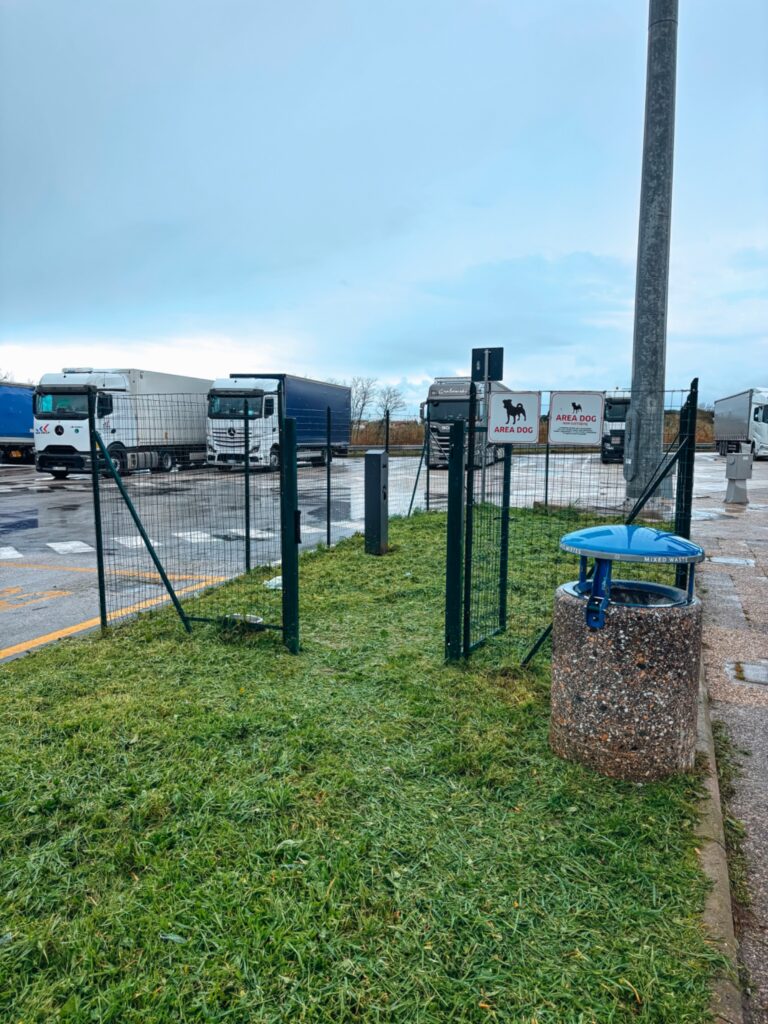
Dogs were allowed inside the service stations too, but since we were travelling at the end of March and it wasn’t hot enough for Alice to be uncomfortable waiting in the car, I didn’t see much point in bringing a huge dog inside with me.
This was our first little taste of Italy, as neither of us had ever been there before. We really liked it. Everyone was incredibly friendly, and even when we didn’t have the words to explain ourselves, a bit of enthusiastic gesturing seemed to solve everything.
Late-night Venice
Late-night Venice is something I’d absolutely recommend. I haven’t seen Venice during the day, so I have nothing to compare it with, but I loved how relatively quiet it was. We could wander around at our own pace and take photos wherever we wanted without fighting our way through huge crowds.
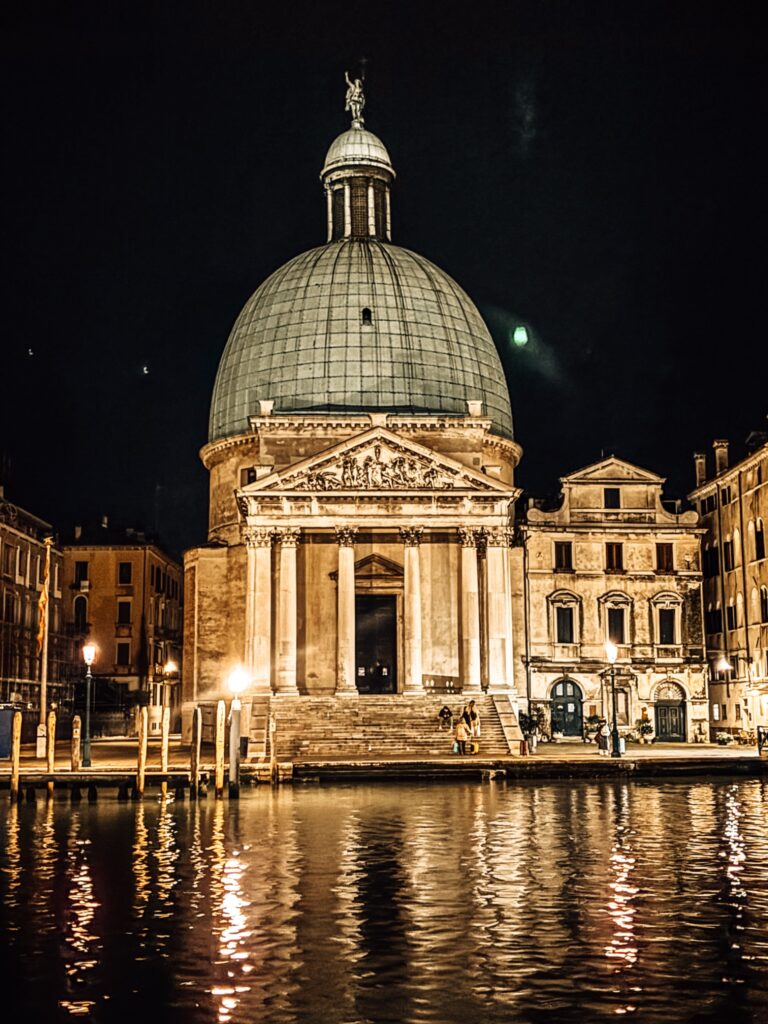
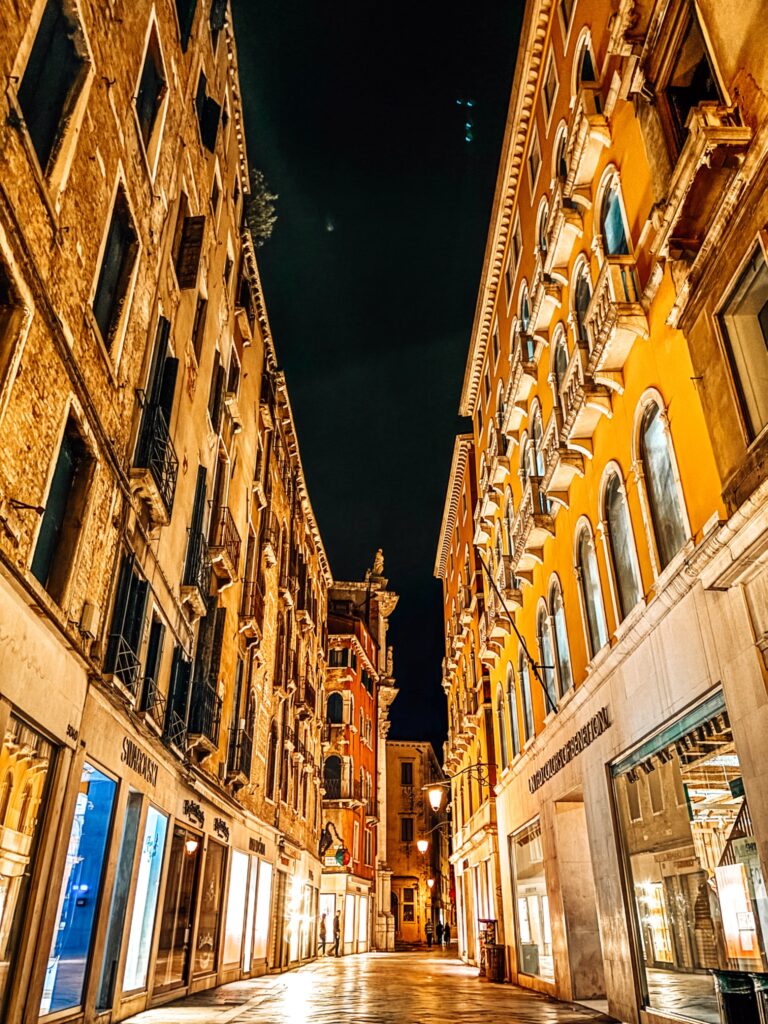
You can’t drive into Venice’s historic centre, so we left the car in a parking garage, which cost us €15, and set off to see the main sights I’d saved on my map.
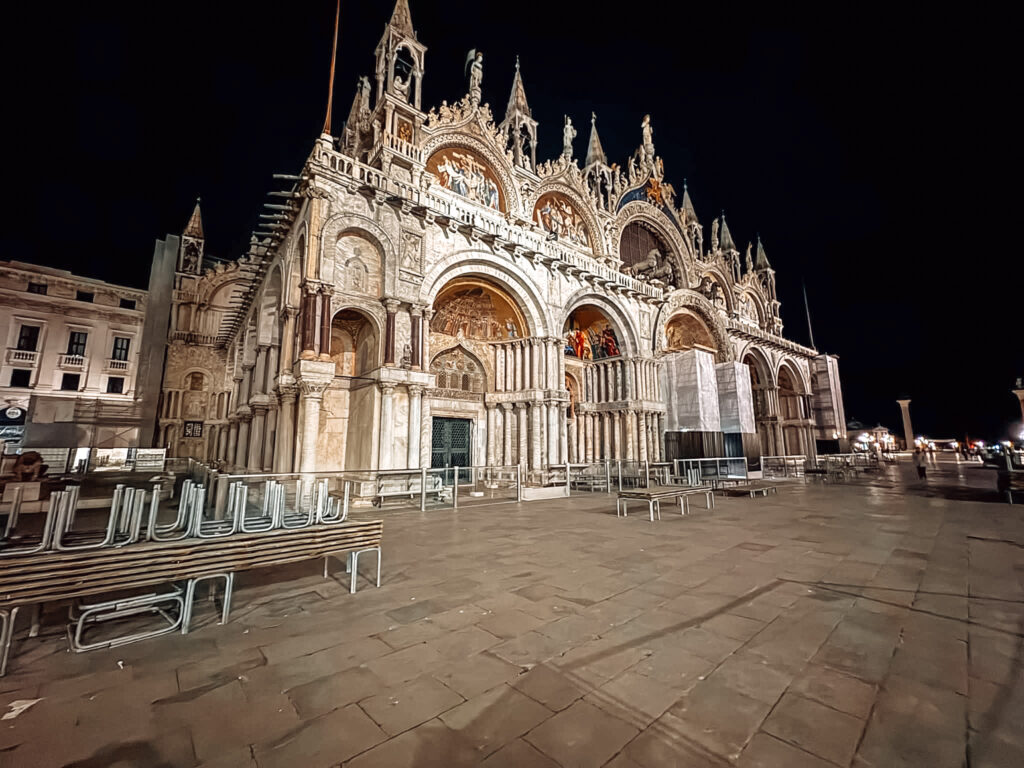
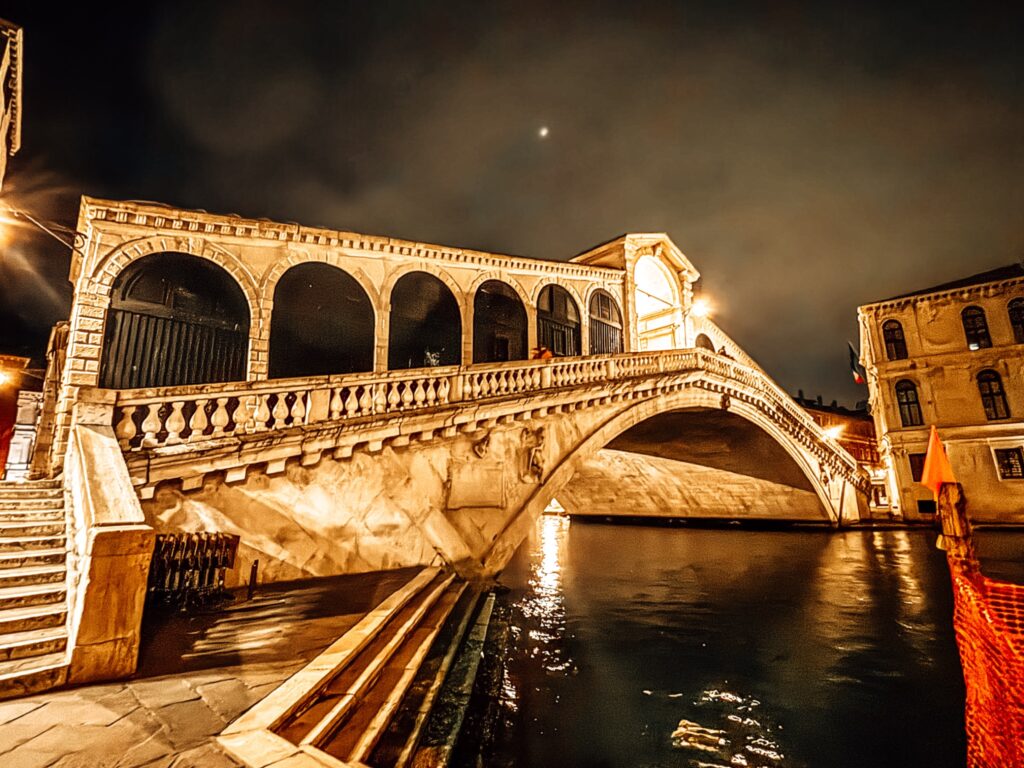
A proper Venice experience should probably include a gondola ride, but we couldn’t bring ourselves to spend €100 for the two of us on one ride. Instead, after reaching our final sightseeing stop, we took a vaporetto back towards where we’d started. Two tickets cost us €19.
It was a really enjoyable experience, and I’d happily recommend it to anyone who doesn’t want to spend a small fortune on a private gondola ride.
We finally got back to the hotel at around 1:30 a.m. We quickly took Alice out to pee and went straight to bed. We were exhausted, but extremely happy with our decision.
Overall, we’re so glad we decided to make that late-night trip into Venice. It easily became one of the highlights of our journey home.
From Italy to Poland
After breakfast, we continued towards home. We thought we’d try to make it somewhere around central Czechia or perhaps closer to the Polish border. Mait started the day’s driving and I took over later in the evening.
We were already close to the Polish border when we stopped at a petrol station to feed Alice and use the toilet ourselves. I checked whether any of the accommodation options I’d saved that morning were still available. They weren’t, so I had to find somewhere else to stay.
I found a suitable place in Gliwice, Poland, about 50 kilometres from the Czech border.
We stayed at Hotel & Spa Biały Dom. I don’t think I’ve ever slept in a bed quite as enormous as the one we had there. My first thought was that perhaps we’d been given the wrong room, because it seemed ridiculously large and fancy considering we were simply passing through for one night with a dog.
It turned out we’d received a room upgrade because I had Booking.com Genius Level 2 status.
Like our hotel in Italy, the grounds were large, green and perfect for walking Alice. I especially liked that even though we arrived after dark, the park was decorated with strings of lights, so we didn’t need a torch for our evening walk.
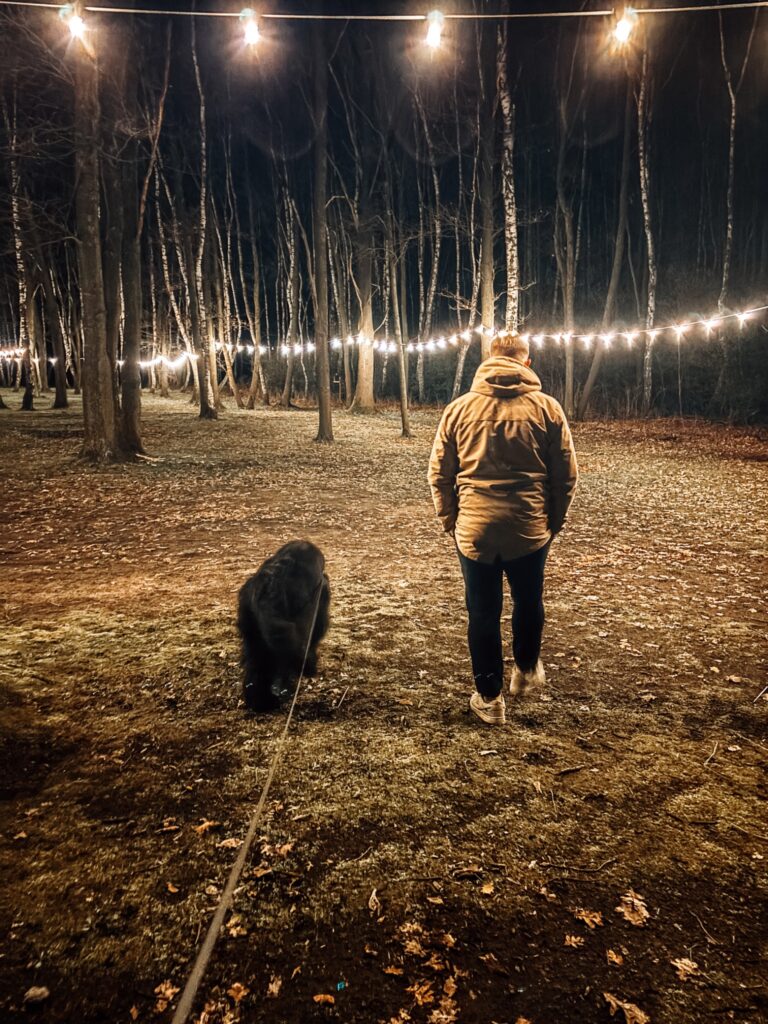
The hotel also has a spa, but because we arrived late and left early the following morning, we didn’t get a chance to use it. The night cost us around €82 including a very decent breakfast, and there was no additional charge for Alice.
One last night in Latvia – and finally home
When we set off the next morning, we still had around 1,300 kilometres to go. Technically, we could have driven it in one day, but Poland is an hour behind Estonia and the clocks were also changing to summer time that night, meaning we’d effectively lose two hours. We decided there was no point forcing ourselves to make it all the way home.
Besides, our fridge at home was empty and the house was cold. Arriving at three or four in the morning didn’t sound particularly appealing.
Spending one final night in Bauska, Latvia, seemed much more sensible. That’s what we did, and we finally arrived home on Sunday at around 3 p.m.
Coming home brought mixed feelings. On the one hand, it was lovely to see our bright, beautiful home again. On the other, it felt as though we’d left a little piece of ourselves somewhere along the road. Alice seemed to be the only one who was genuinely delighted to be home.
Our final stop on the road had been in Pärnu, where we went for something to eat. Afterwards, we told Alice that we were going home now.
Alice was an incredibly clever dog. She understood human sentences remarkably well, and although she’d spent most of the trip sleeping peacefully in the car, after hearing the word “home” she kept sitting up every few minutes to check whether we’d arrived yet.
When we finally got there, she ran straight into the garden and happily rolled around on the ground. You could see how much she enjoyed being home.
Looking back, I’m especially grateful that Alice came on this trip with us. She was already 12 years old, and we knew we had more days behind us together than ahead of us. What we didn’t know, of course, was just how few were left.
We arrived home on March 29. By then, we’d been away for six weeks, driven around 10,500 kilometres and travelled through 13 different countries. Our European road trip had taken us across a large part of the continent, but the most surprising thing was that Alice actually seemed to have more energy after we came home than she’d had before the trip.
We took her for a walk every day, and nothing gave us any reason to think that we had only a few days left.
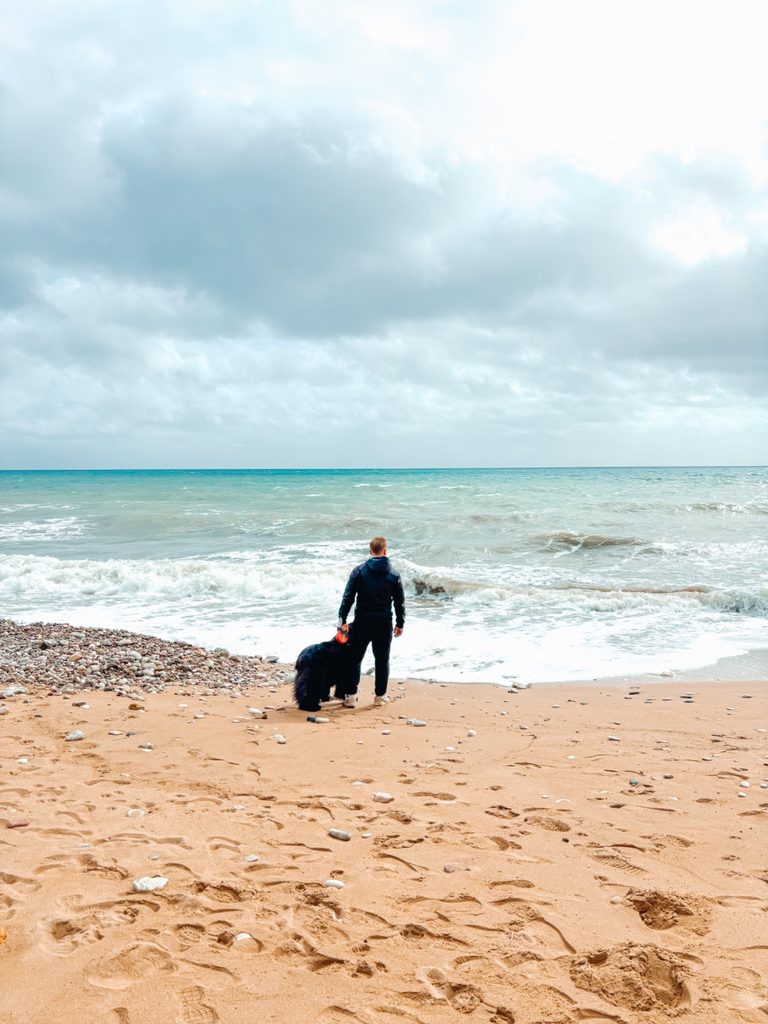
On 7 April, just nine days after we came home, we had to say goodbye to Alice forever.
Driving from Greece to Estonia – the numbers
After the trip, I went through our bank statements again to see exactly how much driving from Greece to Estonia had actually cost us.
Travel dates: 23–29 March 2026
Days on the road: 7
Overnight stops: 6
Fuel: €382.71
Tolls and vignettes: €142.06
Accommodation: €423.85
Durrës–Bari ferry: €260.00
Food, coffee, drinks and other purchases along the way: €267.90
Food and drinks on the Durrës–Bari ferry: €48.50
Venice parking and public transport: €34.00
Airalo eSIM: €17.50
Total: €1,576.52
When looking at the total cost of the journey home, it’s worth keeping in mind that this was definitely neither the cheapest nor the most direct way to drive from Greece to Estonia. The most logical option would have been to return more or less along the same route we’d taken on the way to Greece.
Instead, we decided to spend three nights in Albania and then take the ferry to Italy. We also made a completely unplanned detour to Venice.
Our Himarë accommodation and the Durrës–Bari ferry alone cost €431.86. We also had the additional fuel and toll costs of driving through Italy, as well as the cost of our visit to Venice.
So our €1,576.52 total shouldn’t be taken as the amount everyone should expect to spend when driving from Greece to Estonia.
For us, the journey home was no longer simply about getting from point A to point B as quickly as possible. We were already on the road, and we wanted to see a little more before going home.
If you’d like to compare the cost of the other half of the journey, I’ve also broken down what it actually cost us to drive from Estonia to Greece.
How much did our entire six-week Europe road trip cost?
Looking back at the trip as a whole, we were away from home for six weeks, drove around 10,500 kilometres and travelled through 13 countries.
Our costs fell into three main parts:
Driving from Estonia to Greece: €1,486.18
31 days on the Peloponnese: ~€3,809
Driving from Greece to Estonia: €1,576.52
That brings the total cost of our six-week Europe road trip to around €6,872 for the two of us, or an average of €156 per day.
That total includes accommodation, fuel, tolls and vignettes, food and drinks, restaurants, the ferry, parking, everyday purchases and activities. It also includes two unexpected car repairs, which cost us almost €620 in total.
Without the car repairs, the six-week trip would have cost us around €6,252, or €142 per day for the two of us.
So no, it wasn’t exactly a cheap trip. But considering that we spent more than a month living in Greece, drove across a large part of Europe and were away from home for six weeks, the total doesn’t seem unreasonable to me.
If you’re curious about what those four weeks in Greece actually looked like, I’ve written a separate post about our month on the Peloponnese – the places we visited, what everyday life there was like and what we learned from staying in one place for longer.
The most valuable part of this trip, however, is something that could never be included in a spreadsheet. We got to spend another six weeks with Alice, drive across Europe together and show her the Mediterranean, the mountains and the Greek sunshine.