Peloponnese in Winter: What It’s Really Like to Visit Greece Off-Season
In February and March 2026, we spent just over a month exploring the Peloponnese in winter. We arrived on the evening of 19 February and started our journey home on the morning of 23 March, giving us 31 full days there.
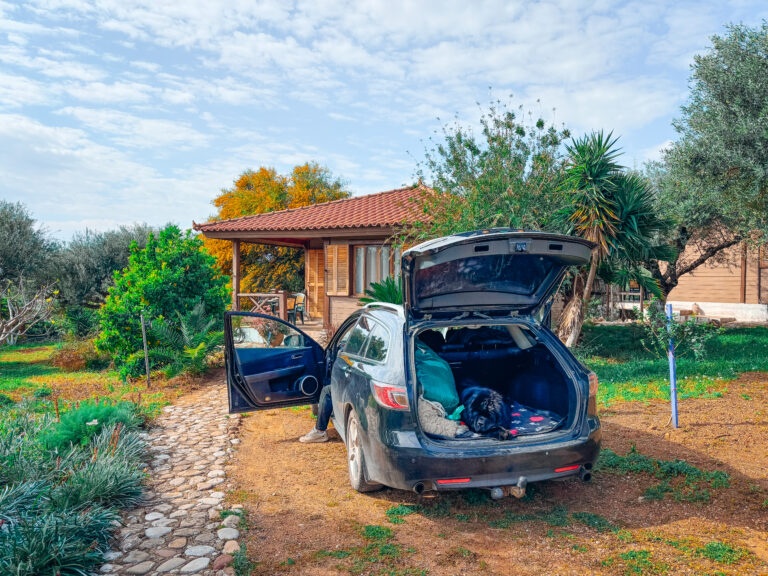
This time, we drove all the way to the Peloponnese from Estonia in our own car – and the journey there turned into an adventure of its own.
The original idea behind the trip was actually very simple: we wanted to escape Estonia’s cold, snowy February for at least a month and go somewhere a little warmer.
The Peloponnese ended up being our destination almost by accident. The previous autumn, I came across a long-term rental offered by fellow Estonians in the small seaside village of Chrani. The price was so good that only afterwards did I start looking into where Chrani actually was and what there was to do around the Peloponnese.
The more I researched, the better the idea sounded.
We didn’t arrive completely unprepared, of course. We knew February wasn’t going to be a classic Greek beach holiday, that not every beach café would be open and that the evenings could get fairly chilly. During our first couple of weeks, we used the heating at night. By March, however, it was getting noticeably warmer and we no longer needed it every evening.
What I hadn’t quite realised before the trip was just how much we would enjoy winter in Greece – and the Peloponnese in particular.
If you want to read more about everything we saw and did during our month there, as well as what four weeks in the Peloponnese actually cost us, I wrote a separate post about the whole experience.
Is the Peloponnese worth visiting in winter?
For us, the Peloponnese in winter was absolutely worth it – as long as you’re not going to Greece with the sole intention of spending all day sunbathing on the beach and drinking cocktails.
For sightseeing, road trips, hiking and exploring nature, winter was a brilliant time to visit. On most days we had at least some sunshine, nearly everything we wanted to see was open on at least some days of the week, and there were no summer crowds anywhere.
We didn’t have to wait for a busload of tourists to move out of the frame before taking a photo at a castle. Parking was easy. We weren’t squeezing past people on hiking trails.
We could simply explore at our own pace.
If what you want is warm sea, beach bars, cocktails and the classic Greek summer holiday, though, I would definitely choose a warmer time of year.
Peloponnese winter weather: what to expect
We were in the Peloponnese from the second half of February until late March, and during that time we experienced a little bit of everything.
There were days with some properly heavy rain and others with completely clear blue skies. Daytime temperatures were usually somewhere around 13–18°C, but for some reason 13°C in Greece felt much warmer to us than 13°C does in Estonia.
The sunshine made a huge difference.
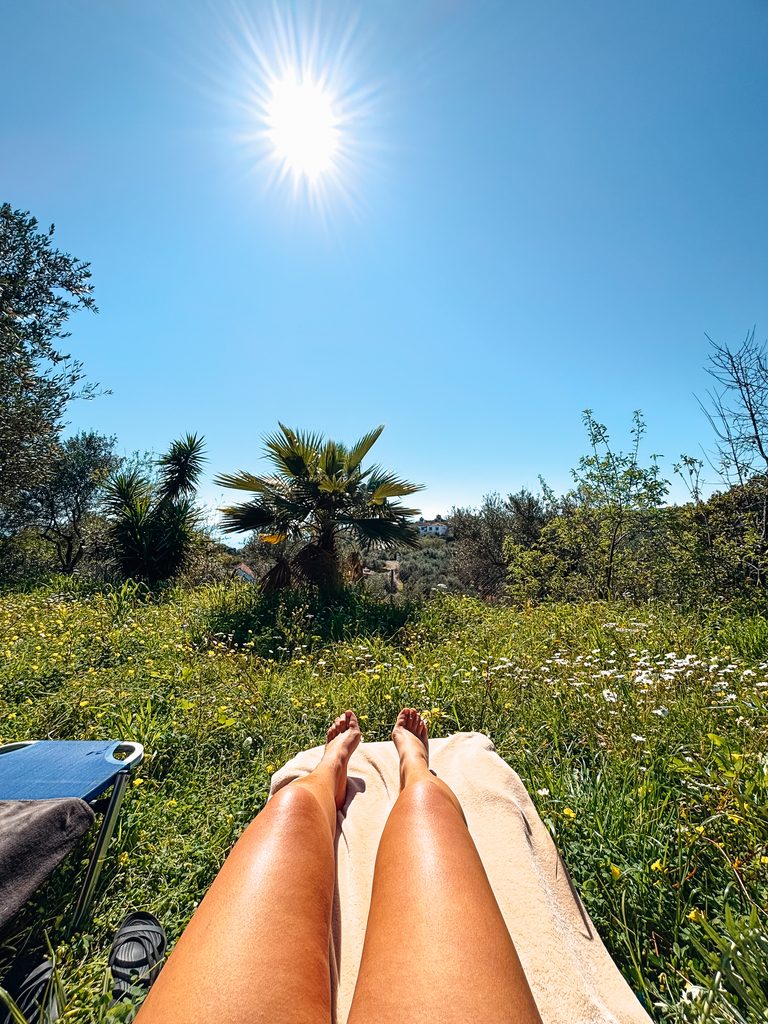
On some days, the air temperature was only around 15°C while the UV index was 4–5, and if we found a sheltered spot in the sun, it was perfectly comfortable to sit outside in short sleeves and even sunbathe. We actually managed to come home with a little bit of a tan.
It’s worth remembering, though, that the Peloponnese is large and the weather can vary enormously depending on where you are.
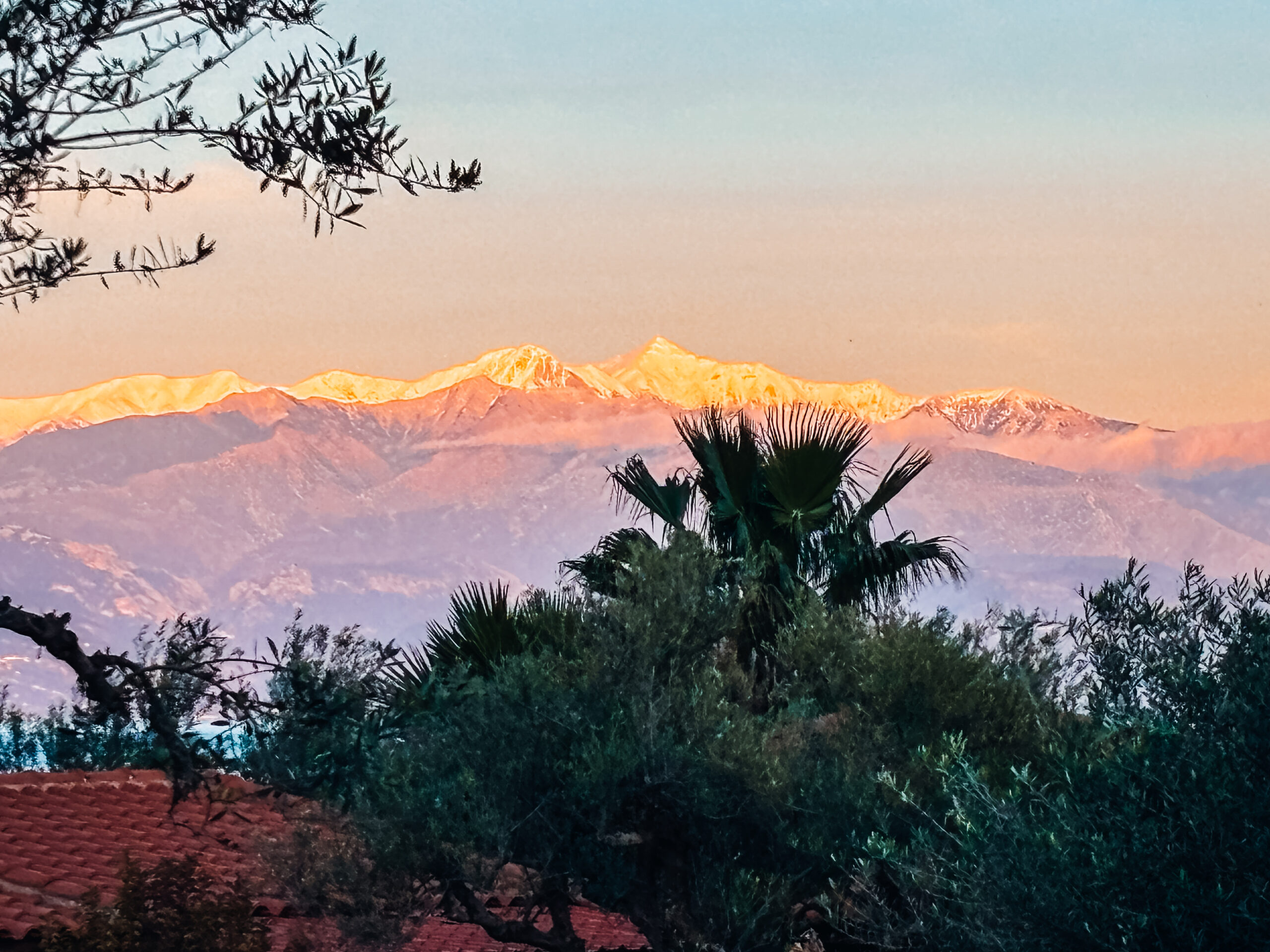
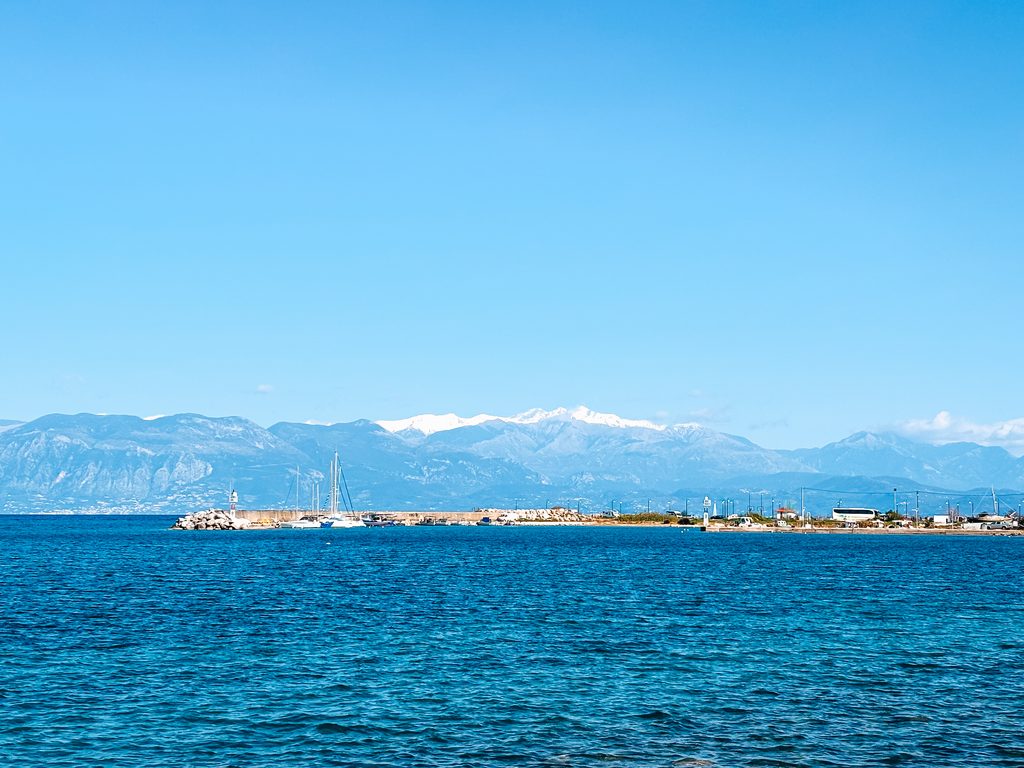
The coast could feel sunny and spring-like while the mountains were still very much in winter. When we drove to Kalavryta in early March, there was still plenty of snow higher up, and there’s even a ski resort there where you can ski and snowboard during winter.
So on the same trip, you might be sitting by the sea in a T-shirt one day and standing among snowy mountains in a jacket a few days later.
What is the Peloponnese like in February and March?
There was already a noticeable difference between late February and March.
When we arrived in the second half of February, the days were still fairly short, the evenings were chilly and parts of the landscape looked very wintry. The vines and fig trees were bare, and we turned the heating on at night.
As March went on, spring became more noticeable almost every day.
The Estonians who lived there kept telling us that it had been an unusually cold year and that winter simply refused to end. Coming from Estonia, where we had started our drive in temperatures of around –25°C, we weren’t quite as bothered by it.
To us, the weather just kept getting better.
On the warmer days in March, we were out in short sleeves and could comfortably sunbathe in sheltered spots.
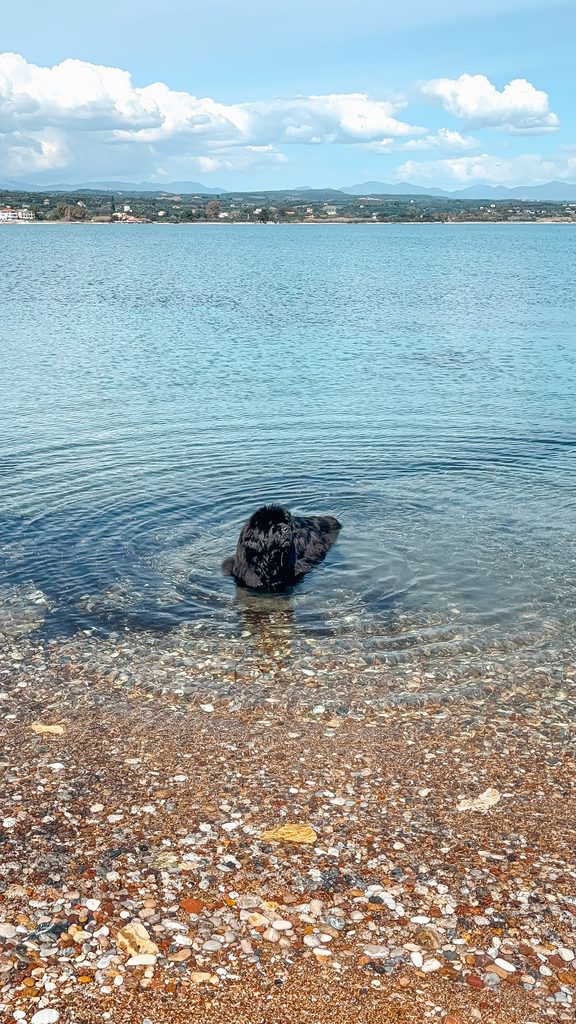
The Mediterranean was still too cold for us, though, and I never went swimming during the trip. Our 12-year-old Newfoundland, Alice, had no such concerns and went swimming anyway.
What is open in the Peloponnese in winter?
This depends a lot on where you choose to stay.
Our base, Chrani, is a small seaside village and in February much of it was essentially hibernating. The grocery shop was open every day, but many restaurants and beach cafés were closed. We didn’t eat out in Chrani once during the entire month.
By the second half of March, we could already see preparations for the beach season beginning. The beach café near our accommodation was being cleaned and prepared, and things were slowly starting to come back to life, but the season still hadn’t properly started by the time we left.
Petalidi and Koroni had much more going on during winter. They are year-round towns, so there were schools, shops, cafés and restaurants open, and we never struggled to find somewhere to eat.
Most of the attractions we wanted to visit were open too. We missed Kyparissia Castle because we happened to go on the wrong day, and quite quickly learned that during winter it’s worth checking each attraction’s opening days in advance.
Many state-run museums and archaeological sites operate shorter winter hours, and a number of them are closed on Tuesdays. Google Maps was usually helpful, but during the off-season I wouldn’t rely on it alone – if possible, check the attraction’s official website as well.
Another useful thing to know when planning a winter trip to Greece is that from 1 November to 31 March, admission to state-owned archaeological sites, monuments and museums managed by the Greek Ministry of Culture is free on the first and third Sundays of every month.
We happened to visit Ancient Messene on one of those Sundays and got in for free. If you’re planning to visit several archaeological sites or museums, those free Sundays are definitely worth keeping in mind when putting your itinerary together.
Things to do in the Peloponnese in winter
In my opinion, winter is particularly good for visiting the kinds of places in the Peloponnese where, in summer, the heat can start to feel like an attraction in its own right.
Castles and historical sites
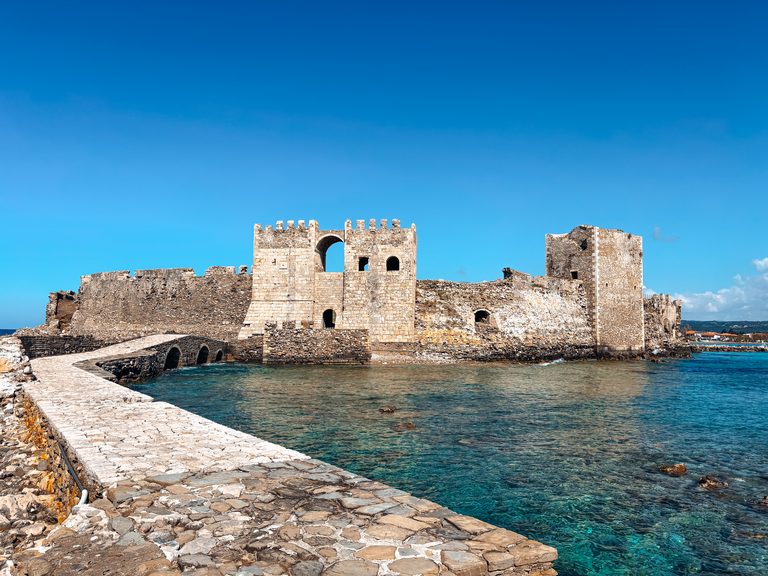
Two of our favourites were Koroni Castle and Methoni Castle.
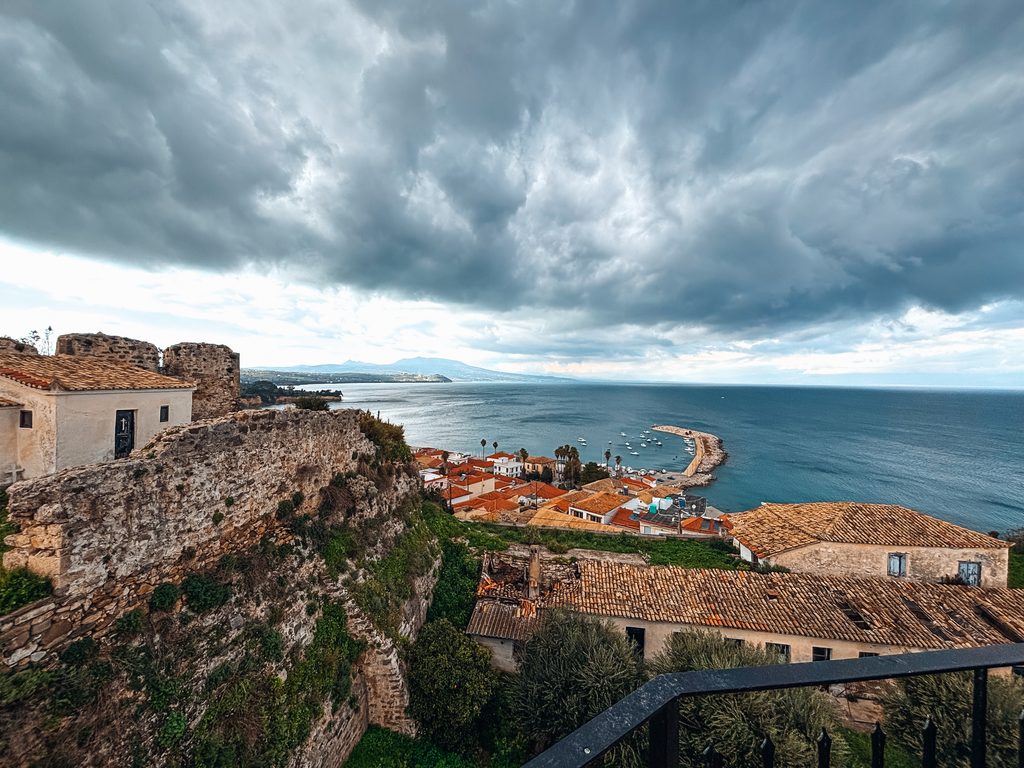
What makes Koroni Castle unusual is that people still live within its walls today, and there is also a functioning monastery inside. Entry was free and there were hardly any other visitors.
Methoni Castle is enormous, and the Bourtzi tower at the end of the stone causeway stretching out into the sea made it one of my favourite places in the entire Peloponnese.
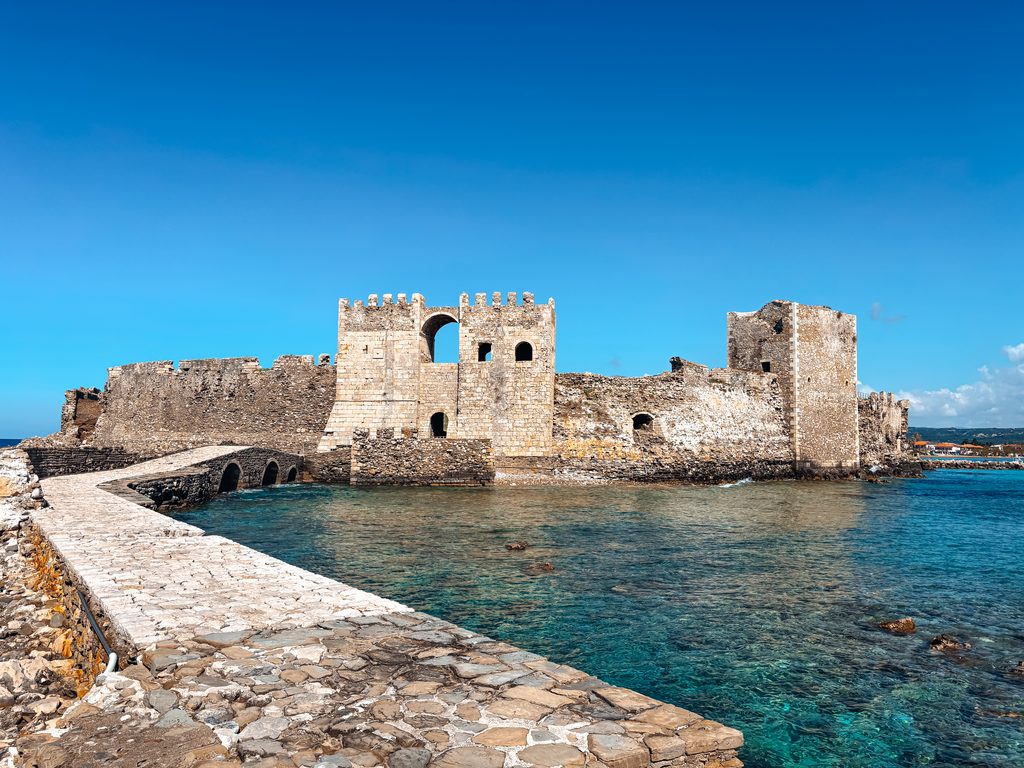
Both were particularly enjoyable in winter because it was neither hot nor crowded.
Old Navarino and Gialova Lagoon
One of Mait’s favourite places was the ruins of Old Navarino Castle.
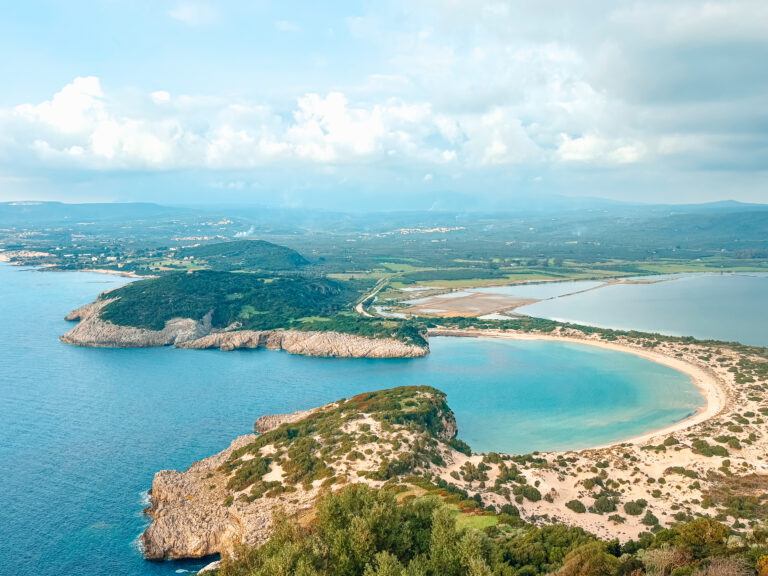
Getting there involved about an hour of hiking uphill, and as someone who isn’t particularly fond of heights, there were a few sections where I was definitely questioning my life choices. The view from the top over Voidokilia Beach and Gialova Lagoon made the climb worth it, though.
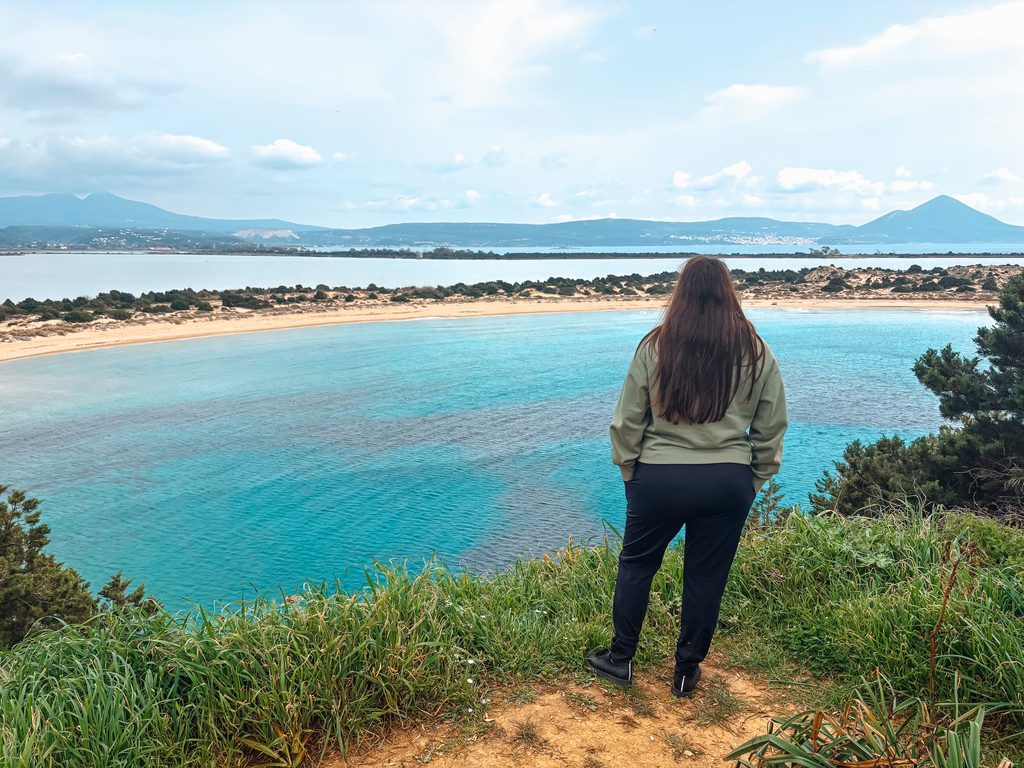
Gialova is an important wetland and a well-known birdwatching area. In early March, we even saw flamingos there.
Getting a decent photo of them with a phone was another matter entirely, because apparently the flamingos had decided exactly how close humans were allowed to get.
Waterfalls are especially impressive in winter
One of the big advantages of travelling during the wetter season was that the waterfalls had plenty of water.
We visited Polylimnio Waterfalls twice and also went to Kalamaris Waterfall near Gialova.
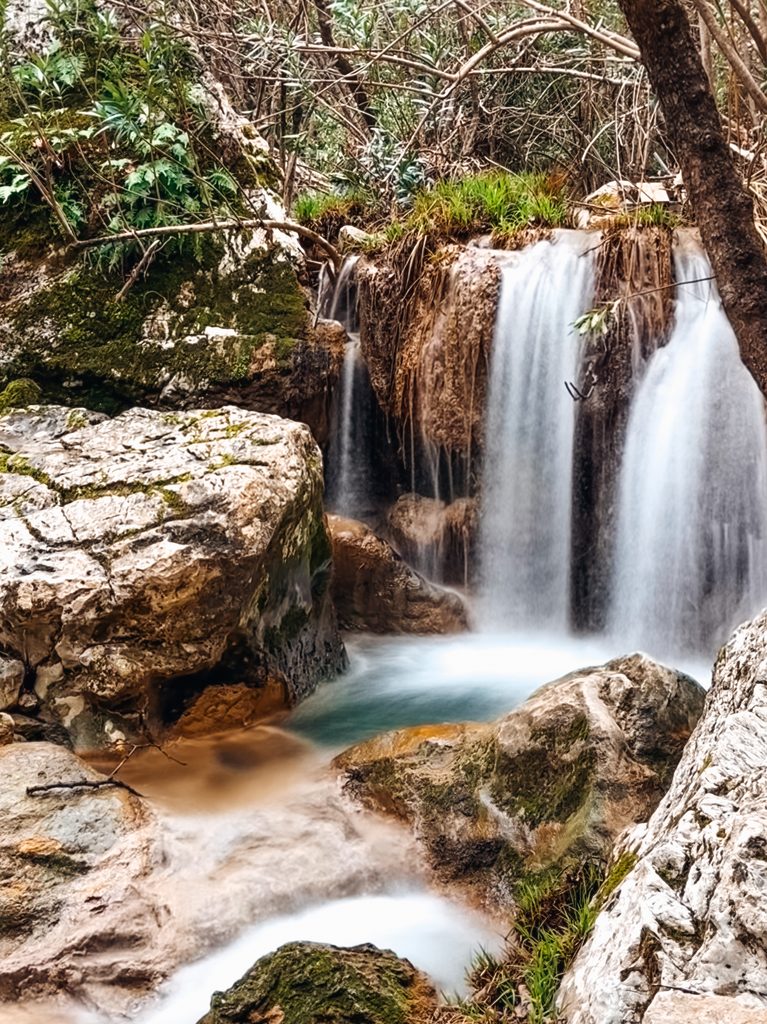
There is a downside, though. After heavy rain, smaller access roads can become very muddy and rough. Locals advised us to check the latest reviews before going, and if the road conditions sounded questionable, we simply left it for another day.
Ancient Messene
If you’re interested in ancient ruins, Ancient Messene is an impressive place.
To be completely honest, ancient ruins aren’t really our biggest passion, so it wasn’t one of the highlights of the trip for me. But the site is enormous and you could easily spend several hours walking around.
And I would certainly rather do that in winter than in 35°C heat.
A winery is a good option for a bad-weather day
One of our favourite experiences of the trip was visiting Ktima Palivou winery.
We learned how the wine is made and stored and finished the visit with a tasting of five different wines. When we visited, it cost €15 per person.
It’s also exactly the kind of activity that works well on a day when the weather isn’t ideal for wandering around outdoors.
Kalavryta shows you a completely different side of Greece
If you want to experience both the sea and proper winter on the same trip, Kalavryta is worth the drive.
The road there took us from spring-like weather on the coast into snowy mountains.
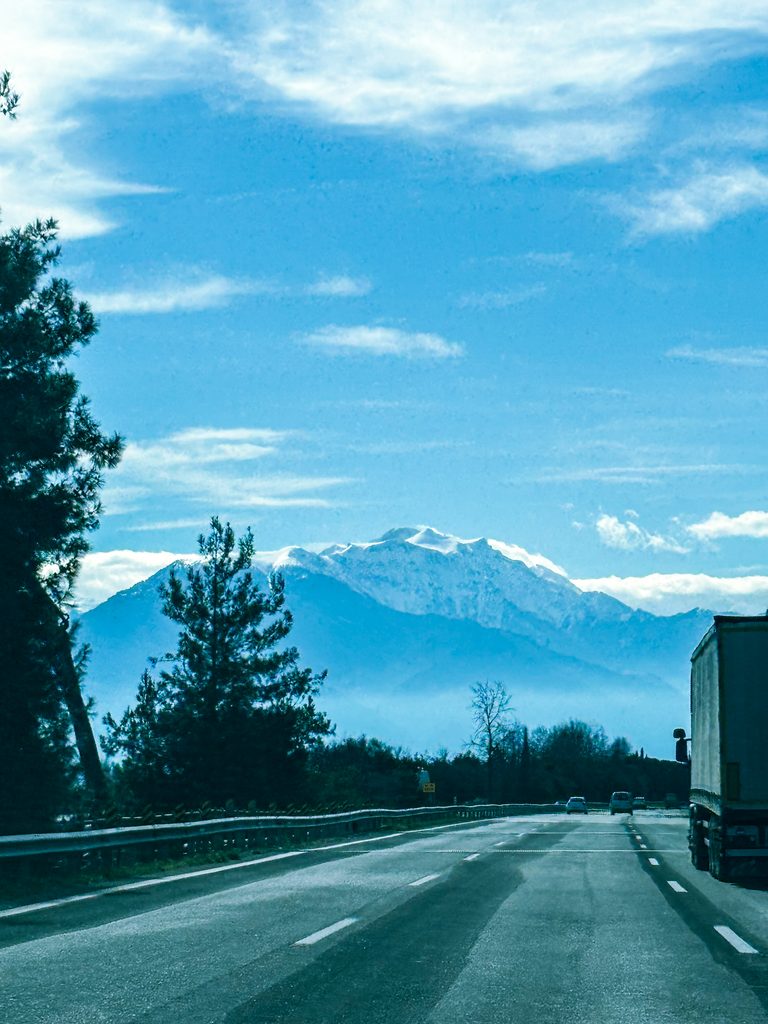
Along the way, we visited the Cave of the Lakes in Kastria, as well as the memorial and the town of Kalavryta itself.
Mount Helmos Ski Centre is also nearby.
Mait would have loved to go snowboarding in Greece, but we only had one day in Kalavryta and simply couldn’t fit everything in.
So yes – you really can sunbathe and ski on the same trip to Greece.
What are the beaches like in the Peloponnese in winter?
The beaches were mostly very quiet.
We saw people travelling in motorhomes and caravans who, like us, had probably escaped Northern Europe for the winter, but we hardly saw anyone swimming in the sea.
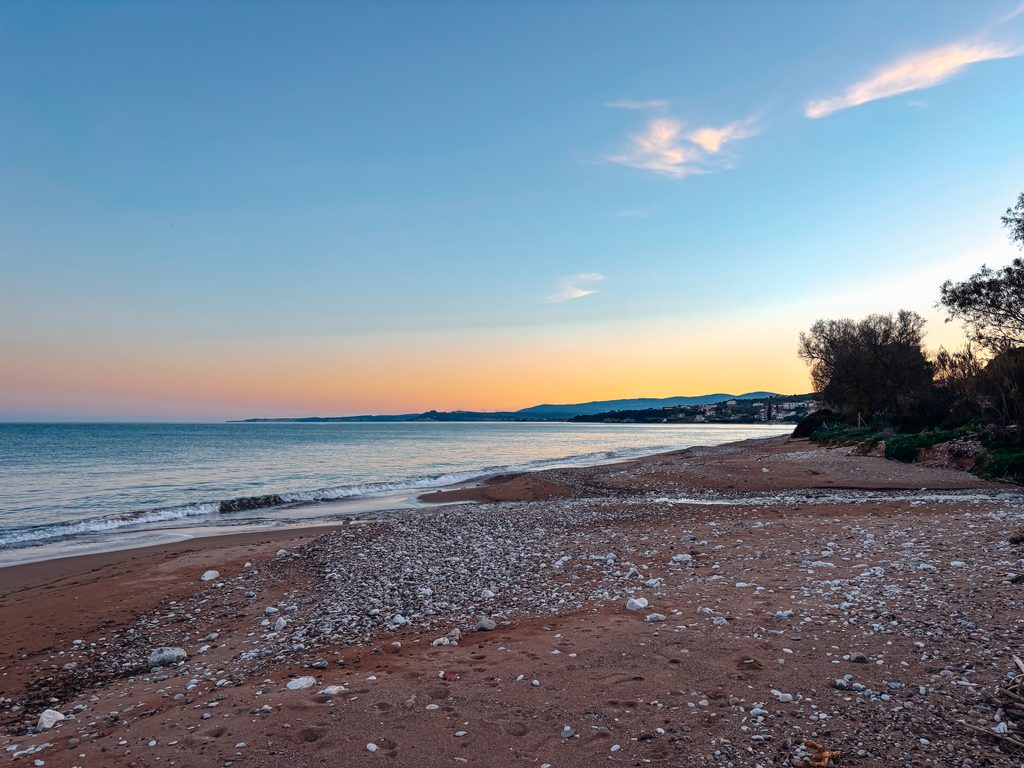
The water was too cold for us, and the beaches were often windy as well. On sunny days, sitting on the beach and sunbathing was lovely, but I never once looked at the sea and thought, “Yes, I really want to get in.”
Alice did.
She happily went swimming in Petalidi, for example.
Winter beaches had their own charm, though. Voidokilia, Chrani, Bouka and the other beaches we visited were almost empty. You could walk, take photos, sunbathe or have a picnic without having to search for a free patch of sand between rows of sun loungers.
If your main goal is a beach holiday, February and March are not the right months.
If you simply want to see and enjoy the beaches without the crowds, that’s a completely different story.
Do you need a car in the Peloponnese in winter?
In my opinion, you need a car in the Peloponnese regardless of the time of year.
If the entire purpose of your trip is to get from the airport to your hotel, spend your holiday around that hotel and the nearby beach, and then return to the airport, you can obviously manage without one.
For me, though, that would mean missing far too much.
The Peloponnese is huge and attractions are spread quite far apart. A car can also be useful for much more ordinary things.
The grocery shop in Chrani was less than a kilometre from our accommodation, but even walking there wasn’t always particularly pleasant because proper pavements were almost non-existent and the road was winding.
Driving around in winter was generally easy. Parking was plentiful and traffic was quiet.
In the mountains, of course, you need to keep an eye on the weather. When we drove to Kalavryta in early March, the roads were completely clear and we had no problems with our all-season tyres, although there was plenty of snow higher up. That was simply our experience on that particular day, though, so I would always check the weather and road conditions before driving into the mountains in winter.
After heavy rain, it’s also worth checking the condition of smaller gravel roads and mountain access roads before heading out. We learned that lesson fairly quickly while visiting waterfalls.
Where to stay in the Peloponnese in winter
We spent the entire month in Chrani, and to be honest, we chose it mainly because the accommodation was run by Estonians and the long-term rate was extremely good.
In summer, I can imagine Chrani being a lovely base for a beach holiday. The beach was practically across the road.
In winter, however, it wouldn’t be my first choice.
There was a grocery shop, but for a bigger grocery run we usually drove to Messini – the town, not Ancient Messene – where there were larger supermarkets. When we wanted to eat out, we generally drove to Petalidi or Koroni.
If I went back to the Peloponnese in winter for another month and wanted to stay in one place again, I would probably choose Koroni.
Koroni still felt alive in winter, with places to eat and a pleasant little town to wander around. Jana and Alfred live there too, and we got on with them really well, so it would be lovely to go exploring together again.
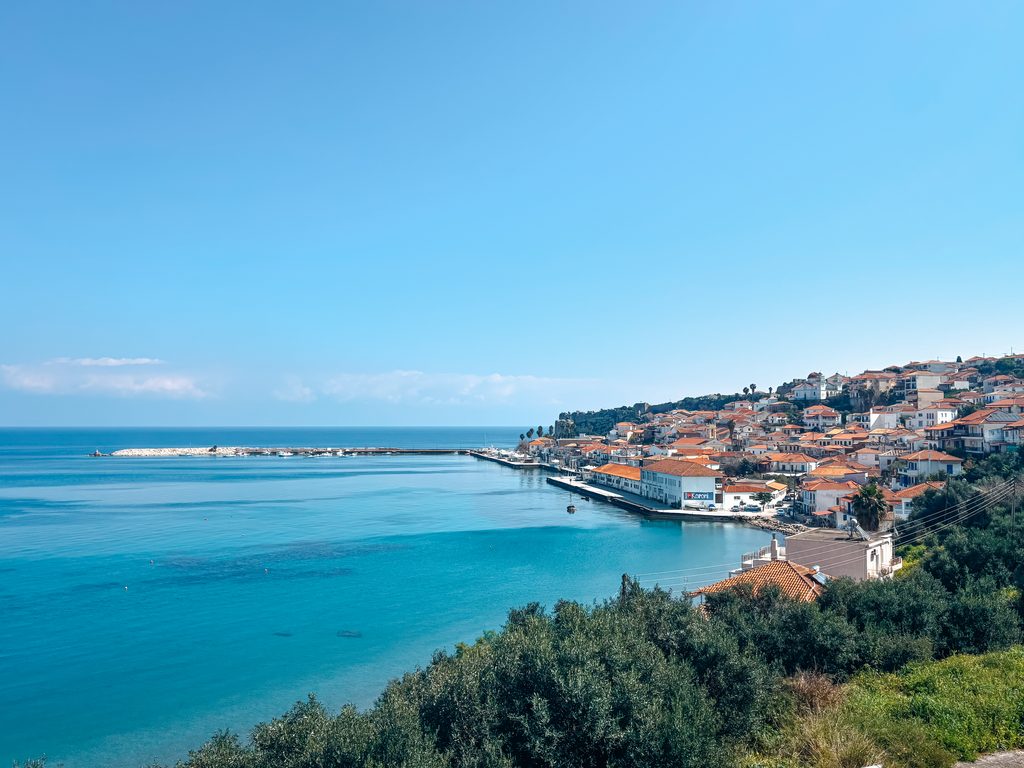
Jana and Alfred also run a small shop in Koroni called Koroni Boutique & Bites, which I’ve added to the map below as well. If we went back, it would definitely be one of the first places we’d stop by.
Chrani would suit someone looking for peace and quiet, easy access to the sea and self-catering accommodation, and who doesn’t mind getting into the car when it’s time for dinner.
If I were spending 7–14 days in the Peloponnese with the aim of seeing as much as possible, I wouldn’t choose one base at all. I would turn it into a road trip and split the trip between different areas so that I wasn’t spending hours every day driving the same roads back and forth.
For a one-week trip, you can see exactly how I’d do that in my 7-day Peloponnese road trip from Athens.
Accommodation and places we visited on the map
The map below shows accommodation options as well as several of the places we visited ourselves or mentioned in this post. It gives you a much better idea of the distances involved in travelling around the Peloponnese and may help you decide which area would work best as a base.
Is accommodation cheaper in the Peloponnese in winter?
In our case, the difference was huge.
We paid €660 for 31 days of accommodation, which worked out at just over €21 per night.
According to the owner of our accommodation, the bungalows and apartments in the same complex cost around €100–150 per night during peak season, depending on the exact unit.
So for us, staying long-term during winter was an exceptionally good deal.
That certainly doesn’t mean you can always find accommodation in the Peloponnese for €20 a night in winter, but if you’re planning a longer off-season stay, it’s definitely worth looking at long-term rates.
Visiting the Peloponnese in winter with a dog
Travelling around the Peloponnese in winter with a dog was very easy for us.
Alice was already a 12-year-old Newfoundland dog at the time, and the cooler Peloponnese winter weather suited her much better than summer heat would have.
The ground and pavements weren’t scorching hot, so we could comfortably take her out even in the middle of the day. In summer, when temperatures can get very high, walks with a large dog would need to be planned for early mornings and late evenings instead.
Every taverna we wanted to visit with Alice was happy for us to sit outside with her, and in several places someone brought her a bowl of water without us even asking.
The beaches were quiet too, with very few people around.
And of course, one major advantage from Alice’s point of view was the sea. Newfoundland dogs are known for loving water, and while the Mediterranean was too cold for us, she had absolutely no problem with it.
What to pack for the Peloponnese in winter
If I had to choose one word, it would be layers.
We packed clothes for both cool and warm days, as well as a lightweight jacket. On some days I definitely needed it; on others we were sitting outside in T-shirts.
We brought swimwear too, and it definitely got used for sunbathing. We just never actually made it into the sea.
For shoes, I had a pair of casual leather shoes and flip-flops.
The flip-flops turned out to be surprisingly useful indoors. Greek homes often have tiled or stone floors, and those can feel remarkably cold in winter. As Estonians, we normally don’t wear outdoor shoes inside, but the cold floor made us bend that rule slightly.
I didn’t bring a hat, scarf or gloves.
That said, I barely wear those in an Estonian winter either, so I probably shouldn’t be anyone’s universal reference point when it comes to packing warm clothes.
Pros and cons of visiting the Peloponnese in winter
For me, the advantages clearly outweighed the disadvantages.
The biggest positives were fewer tourists and queues, easy parking, being able to visit attractions without dealing with summer heat, and significantly cheaper accommodation.
You can also save money on entrance fees by making use of the free-admission Sundays at state-run attractions during the winter season.
And because winter is wetter, the waterfalls had plenty of water and looked especially beautiful.
The downsides were more unpredictable weather, closed beach bars and some restaurants being closed in smaller coastal villages.
Some attractions weren’t open every day, and after heavy rain, smaller access roads could be in fairly poor condition.
And of course, if swimming in the sea is important to you, winter isn’t the most reliable choice.
Who would I recommend the Peloponnese in winter to?
The Peloponnese is a great winter destination for anyone who wants to go on a road trip, visit historical sites, hike, spend time outdoors and experience Greece without the summer crowds.
It also works really well for a longer stay if you simply want to escape the coldest part of the Northern European winter without necessarily needing 30°C heat.
If your ideal Greek holiday means warm sea, a sun lounger, a beach bar and summer temperatures lasting into the evening, February and March probably aren’t for you.
I wouldn’t say winter is the best time to visit the Peloponnese for everyone – but for the kind of trip we wanted, it worked incredibly well.
Would we visit the Peloponnese in winter again?
Yes.
If I wanted to escape another cold, gloomy February in Estonia, the Peloponnese would be a very good option.
This time, we’d already have familiar faces and places waiting for us, and I’d actually be quite curious to see what has changed.
And somehow, even after an entire month, there was still an enormous amount we never got to see.
Olympia, Mystras, Monemvasia and Nafplio all ended up on the list for next time, and I’m sure there are plenty more places I haven’t even heard of yet.
So I definitely want to go back to the Peloponnese.
When our time in Greece came to an end, we didn’t take the most direct route home. Instead, we continued our road trip through Albania and Italy on the way back to Estonia.
I would happily go back in winter, although I’d also like to try autumn one day. By then the worst of the summer heat should be over, the sea should still be warm and local produce would be in a completely different season.
But if the question is whether I would visit the Peloponnese in February again, the answer is very simple.
I would.
Frequently asked questions
Is the Peloponnese worth visiting in winter?
In my opinion, yes. There are far fewer tourists, accommodation can be significantly cheaper than in peak season, and the temperatures are very comfortable for sightseeing and hiking. Just don’t expect a traditional beach holiday.
What is the weather like in the Peloponnese in winter?
Based on our experience, this part of Greece in winter felt more like a Northern European spring than winter. Daytime temperatures were usually around 13–18°C, and on sunny days the UV index reached 4–5.
The weather was changeable – we had both heavy rain and completely clear, sunny days.
Is the Peloponnese warm in February?
That depends very much on where you’re coming from and what you consider “warm”.
We arrived in the second half of February after starting our drive in Estonia at around –25°C, so Greece felt pretty wonderful to us.
Locals and Estonians who spend longer periods there were still wearing long sleeves and trousers while we were already walking around in T-shirts during the day.
Is March a good time to visit the Peloponnese?
If you want a classic beach holiday, probably not.
But if you want to explore historical sites, hike, take a road trip and photograph beautiful places without the crowds, March was a very good time to visit in our experience.
By mid-March, sheltered sunny spots were already warm enough for us to sunbathe.
Do you need a car in the Peloponnese?
If you actually want to explore the region, I personally wouldn’t go without one.
Distances are large, and many of the beautiful beaches, castles, waterfalls, villages and other attractions are much harder to reach using public transport.
Are restaurants and attractions open in the Peloponnese in winter?
It depends on the location.
In larger towns and places where locals live year-round, restaurants, cafés and shops were generally open. In smaller seaside villages, many seasonal businesses were closed.
We didn’t come across any attraction we wanted to visit that was completely closed for the entire winter season. Some did have reduced winter opening hours, though, and certain days of the week were closed.