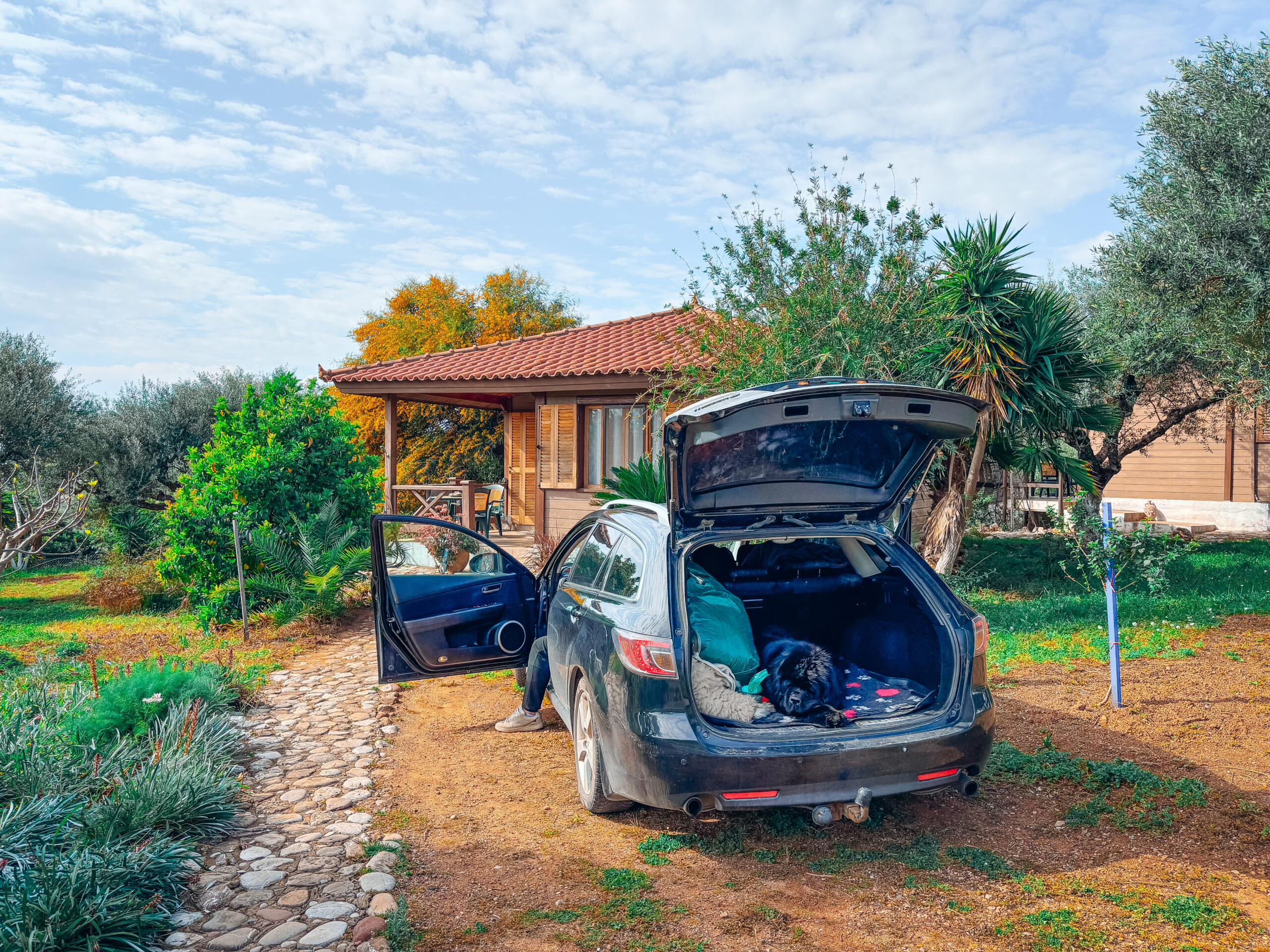
Driving from Estonia to Greece – a Europe road trip with our 12-year-old dog
For years, Mait and I had talked about spending part of the winter somewhere warmer. But there was always something getting in the way – too much work, too many dogs, or simply not enough money.
Then, in October 2025, I randomly came across an accommodation deal in the Peloponnese in Greece, and we decided that this time, we were actually going to do it. We planned our work and everything else around leaving no later than mid-February. The idea was to spend four weeks in Greece, plus however long it took us to drive there and back.
If you’re wondering what the Peloponnese is like in winter, I’ve written a separate post about our February and March experience, from the weather and empty beaches to what was actually open.
My one non-negotiable condition was that Alice, our 12-year-old Newfoundland dog, was coming with us.
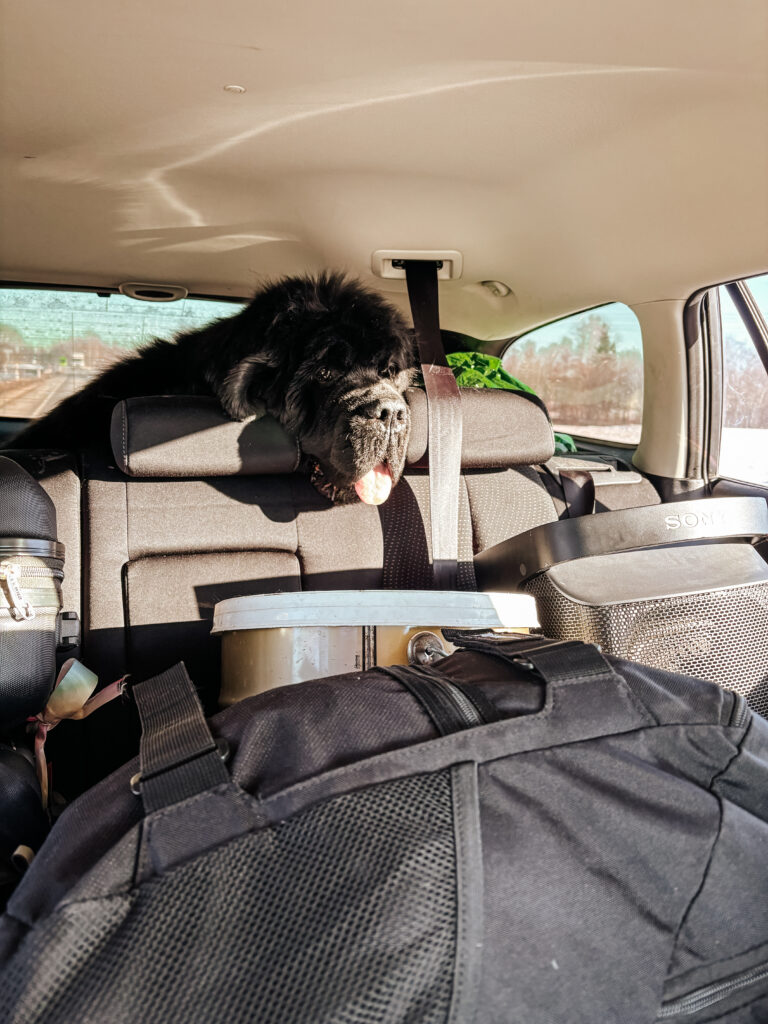
Luckily, Alice was already an experienced traveller. She had been to plenty of dog shows over the years, and her longest road trip had taken her all the way to Romania. So I wasn’t particularly worried about whether she could handle a long drive. The bigger question was how to make a journey like this as comfortable as possible for a very large, very old dog.
Planning the trip: our route, dog documents and the car
I started by figuring out our route. For driving from Estonia to Greece, this was the route we settled on:
Estonia → Latvia → Lithuania → Poland → Slovakia → Hungary → Serbia → North Macedonia → Greece.
Before the trip, we thought driving from Estonia to Greece would be fairly straightforward: three overnight stops, long days on the road and plenty of breaks for Alice along the way. As it turned out, the journey had other plans for us.
Next, I looked into the vaccinations and documents Alice would need to travel through all of those countries.
Because our route also took us through countries outside the European Union, Alice needed a rabies antibody titre test in addition to a valid rabies vaccination. Luckily, she had already had the test done years earlier when we travelled to Ukraine. Since none of her rabies vaccinations had expired in the meantime, the previous test was still valid for this trip.
Important: if you’re planning to travel internationally with a dog, always check the current requirements for your specific route. The rules depend on the countries you’re travelling through and can change over time. As for which documents anyone actually asked to see at the borders… that’s a different story entirely.
Our car is a 2009 Mazda 6. The next job was getting it into good enough mechanical condition that we’d actually trust it to take us all the way to Greece. We took it in for servicing, had the oil changed and got everything else done that seemed necessary.
We also had to swap our studded winter tyres for non-studded winter tyres.
Looking back, it’s quite funny how thoroughly prepared we thought the car was.
Driving from Estonia to Greece – our first day on the road
We left Estonia on 14 February.
Our drive from Estonia to Greece got off to a perfectly uneventful start, with Łomża in Poland as our first destination.
We had agreed that the journey itself was part of the trip. The goal wasn’t to get there as quickly as humanly possible, but to actually enjoy the drive. We stopped roughly every two to three hours to stretch our legs and let Alice out.
The original plan was to make three overnight stops – in Poland, Hungary and North Macedonia – and arrive in Chrani on the evening of 17 February.
I’d booked our accommodation in advance because finding somewhere suitable at the last minute isn’t necessarily easy when you’re travelling with a huge dog. I always checked whether dogs were allowed, whether there were any size or weight restrictions and whether there was a park or somewhere nearby where we could take Alice for a walk.
On the first day, we drove to Łomża in Poland. We arrived at a perfectly reasonable hour, had a relaxed dinner, took Alice for a walk around the hotel and went to bed.
Day two – 30 kilometres and our entire travel plan went out the window
We woke up early the next morning, had the breakfast included with our hotel stay and were back on the road towards Hungary by 8:40. Our goal for the day was Kecskemét.
Before joining the motorway, we filled the tank. Without stops, we had 1,082 kilometres and around nine hours and 20 minutes of driving ahead of us.
But life had other plans.
We had driven about 30 kilometres when the red battery warning light suddenly appeared on the dashboard.
Pulling over on the motorway wasn’t an option, so we switched off every electrical thing we could and started desperately looking for the nearest petrol station.
Within a minute of the battery light coming on, the dashboard looked like a Christmas tree. Every warning light imaginable was glowing, the heater stopped producing warm air, and things were starting to look pretty bad.
We found a petrol station within about 20 kilometres.
Luckily, we had comprehensive car insurance, so we called roadside assistance and waited for the recovery truck arranged by our insurer.
It turned out that the alternator belt had snapped.
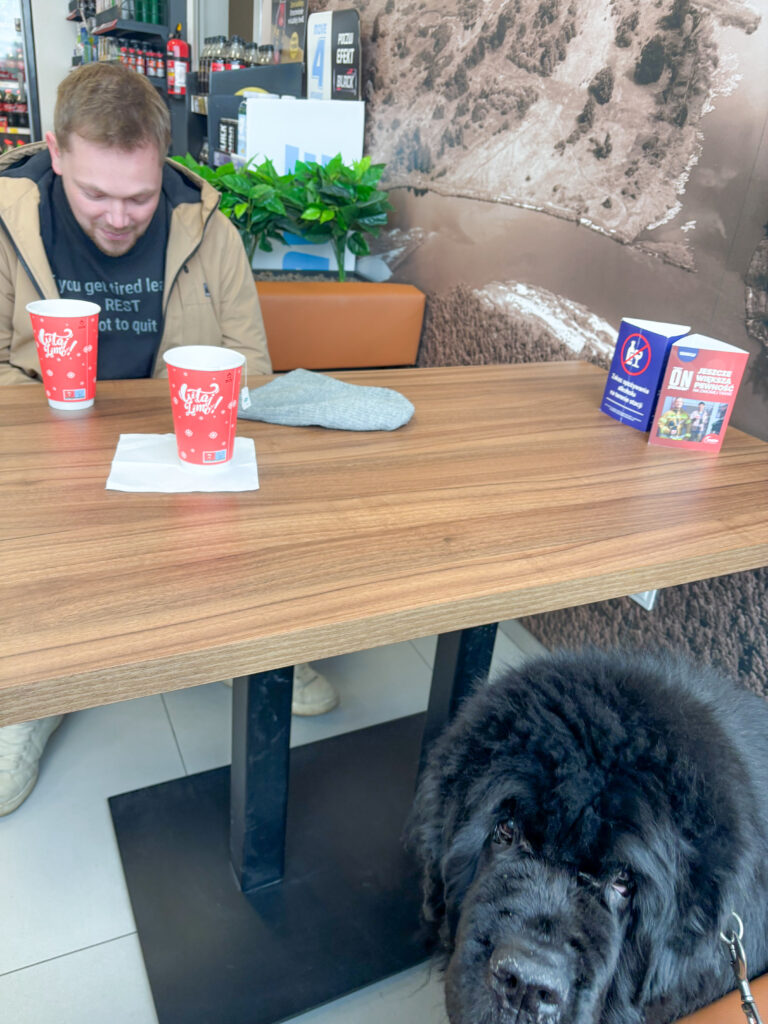
It was −13°C outside, and we very quickly realised that waiting in the car wasn’t going to work. We bought some hot tea, explained the situation to the staff and asked whether our dog could wait inside the petrol station with us.
They said yes.
They even offered her water.
A Sunday in Poland with a huge dog and a broken car
It was Sunday.
And apparently, nothing resembling a repair shop in Poland was open.
A hotel was arranged for us in a small Polish town called Zambrów. If it had just been the two of us, the situation wouldn’t have been too complicated. With a giant dog, everything becomes twice as difficult.
A recovery truck, unsurprisingly, has only two passenger seats in addition to the driver’s seat.
With considerable effort, we managed to squeeze Alice into the footwell in front of us. She was not particularly impressed by this arrangement. Alice loved travelling by car – provided she could stretch out comfortably in the boot of the Mazda.
We ended up staying at a lovely little boutique hotel called Impresja Hotel and Restaurant.
The owner absolutely loved Alice, and by coincidence, we were the hotel’s only guests that day. She eventually left us there on our own, explained how to get in and out of the building and gave us her phone number in case we needed anything.
That unexpected extra night cost us €76.84.
On Monday morning, our Mazda was taken 65 kilometres away to a Mazda dealership in Białystok.
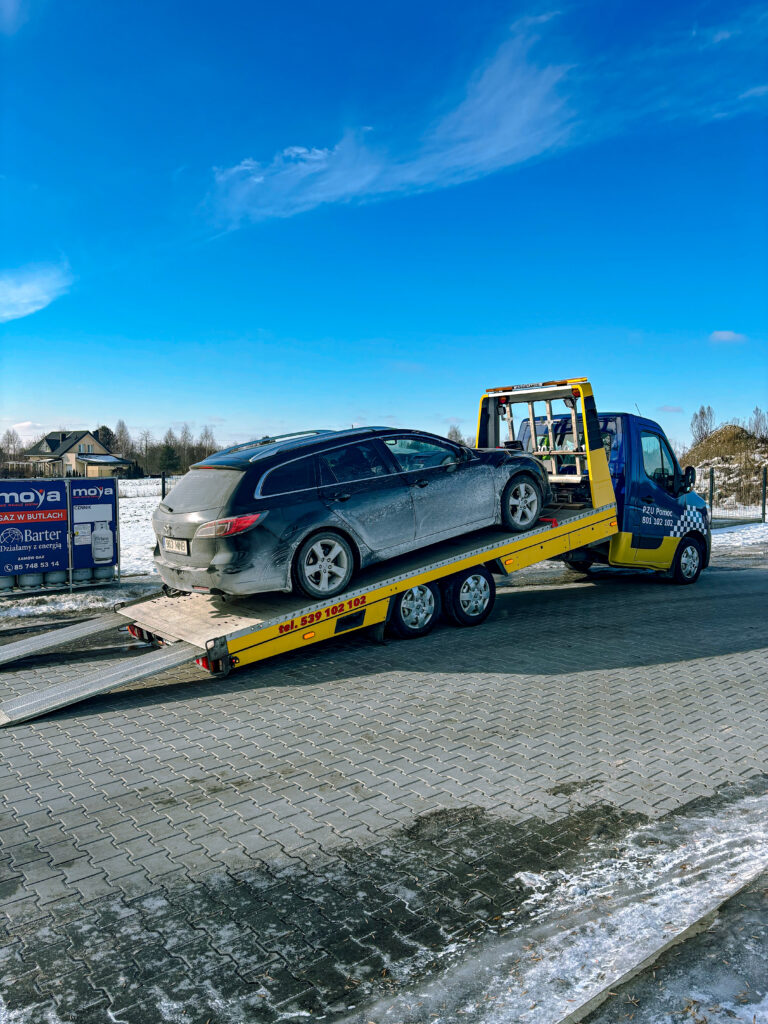
We were slightly surprised that a car this old was being taken to an official Mazda dealership, but we certainly weren’t complaining. All we could do was wait for some information and a quote.
We joked that if they came back with a repair bill of several thousand euros, we’d simply tell them to keep the car and call someone from Estonia to come and collect us.
At breakfast, the hotel owner told us we’d need to check out by noon because all the rooms were booked for that night. At the same time, she and her family were incredibly kind and helpful and told us they had another property where we could stay if necessary. We just needed to let them know once we knew what was happening with the car.
At around 10 a.m., I got a phone call explaining, in very technical automotive English, exactly what was wrong with the Mazda and what needed to be done.
Let’s be honest – I probably wouldn’t have understood half of it in Estonian either.
In any case, the quote was 1,300 PLN, or around €300. They explained that only after fixing the immediate problem would they be able to test the engine and make sure the overheating hadn’t caused any additional damage.
Assuming everything else was fine, there was a chance we’d have the car back within about five hours and could continue our journey.
I gave them the go-ahead.
The final amount charged to our card for the repair was €296.56.
But how do you get 65 kilometres to your car with a giant dog?
Now we had another problem: how exactly were we supposed to get ourselves and a giant dog 65 kilometres to Białystok to collect our car?
I messaged the hotel owner and asked whether she happened to know anyone who might be willing to drive us there for some extra money.
As luck would have it, she was driving to Białystok herself half an hour later and offered to take us with her.
Waiting feels very, very long when there’s absolutely nothing you can do.
We spent hours hanging around the Mazda dealership like a pair of stranded idiots, waiting for someone to tell us what was going on.
They’d originally said the car might be ready at around 3 p.m. Nobody came to talk to us until 4:45 p.m.
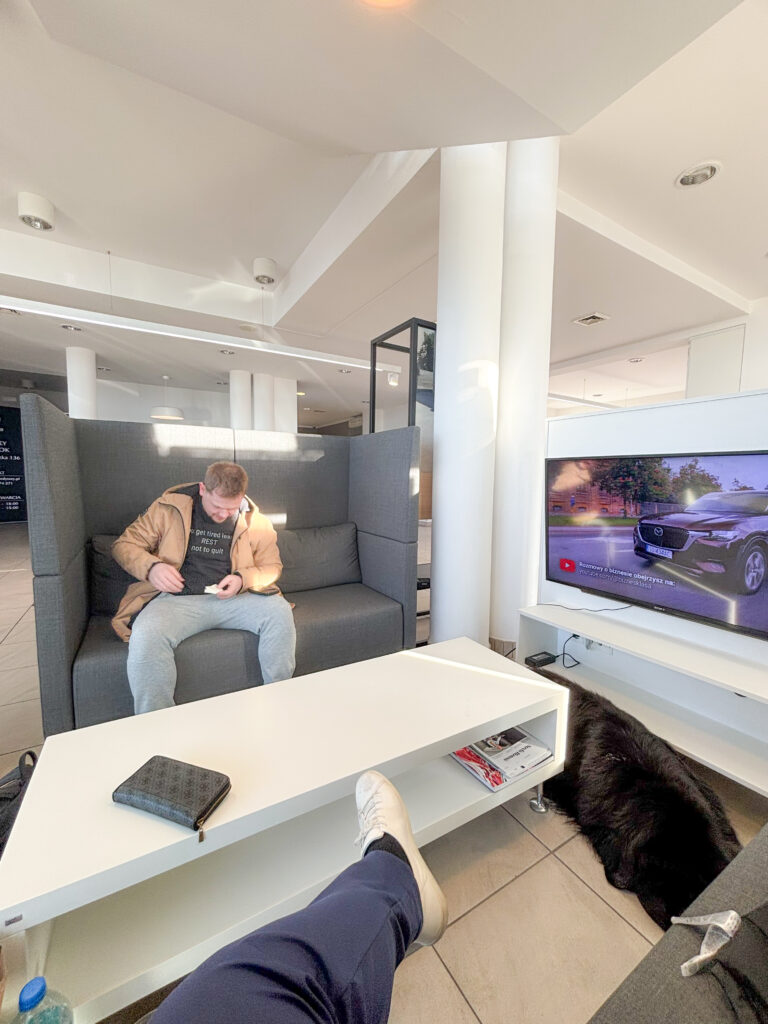
Thankfully, we got lucky.
The Mazda was ready, and the engine hadn’t suffered any additional damage.
The dealership did, however, recommend replacing both front wheel bearings in the near future.
We’d had the car checked just before leaving Estonia and hadn’t really noticed any suspicious bearing noise. The exhaust was ridiculously loud, but we already knew about that.
With the benefit of hindsight, I can tell you that what we’d assumed was the exhaust making all that noise was actually the wheel bearings.
Abandoning the plan accidentally took us to a completely different part of Poland
Because we got the car back so late, we decided to spend one more night in Poland.
The plan was to get as close to the Czech border as possible, so we could continue towards Hungary the following morning. I looked at towns along the route on the map while simultaneously searching Booking for somewhere to stay.
I found a suitable dog-friendly hotel, put the exact address into Waze and off we went.
When we finally arrived, it turned out I’d managed to get something spectacularly wrong.
Instead of ending up near the Czech border, we were somewhere close to the Poland-Slovakia-Ukraine border.
So much for our carefully planned strategy of avoiding winding mountain roads and sticking to motorways.
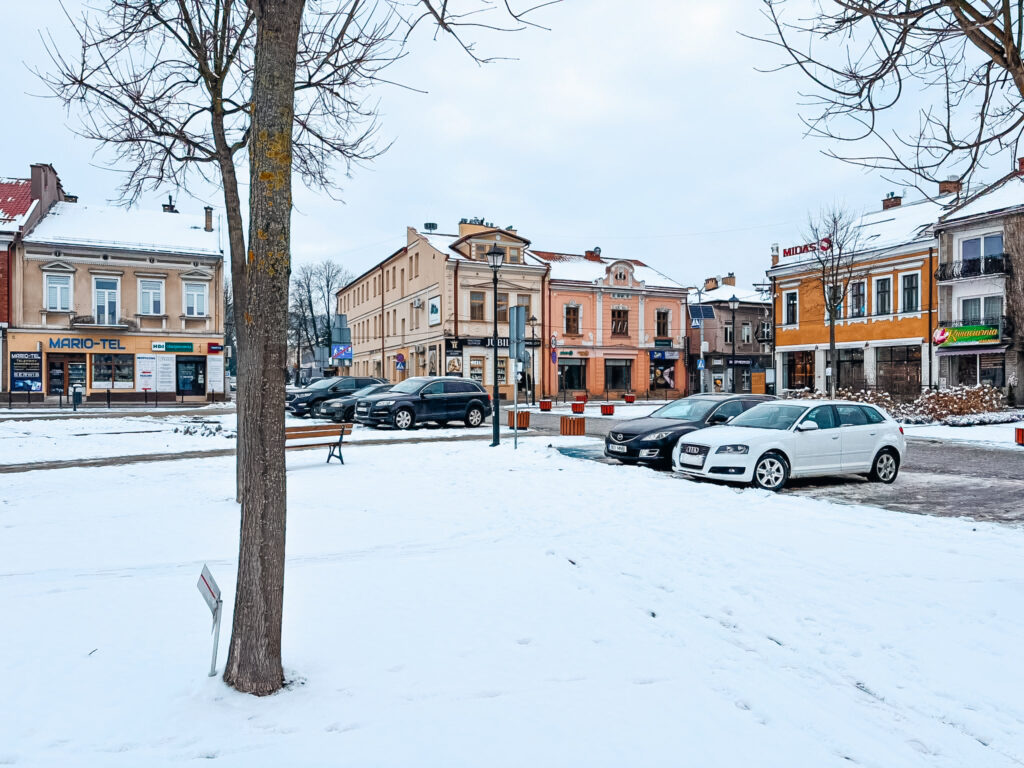
Our hotel, Midas Strzyżów, actually turned out to be really cosy, and breakfast at the restaurant next door was included in the price.
That little navigation mishap showed me a completely different side of Poland, and I’d happily go back to that part of the country in the future.
This was our second extra night caused by the car trouble, and it cost €64.72.
The next morning, we took Alice for a walk around town. There was som
Tolls and vignettes – something worth budgeting for
By this point, we were getting into the part of Europe where motorway tolls and vignettes started becoming a regular expense.
Our trip took place in February and March 2026, so the amounts below are what we actually paid at the time. Toll and vignette prices can change, so always check the current rates before your own trip.
For our journey south, the vignettes we bought and road tolls we paid came to:
Czech vignette: €9.60 – unused
Slovakia, first vignette: €8.10 – unused because of the car breakdown
Slovakia, second vignette: €8.10
Hungary: €18.48
Serbia: €25.17
North Macedonia: €2.29
Greece: €71.85
Total: €143.59
We had bought the Czech vignette based on our original route, but after the car repairs and the resulting change of plans, we never actually drove through the Czech Republic.
The first one-day Slovak vignette also went to waste because the breakdown meant we didn’t reach Slovakia while it was valid.
So altogether, €17.70 went on two vignettes we never got to use.
We didn’t have to pay any separate motorway charges for a normal passenger car in Latvia, Lithuania or on the Polish roads we used.
Poland’s toll system for passenger cars is a little more complicated than simply buying one national vignette. Whether you pay depends on the particular motorway section and who operates it. We didn’t use any toll sections on our route.
In Slovakia and Hungary, we used electronic vignettes. In Serbia, North Macedonia and Greece, we paid tolls based on the roads we actually travelled.
Practical tip: when buying vignettes, use the country’s official sales channels whenever possible. Google searches bring up plenty of third-party websites selling exactly the same vignettes with an additional service fee added on top.
When Plan A is already dead
We continued towards Hungary.
By this point, all our original accommodation bookings and travel plans had gone out the window, so we decided there wasn’t much point trying to rescue the schedule anymore.
We put our accommodation in Greece into Waze as the final destination and decided we’d simply drive for as long as we felt comfortable, then figure out where to stay as we went.
At the same time, we were trying to find a repair shop that could replace the Mazda’s front wheel bearings.
A couple of garages didn’t reply at all. The ones that did either had no availability or quoted completely ridiculous waiting times for the parts.
Slovakia decided our tyres were far too new
So there we were, happily driving through Slovakia towards Hungary when, in the middle of a 90 km/h stretch of road, we encountered an absolutely enormous pothole.
We saw it at exactly the point when there was nothing we could do about it. There was a lorry coming towards us in the opposite lane, so we hit the pothole with an almighty bang.
The glove compartment flew open, Mait’s phone launched itself out of its holder onto the floor, and Mait responded with an impressive amount of swearing.
We pulled over as soon as we could to check the tyre.
And what a lovely surprise – it now had a bulge in the sidewall.
The day before leaving Estonia, we’d bought brand-new non-studded winter tyres to replace our studded ones.
Well, there’s no shame in being rich. We’ll just buy some more…
From then on, we checked the tyre at every stop to make sure it wasn’t getting any worse. Luckily, it remained stable and we made it to our hotel in Hungary, which I’d booked while we were on the road.
One night for two people, including breakfast, cost €79, but they charged another €28 for Alice.
The breakfast selection was rather underwhelming, and dinner in the restaurant was thoroughly average while being surprisingly expensive.
Let’s just say we wouldn’t go back.
From Hungary through Serbia to North Macedonia
The next morning, we headed towards North Macedonia.
The wheel bearing still hadn’t been replaced. Neither had the tyre.
At times, the noise inside the car made it feel as though we were sitting in an aeroplane rather than a Mazda.
But since we still hadn’t found a garage that could fit us in within a reasonable timeframe, we just kept driving and hoped for the best.
I’d crossed various borders with Alice before while travelling with a company that organised trips to international dog shows, but I’d never independently crossed an EU external border with a dog.
I had no idea how long the Hungary-Serbia border crossing might take, especially since Serbia is neither an EU nor a Schengen country.
In reality, including the wait, it took about five minutes.
Nobody was interested in the dog.
For the first time in ages, we even got stamps in our passports.
Serbia was a pleasant surprise. There was just something about the place we immediately liked. The roads were in excellent condition, and overall it left us thinking we’d like to come back properly one day.
We stopped a couple of times in Serbia to stretch our legs, but otherwise we simply drove through the country.
The Serbia-North Macedonia border took a little longer. They asked where we were going and how long we’d be staying, and they also wanted to have a look inside the car.
The border officer glanced at Alice, told us she was a beautiful dog, and showed absolutely no interest in her passport.
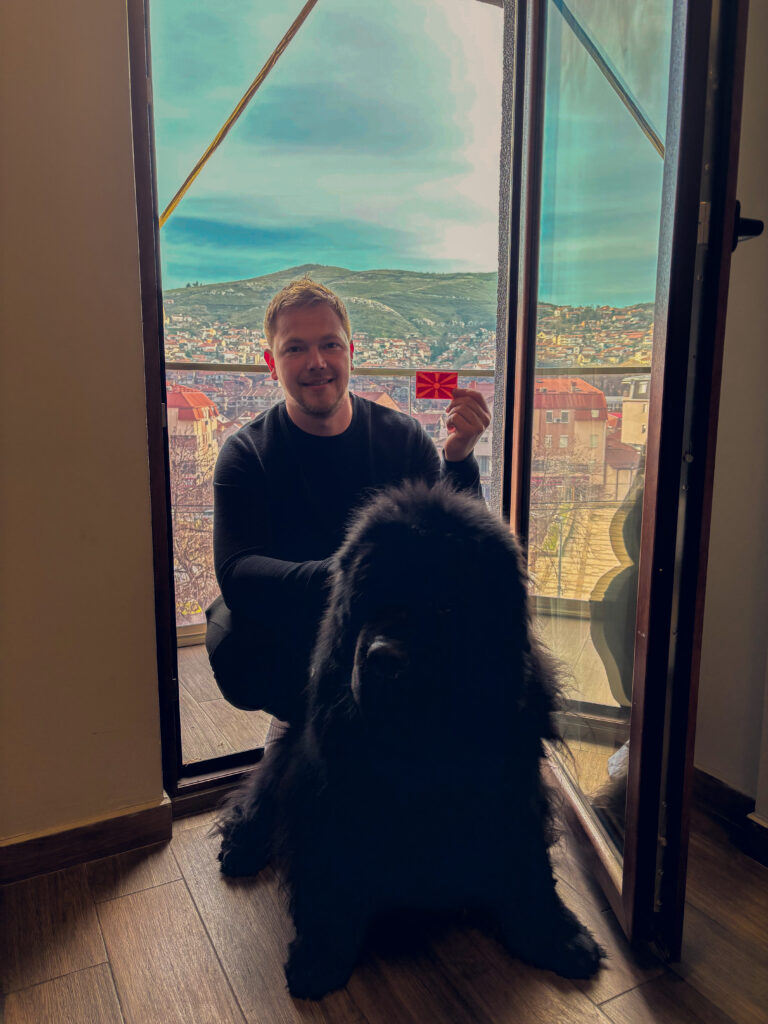
We spent the night in Veles, roughly in the middle of North Macedonia. Our hotel, International Palace, was right in the centre of town.
Compared with Hungary, prices were much lower, and there was no additional charge for Alice. They even told us we were welcome to bring her into the restaurant if we wanted to.
We didn’t feel the need.
We left her asleep in the hotel room and celebrated the fact that, in her old age, we finally had a dog who could be left alone in a hotel room.
We’d stayed in quite a few hotels with Alice over the years, and in the past, whenever we’d left her alone, she’d somehow managed to let herself out of the room.
At 12 years old, she had finally learned to simply go to sleep instead of getting up to mischief.
“But nobody ever asked to see our dog’s documents”
By this point, we’d crossed several international borders and nobody had asked to see Alice’s documents even once.
They weren’t checked when we later entered Greece either.
That does not mean you should travel without the required documents.
Alice had her pet passport, a valid rabies vaccination and the rabies antibody titre test required for our route. The fact that no border officer chose to check them was simply our experience on this particular journey.
The next border crossing could be completely different, and saying “but nobody asked for it at the last border” isn’t going to be much help if your dog doesn’t actually have a document that is legally required.
So before taking a dog on a trip like this, I would always check the current official entry and re-entry requirements for every country on the route, particularly if the journey takes you outside the European Union at any point.
The final 950 kilometres
From our hotel in Veles, we had around 100 kilometres left to the Greek border.
But Greece itself is rather large.
We still had around 950 kilometres to go before reaching our accommodation in Chrani, which meant roughly nine hours and 15 minutes of driving without stops.
We contacted our hosts and asked whether it would be okay if we arrived late in the evening.
Luckily, it was.
If it hadn’t been, we would have made one more overnight stop somewhere in Greece.
Our first impression of Greece was very positive.
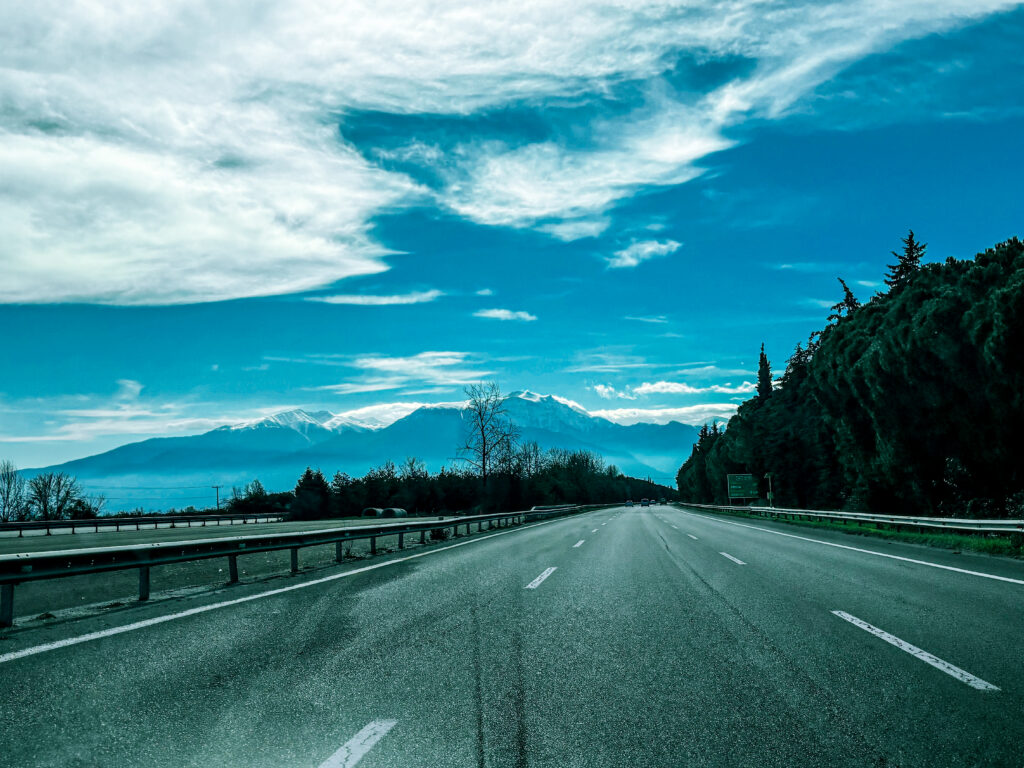
Crossing the border back into the European Union was straightforward. At one point, we were asked what we had in the car, but once again, neither Alice nor her documents seemed to interest anyone.
Greek roads were generally good, although the first 100 kilometres or so after entering from North Macedonia were… interesting.
There were 120 km/h speed limits on roads with one lane in each direction and 90 km/h limits on roads with three lanes in each direction. On some of those one-lane stretches, drivers somehow managed to turn two lanes into four.
After that, the drive became considerably more straightforward.
Mait and I had made a deal: he would drive earlier in the day while it was light, and I’d take over once it started getting dark. Mait isn’t exactly at his best behind the wheel in the dark and has a tendency to do all sorts of strange things once visibility gets worse. And since the passenger-side brake pedal doesn’t work, I feel much safer driving myself at night.
From Poland onwards, motorway speed limits were often 130 km/h, but given the mechanical condition of our car by that point, we rarely went above 115 km/h.
Finally there – Chrani
Chrani is a small village on the Peloponnese, in the Kalamata region.
We were staying at Elena Bungalows, which was run by Estonians. They welcomed us warmly and immediately wanted to know where our promised big black furry friend was.
We got the keys to our bungalow, checked the essentials and started unpacking.
We had finally made it.
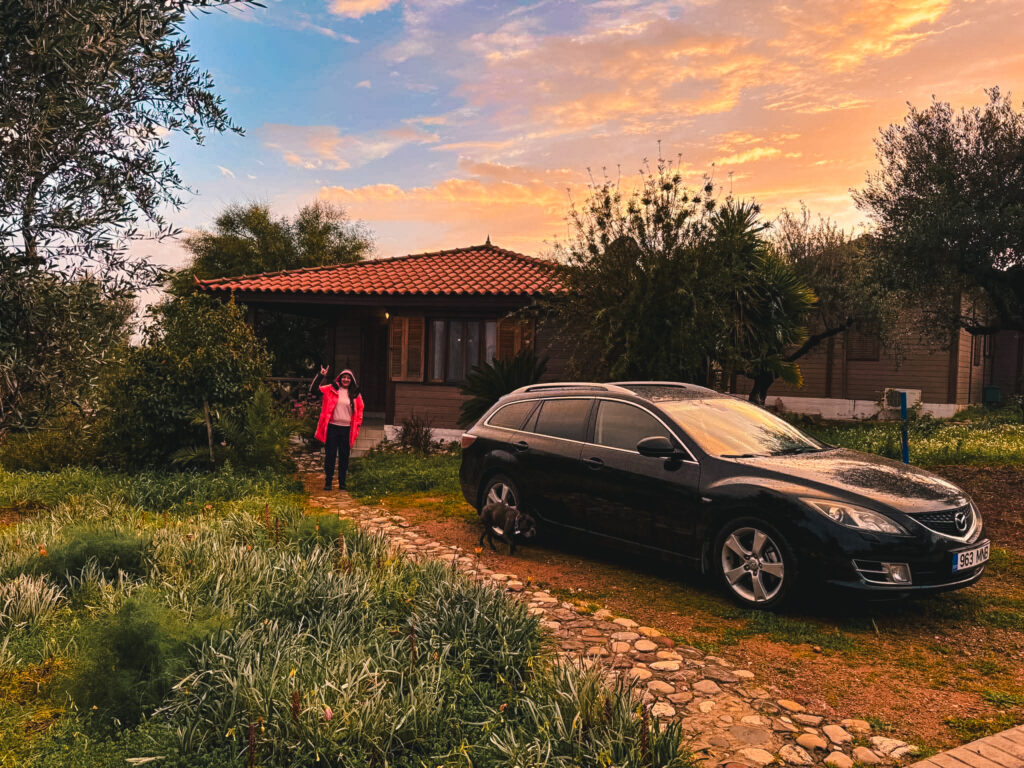
It was the evening of 19 February, at around 10:45 p.m. According to our original plan, we should have arrived in Chrani on the evening of 17 February. The car breakdown had added two full days to our journey.
We took Friday and Saturday easy, settling in and putting out a few fires in our work emails.
On Friday, we drove to Lidl in the nearest larger town, Messini, and stocked up on everything we needed.
We spent the rest of Friday and Saturday doing very little in our little bungalow and slowly settling into the Greek rhythm.
We ended up spending the next four weeks exploring the Peloponnese, using Chrani as our base. You can read about our four weeks in the Peloponnese, the places we visited and how much it all cost here.
If you’re flying into Athens rather than driving across Europe, I’ve also put together a 7-day Peloponnese itinerary from Athens.
Driving from Estonia to Greece – what did it actually cost?
After the trip, I went through our bank statements to work out exactly how much driving from Estonia to Greece had cost us.
Travel dates: 14–19 February 2026
Days on the road: 6
Overnight stops: 5
Fuel: €425.90
Tolls and vignettes: €143.59
Accommodation: €365.37
Food, coffee, drinks and other purchases along the way: €244.76
Unexpected car repair in Poland: €296.56
Airalo eSIM: €10.00
Total: €1,486.18
Of course, not all of those costs would have happened if everything had gone according to plan.
The car breakdown resulted in two additional hotel nights: €76.84 at Impresja Hotel and Restaurant and €64.72 at Midas Strzyżów.
We also lost €9.60 on the unused Czech vignette and €8.10 on the first Slovak vignette.
Together with the €296.56 car repair, our little Polish detour added €455.82 in direct extra costs.
Without those expenses, the same journey would realistically have cost us around: €1,030 for two people.
And instead of spending six days making our way across Europe, we probably would have arrived in Chrani on the evening of 17 February, just as originally planned.
Despite everything that went wrong, driving from Estonia to Greece was still an experience we were glad we had. It definitely wasn’t the road trip we had planned, but six days later, we finally made it to the Peloponnese — with quite a story to tell.
On the other hand, we wouldn’t have a story about spending a Sunday stranded in Poland in −13°C weather with a broken car, squeezing Alice into the footwell of a recovery truck, buying two Slovak vignettes and accidentally ending up almost at the Ukrainian border.
So at least that €455 bought us plenty of blog material.
So at least that €455 bought us plenty of blog material.
After four weeks in Greece, it was eventually time to head home – although we didn’t exactly take the most direct route. Our journey continued with a Europe road trip from Greece to Estonia via Albania and Italy, including a few days in Himarë, the Durrës to Bari ferry and an unplanned late-night visit to Venice.
If you’re planning your own trip to Greece or want to follow the rest of our journey, you can find all of our Greece travel stories here.