How we got robbed in our sleep, rammed on the highway and escaped the riots in the Dominican Republic
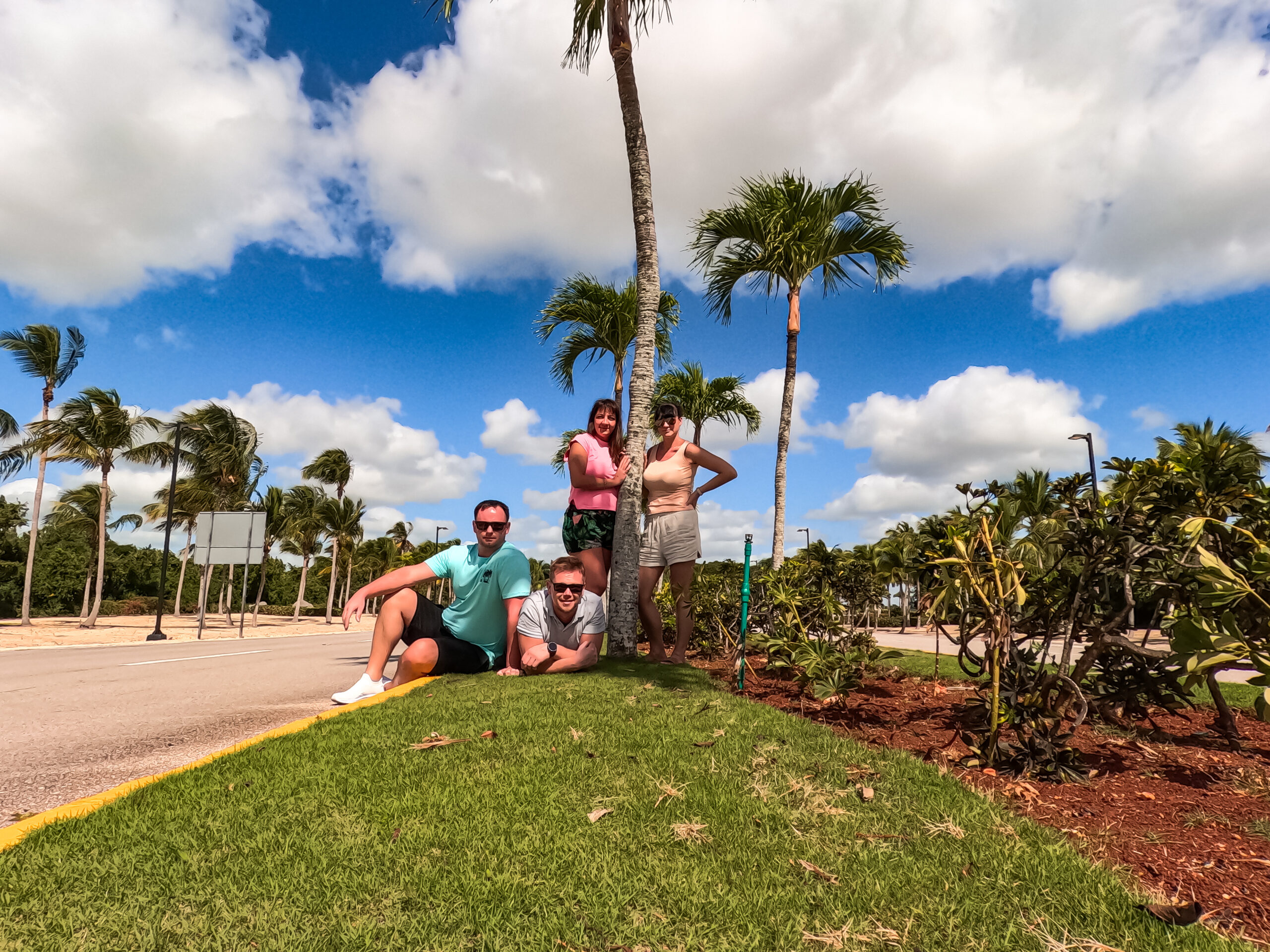
If anyone’s curious about how we got robbed in our sleep, had someone crash into us on the highway at 80 km/h, and somehow managed to escape the middle of a riot, here’s the story of our Dominican Republic road trip.
It was our first long-haul trip without a travel company. We wanted to see what real life was like.
We did.
A lot more of it than we wanted to.
We spent two weeks in the Dominican Republic, travelling by rental car from Punta Cana through Las Terrenas and the Samaná region all the way to Bahía de las Águilas and back. That trip taught us more about independent travel, accommodation security and driving in the Dominican Republic than any holiday we had taken before.
First stop: New York
Our flight route was Tallinn–Helsinki–New York–Punta Cana, and the same route back.
On the way there, we had a whopping 11.5-hour layover in New York, so we used the airport Wi-Fi to order a Lyft — basically the American equivalent of Bolt — and headed straight to the Empire State Building.
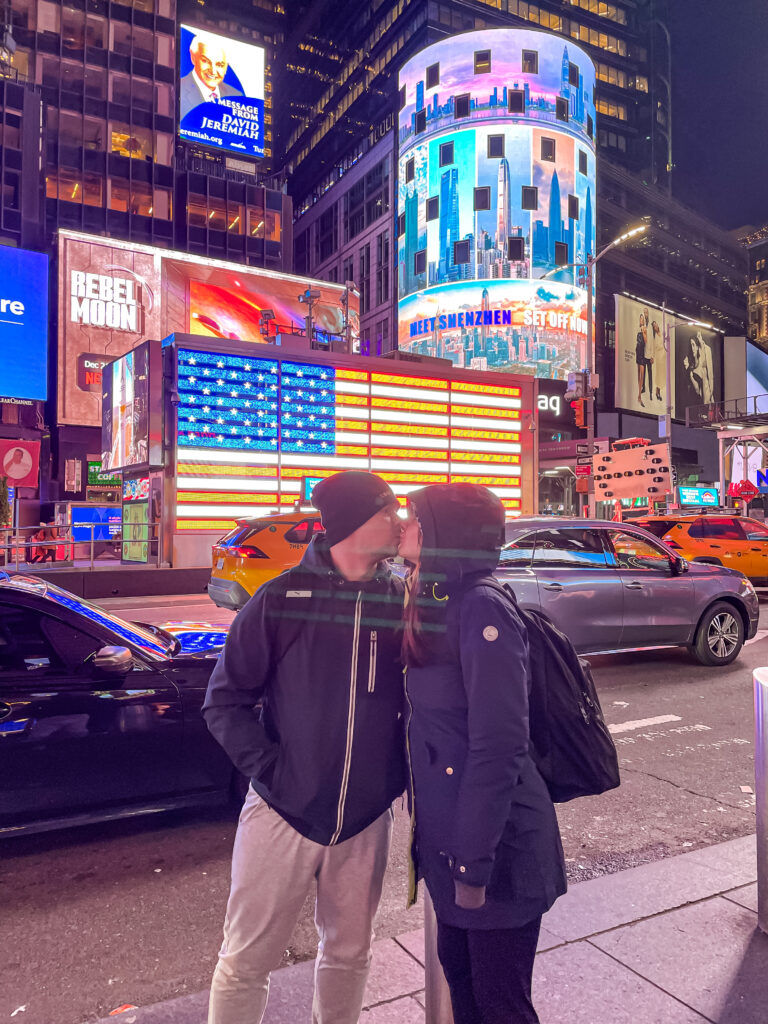
From there, we walked to Times Square, took in as much of it as we possibly could, grabbed something to eat at an incredibly crowded McDonald’s, and then took a Lyft back to JFK.
Our flight to Punta Cana left at 6:30 in the morning, so we got to spend the night in a mostly deserted JFK Terminal 5, with pretty much everything closed.
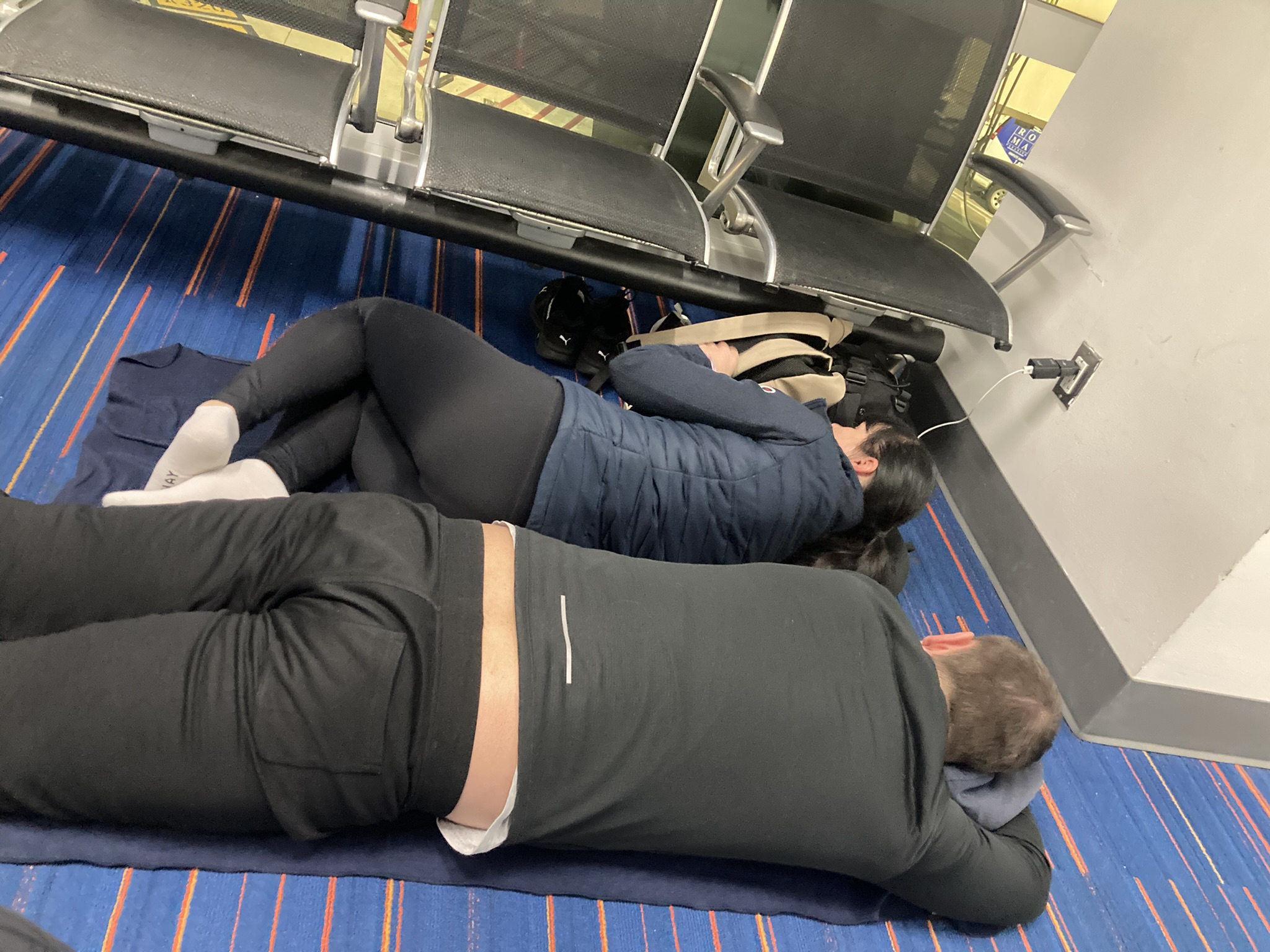
A useful note for smokers: there was no smoking area inside the terminal. I went outside for a cigarette once and had to go through security again to get back into the airport. Luckily, there were no crowds and the whole process was quick and easy.
Punta Cana – paradise at first
We landed in Punta Cana at around 11:15, went through passport control and exchanged a small amount of dollars for local currency before leaving the airport.
We had booked a transfer from the airport to our accommodation. The accommodation itself was booked through Airbnb, while the transfer was through GetYourGuide. We eventually managed to find our driver after a local airport employee called him for us.
We made our way from one place to another, with the bottle of Jägermeister we had brought from home keeping us company, and eventually arrived at our accommodation.
The place exceeded all our expectations. It was quiet and private, the rooms were clean and comfortable, and there was a lovely pool as a bonus. The nearest grocery store was about 200 metres away — both the selection and the overall feel reminded me of Estonia in the early 1990s. Prices generally weren’t displayed in the shops, but they stayed the same from day to day and the person behind the counter seemed to know them all by heart.
If there was one thing that bothered us, it was the security guard sitting in a watchtower right behind our terrace. It’s a little annoying having someone there who can see when you wake up, when you eat and when you’re lying by the pool. A little spoiler for what’s to come: by the end of the trip, we were extremely grateful those security guards were there.
We spent our first afternoon and the following day exploring the area on foot and relaxing by the pool. After that, we booked a day trip to Saona Island through GetYourGuide. We made the booking locally just a couple of days before the trip, and based on our experience, that worked perfectly well. We really enjoyed the tour – the day was well organised, gave us a chance to see a completely different side of the Dominican coast, and we’d happily recommend it to others.
Punta Cana itself didn’t make much of an impression on us. Everything felt very touristy, prices were on the expensive side, and we didn’t get much of a sense of what everyday local life was actually like. But that was exactly what we wanted to see — the real Dominican Republic.
Looking back, you could say we got what we wished for.
Maybe a little too well.
Our Dominican Republic road trip begins
We knew we needed to make our way to our next accommodation in Las Terrenas on the Samaná Peninsula, so we rented a car.
We ended up with a Ford Explorer for seven days, which cost us $560 plus a $250 cash deposit. We thought that was a pretty sweet deal.
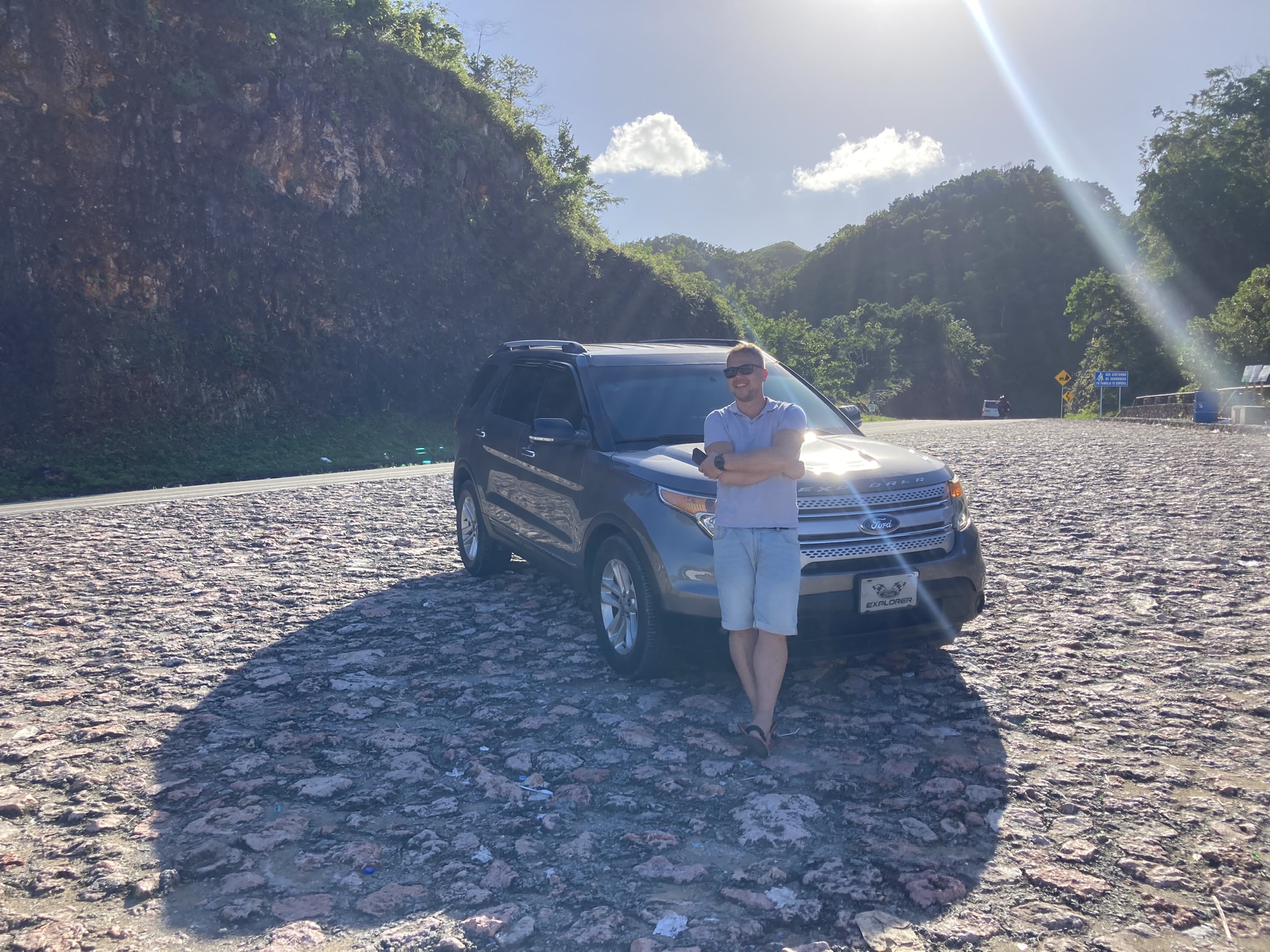
The traffic was chaotic, and no one was exactly volunteering to get behind the wheel. The guy at the rental company told us he didn’t care who drove as long as they had the right driving licence with them — which meant three out of four of us, since Külvi had conveniently left hers at home. 😅
We bought a local SIM card with mobile data, and our drive from Punta Cana to Las Terrenas could begin.
Along the way, we stopped for lunch in a small local village and ate alongside the locals — rice and chicken, much to my “delight”. We also bought three incredibly good pineapples from a local for 100 pesos and continued on our way.
Tolls varied from around 60 to 400 pesos depending on the stretch of road, and they had to be paid in cash using local currency.
Las Terrenas and our “villa”
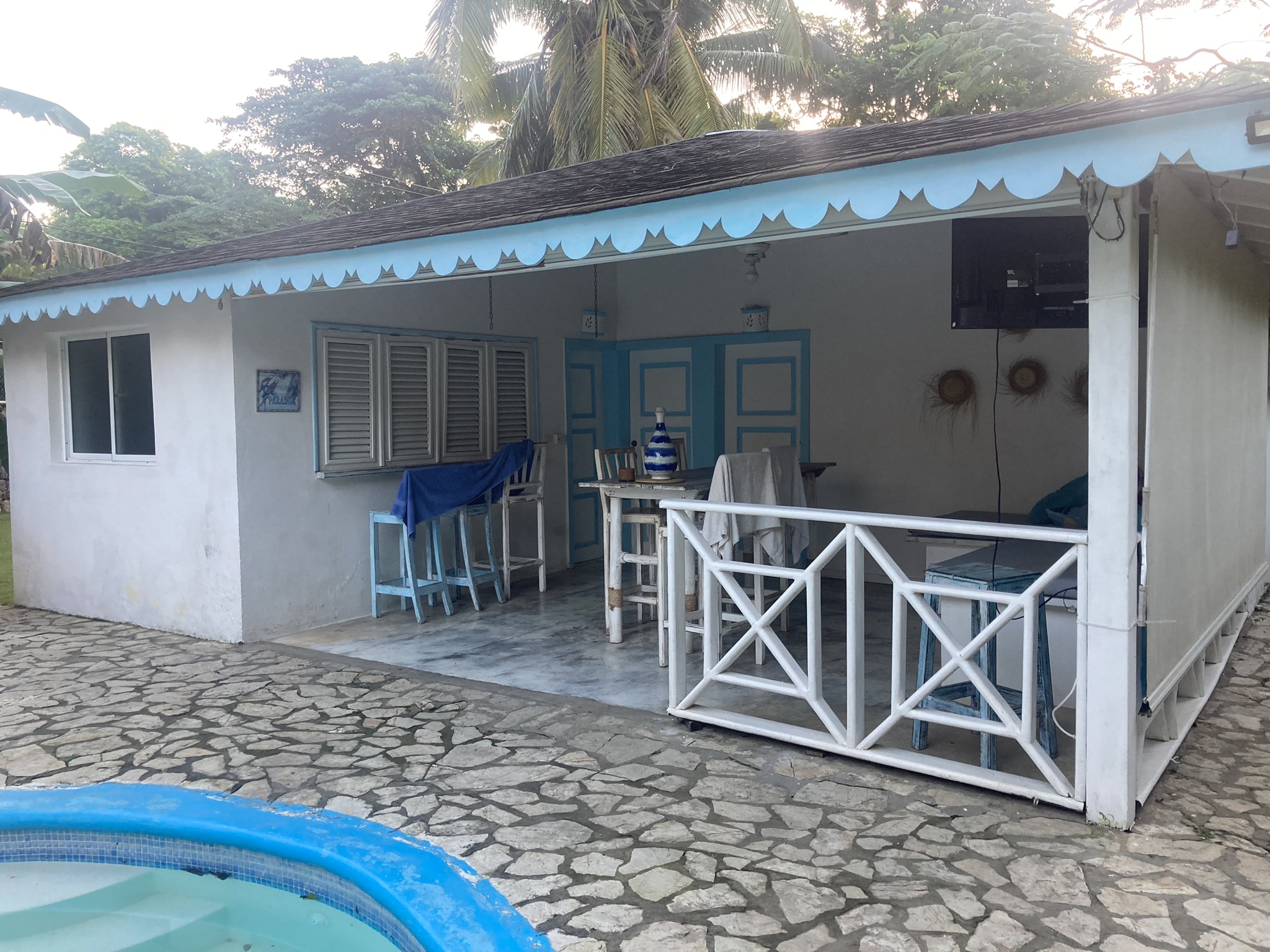
Once again, we had booked our accommodation through Airbnb. Expectations were high because this time, instead of an apartment, we had booked a villa with a private pool.
When we arrived, we quickly discovered that yes, there was a house and yes, there was a pool — but calling it a villa was a bit of a stretch.
Once we got over the initial surprise, we managed to find plenty of positives about the place, and overall, there really wasn’t anything particularly wrong with it. Our expectations had simply been higher. The beach was a five-minute walk away, there was a decent supermarket across the road, and the local food delivery app worked brilliantly.
We also shared the house with two tiny dogs. As dog owners, we were obviously delighted to have them around, and they brought us plenty of joy. One of them became especially attached to us — following us everywhere during the day and then trotting home with us at night to sleep. Someone was clearly feeding them, because they had absolutely no interest in our pasta or bread. We were welcome to keep that for ourselves. In the mornings, they would be curled up asleep on the “sofa” and were ridiculously happy when we woke up and came out of our rooms.
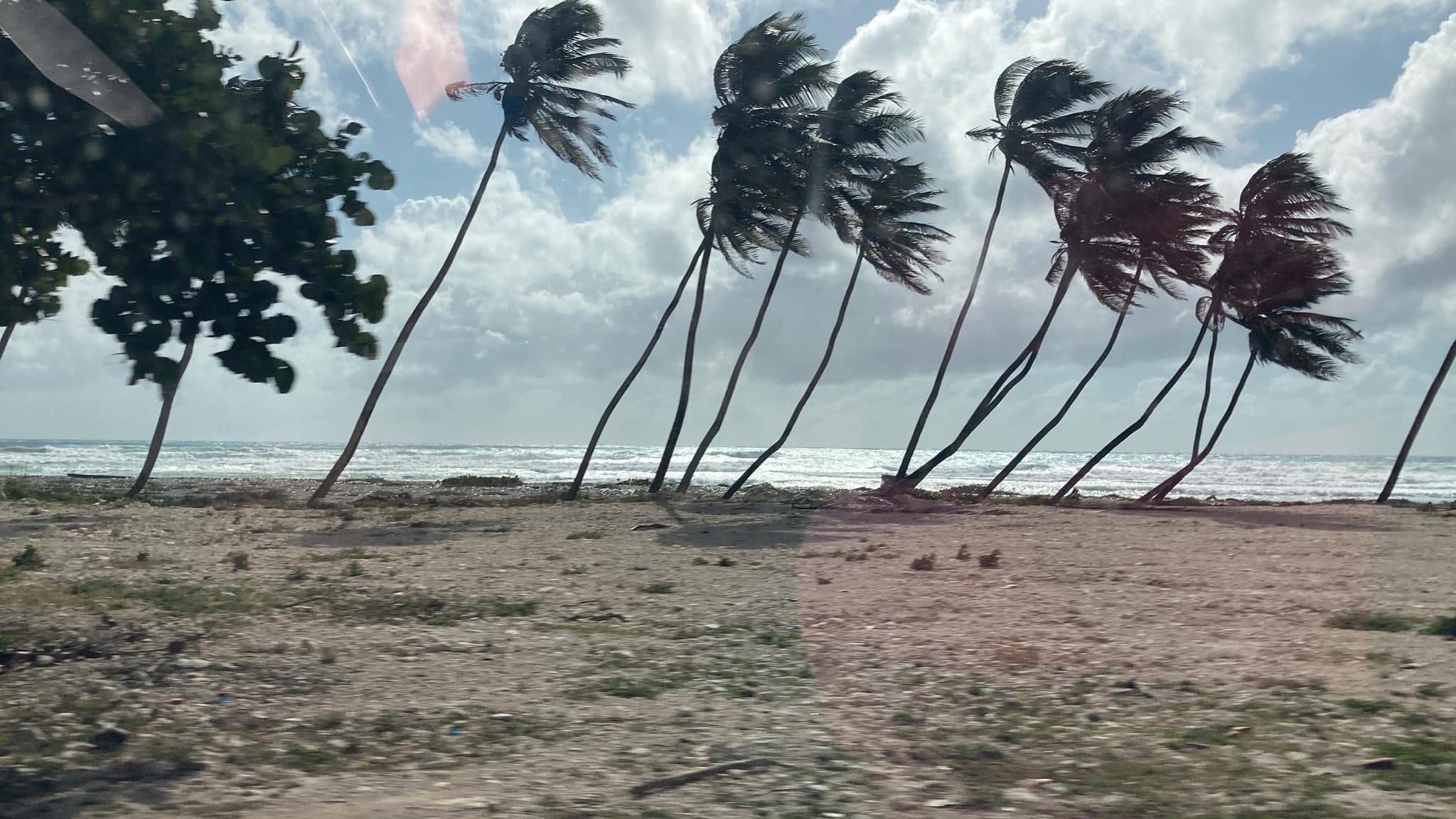
We spent our first full day in Las Terrenas at Playa Bonita. We got caught in a bit of rain, but nobody let that spoil the mood. The Atlantic was beautifully warm with just the right amount of waves — perfect for cooling off and keeping both sunseekers like us and the surfers entertained.
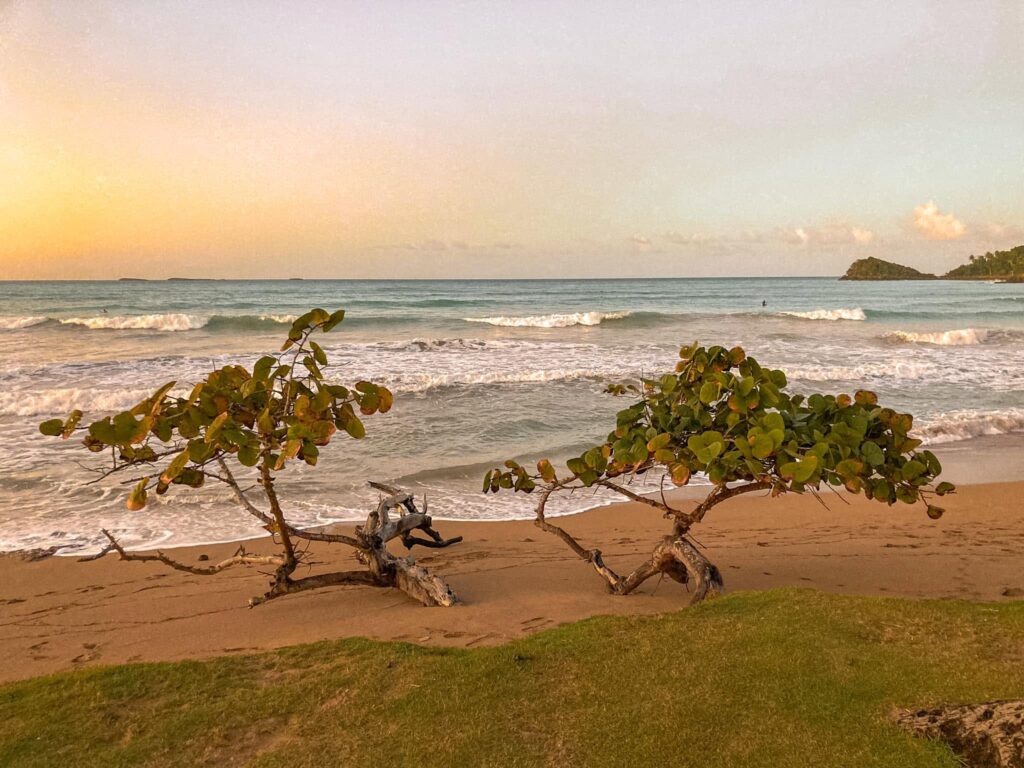
On our second day, we went to the beach again. That evening, we decided to go looking for some local fruit and found a great supermarket a few kilometres away. It looked just like a supermarket back home in Estonia — prices clearly displayed and plenty to choose from. We stocked up on food and drinks, bought loads of local fruit, and headed back to the house to make dinner.
We ate, watched a movie and were absolutely loving life.
At around 10:30 p.m., each couple went to their own room to sleep.
And that’s when our holiday in paradise took a very different turn.
“There was a strange man standing in the room, watching me while I slept!”
I wasn’t sleepy yet, so I stayed up watching Netflix on my phone.
At some point, I heard what sounded like the door between the rooms swinging back and forth, but I didn’t think much of it at first. I could still hear Külvi and Maarjo talking in their room, so I figured Külvi would deal with it. Eventually, I decided to check what was going on and discovered that it was actually the front door that hadn’t been closed properly. I got out of bed, shut the door and went back to watching my movie. When I finally got sleepy, I put my phone on the bedside table and passed out.
At around one in the morning, Mait and I woke up to Külvi screaming. We jumped out of bed and tried to figure out what had happened. Mait even asked her if she’d had a nightmare.
Külvi just kept repeating:
“That wasn’t Matu. That wasn’t Matu.”
Eventually, she managed to get out a sentence that went something like:
“There was a strange man standing in the room, watching me while I slept!”
What?
What the hell?
Right now?
Like… actually inside the room?
Okaaay.
The guys went outside to have a look around. The first thing I asked was:
“Where are the passports?”
Külvi knew that theirs were in her bedroom, inside a small red bag at the bottom of a suitcase in the bottom of the wardrobe. As far as I knew, our passports were supposed to be in my backpack, but Mait said he had moved them somewhere else. And sure enough, they were there.
But Külvi’s little red bag was no longer in her suitcase.
And my backpack was gone too.
Right. Someone had clearly been in and out of our bedrooms more than once and was probably coming back for the electronics.
Külvi and Maarjo’s passports were gone. All of our cash. My backpack. Bank cards…
Fuck.
We called 911.
All in Spanish, of course.
Eventually, they found someone who spoke English. I was explaining what had happened when suddenly the guys came back.
With the passports.
The thief had taken the cash but left behind the bank cards, bags, documents and — most importantly — THE PASSPORTS!
The 911 operator asked if we were all okay. Since none of us had been hurt, they gave us the number for the local police. Eventually, they found someone there who supposedly spoke English.
Well.
Let’s just say that in Estonia, your average six-year-old speaks English at about the same level.
They asked for our phone number and told us someone would get back to us.
Wtf?!
Someone had literally just been inside our house while we were sleeping and you’re going to… get back to us?
Apparently so.
We’re waiting.
Still waiting to this day.
One night wasted — time to leave
We messaged the owner of the house and spoke to the tourists staying next door. No one had broken into their place, but they had already been living there for a month and a half. According to them, the mistake that may have made us a target was turning off all the lights when we went to bed.
Everyone was shocked by what had happened.
None of us could sleep anymore.
We had an excursion booked for the morning and needed to leave the house by 7:30 at the latest. We tossed and turned, jumping at every little noise. Thankfully, the thief didn’t come back. But one thing was clear: there was no way we were staying there. We’d take the loss on that one night and find somewhere else to stay.
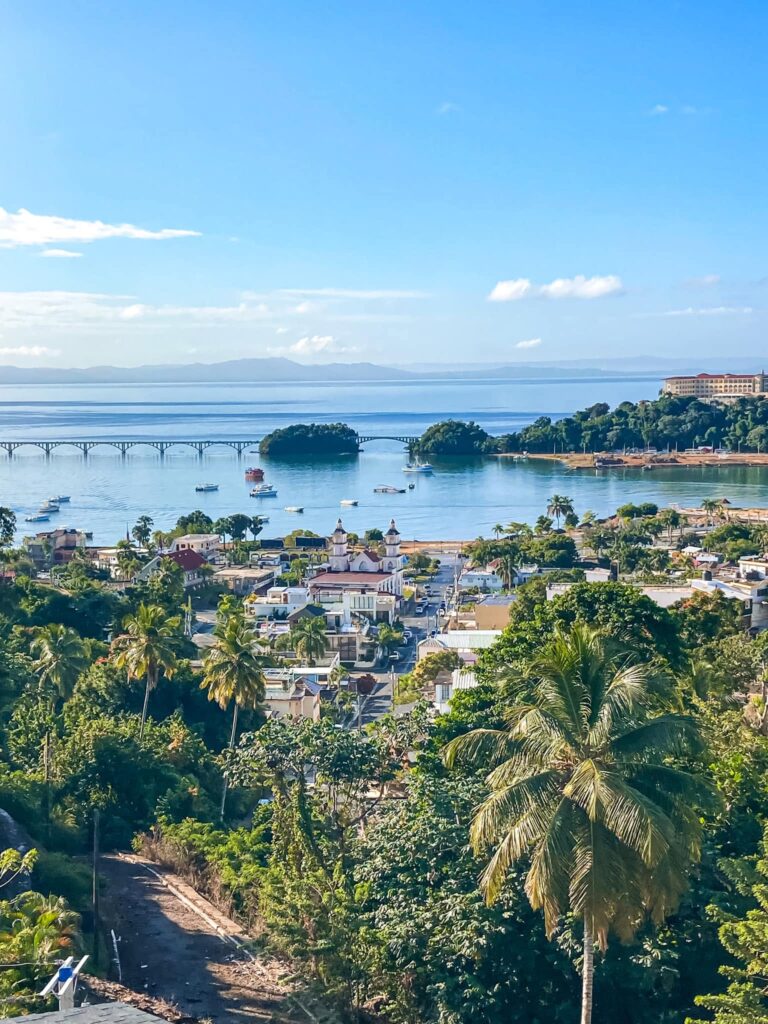
We packed our things, told the owner about our decision and headed towards the town of Samaná, where our excursion to Los Haitises National Park and Cayo Levantado was due to begin.
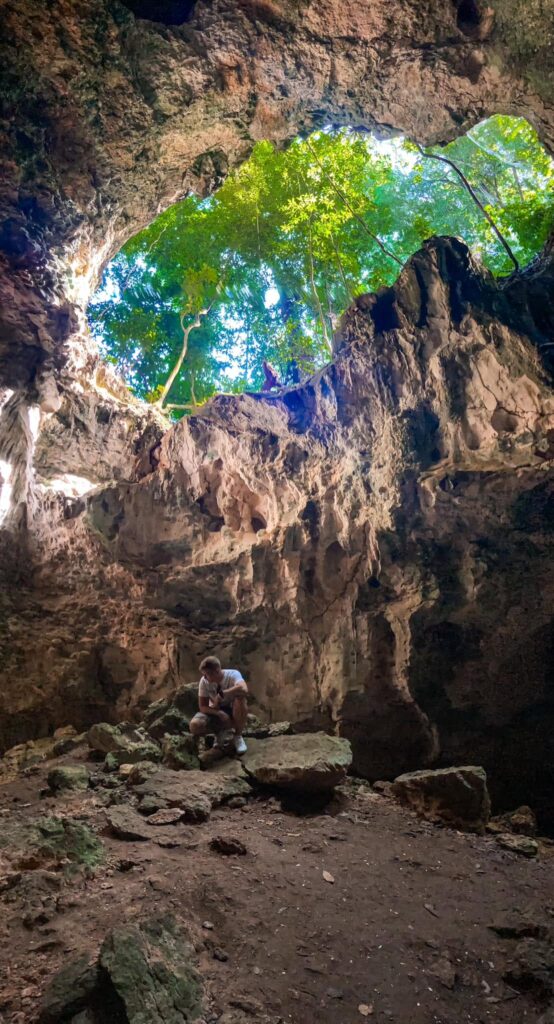
The trip itself was interesting. The views were incredible, and the guides were knowledgeable and friendly. We were just completely drained, and the exhaustion kept catching up with us.
The day ended at around 4:30 p.m., and we set off to find the new accommodation we had booked that same morning.
Our main requirement?
An armed security guard.
When we arrived, there he was, armed and on duty. We could park the car safely, and the place itself was amazing. The terrace overlooked the Caribbean Sea, everything was spotless, and there was even a washing machine and dryer, which we put to use straight away.
80 km/h — and then, bang
The next morning, we set off for a completely different part of the Dominican Republic. Google Maps was showing a drive of almost nine hours. We made a quick stop at the Sirena supermarket we had already become familiar with in Las Terrenas, then headed southwest.
The traffic was chaotic, but manageable. It got much heavier around Santo Domingo, although once we reached the outskirts, it honestly didn’t seem that bad to us. At least people seemed to follow some of the driving rules we were familiar with, and there weren’t quite as many guys on scooters constantly squeezing into every available gap.
On our way out of the city, we paid another toll. We had about 300 kilometres left to go, and Maps was showing five and a half hours of driving. We wondered just how bad the roads had to be for such a relatively short distance to take that long.
We made it another few dozen kilometres.
We were doing around 80 km/h on the highway.
And then — bang.
A big pickup truck had slammed into us from the right.
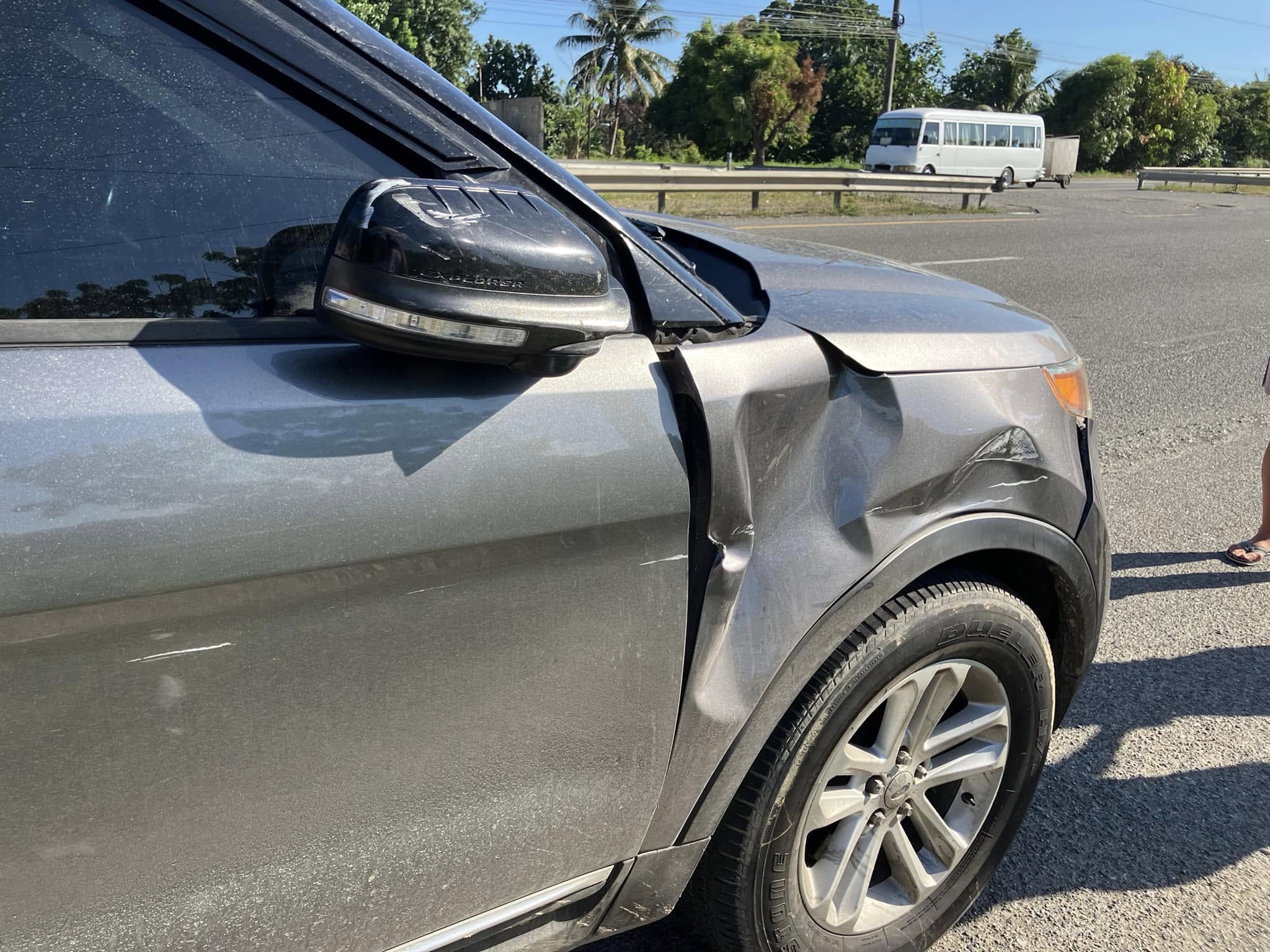
Mait managed to force the other driver to pull over, and the Spanish-language conversation involving a lot of hand gestures could begin. I immediately called the owner of the rental car, explained what had happened and let him speak directly to the driver who had hit us.
Meanwhile, various locals kept appearing, walking around us, inspecting the damage, coming and going, and discussing something among themselves. About half an hour later, things were more or less sorted out, but we still couldn’t decide what to do next. Should we write off our next accommodation, drive all the way back to Punta Cana and find somewhere else to stay, or keep going towards Bahía de las Águilas after all?
We were still discussing our options when an older man on a scooter appeared and started very insistently trying to tell us something. He kept making circles with his fingers, waving his arms and gesturing.
Eventually, we understood.
He seemed to think that the four of us, being white, had been hanging around at the end of a village road for far too long, and he was warning us not to stay there any longer. Our interpretation of what he was trying to tell us was pretty clear: get out of there before someone turns up with a gun and robs us.
Right.
Straight into the car, doors locked, and off we went.
Thank you to that man.
God knows what might have happened otherwise.
Heading towards the Haitian border in the pitch dark
If there was one thing we had learned by then, it was that our sense of security improved considerably every time we spotted an armed guard at a petrol station.
After driving for another twenty or thirty minutes, we found a place that seemed suitable, parked the car and took the opportunity to use the bathroom. We didn’t stay long. Something about the place made us uncomfortable, so we made a quick decision to keep going.
The sun set at around 6:30 p.m., and half an hour later it was pitch black.
We had reached the last town before the mountains. There weren’t many kilometres left, but Google Maps was still showing four hours to our destination. Anyone who has ever been to a Caribbean country knows that this is when life really gets going.
Scooters.
People.
Dogs.
Cows.
All moving in every possible direction, either with no lights at all or with their high beams blazing.
The decent roads were gone. Ahead of us were winding mountain roads through small villages, with potholes, sudden humps and roadworks appearing out of nowhere.
None of this exactly boosted our confidence.
Eventually, we had just 30 kilometres and about an hour of driving left.
Let’s just say that if I hadn’t had the location pin sent by our accommodation right there in front of me, I would have sworn we were driving into a trap. Mait was already convinced we were.
The road was a mixture of dirt and gravel, with barrels blocking parts of it — basically your average roadworks in Estonia, except this looked like the kind of road you definitely weren’t supposed to drive through. The signs along the way were still pointing towards Bahía de las Águilas, though, so the four of us kept going through the pitch-black night, weaving our way around cows wandering in the road.
One kilometre to go.
Mait said that if we didn’t see some lights soon, he was turning the car around.
And then we saw them.
Lights.
A car park full of cars.
A security guard.
Police.
Thank God.
Finally, paradise
It was a campsite — a cosy, welcoming place with large tents, proper washing facilities and beds, right on the Caribbean coast.
A security guard with a shotgun showed us to our tents.
We settled in, opened a bottle of local rum and talked about everything that had happened.
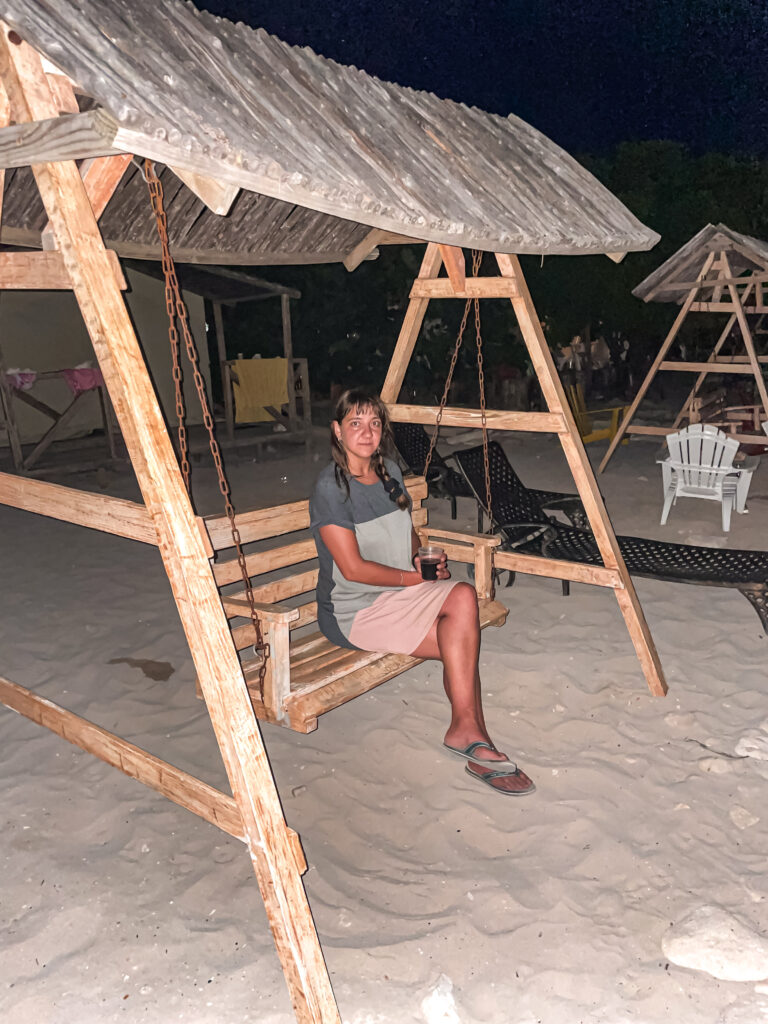
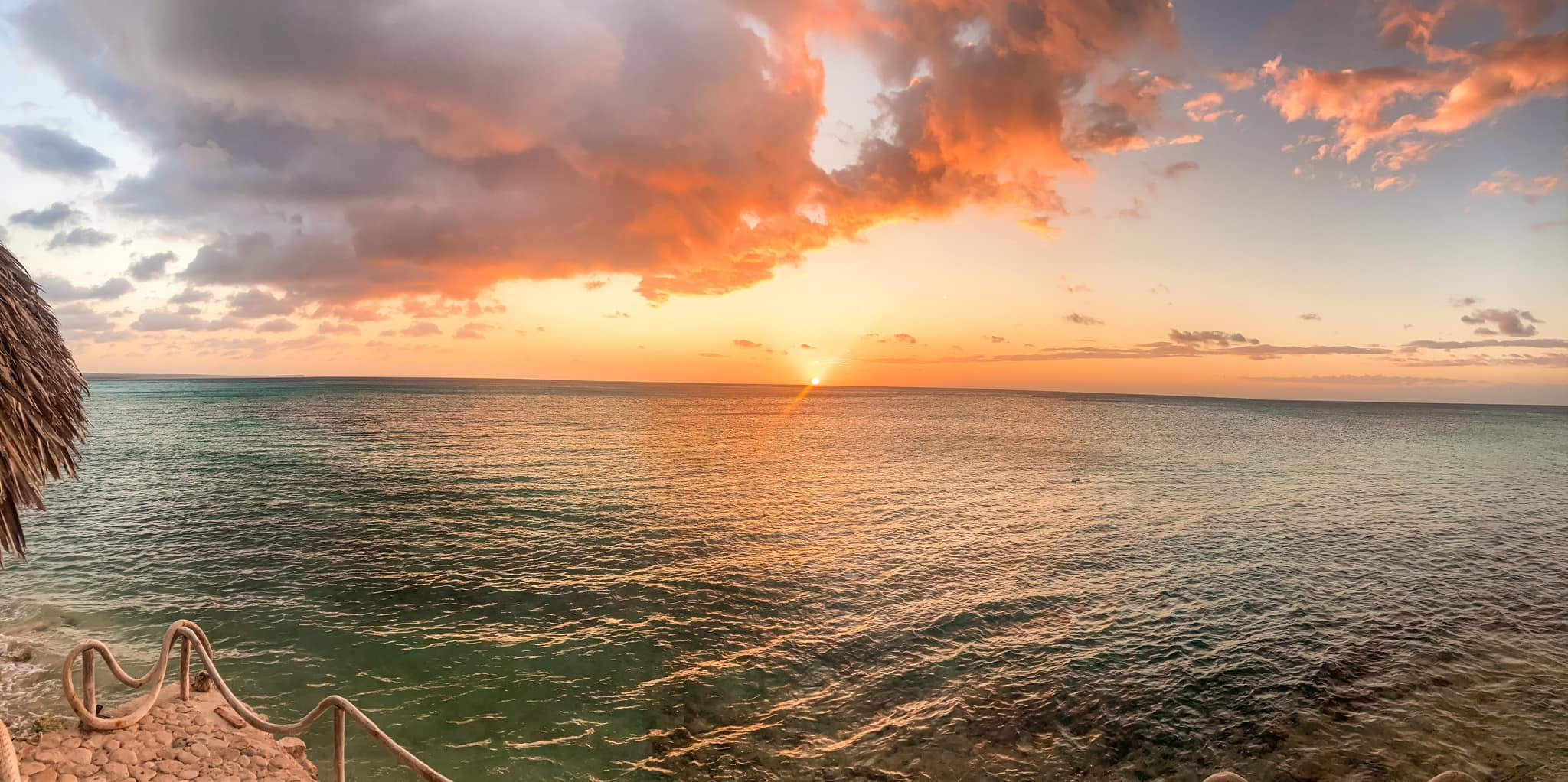
When we woke up the next morning, we realised we had finally made it to paradise. For the first time in a while, we could relax and feel safe and comfortable again. We stayed there for two nights.
Looking back, our stay near Bahía de las Águilas ended up being one of our favourite places of the entire trip. It wasn’t anything fancy, but we loved the location, the atmosphere and being right by the sea. After everything that had happened over the previous few days, it was also somewhere we finally felt completely comfortable again.
I recently looked the place up on Booking.com to see what had changed since our visit, and honestly, it made me want to go back. They’ve made quite a few improvements since we stayed there, but it still looks like the same place we remember. If we ever return to Bahía de las Águilas, I’d happily stay there again.
We all agreed that we needed to be on the road by nine at the latest. That way, we’d make it back to Punta Cana before dark.
We more or less managed to stick to the plan. Breakfast ran a little late, but overall we were still on schedule. In daylight, the road didn’t seem nearly as bad as it had in the pitch dark the night before. The views were incredible — the sea on one side and mountains on the other.
The natural scenery in the Dominican Republic really is stunning, but to truly experience it, you need to get out of Punta Cana.
And then there were trees in the middle of the road
We had been driving for about three hours, enjoying the views and feeling pretty good.
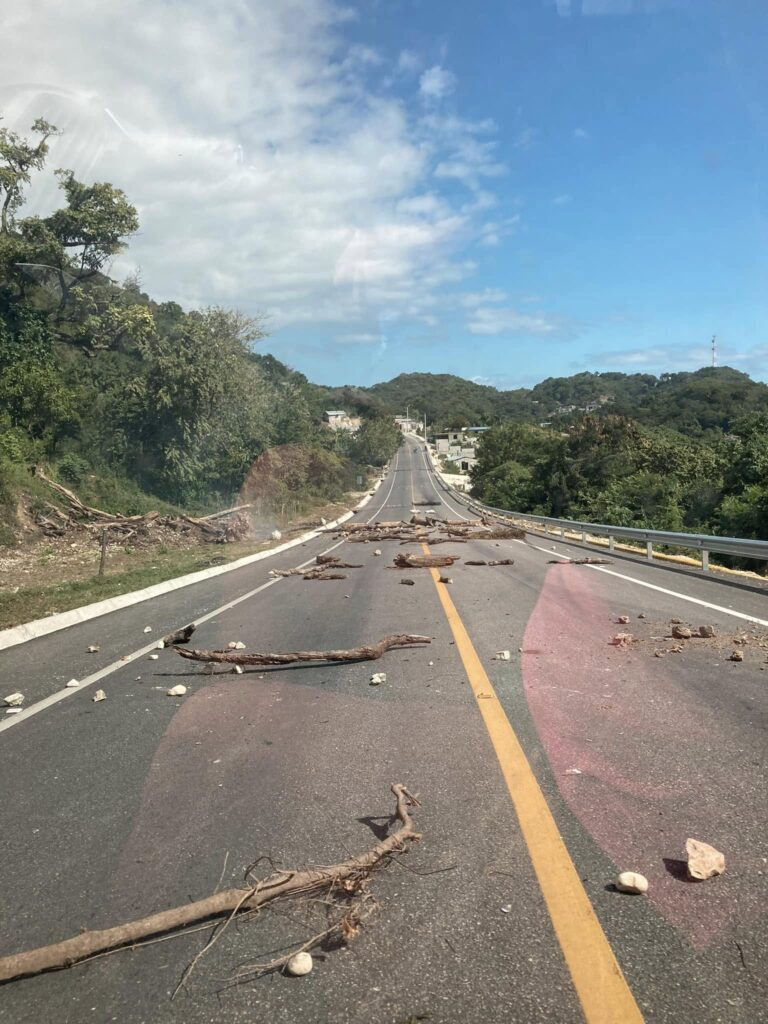
Then suddenly, the road was blocked.
Rocks.
Branches.
Logs.
A few cars had already stopped.
Right. Waze showed us there was another way around.
We turned around and got out of there. The detour had branches, debris and large rocks scattered across the road too. Thank God we had rented an SUV.
But by now, one question was starting to creep into our minds:
What the hell is going on here?
There was a traffic jam ahead, and more and more cars were piling up behind us. Then we spotted local police officers carrying riot shields.
Uh-oh.
This didn’t look good.
Riots.
Oh, great.
Because apparently that was the one thing our trip had been missing!
“Passports! Get your fucking passports!”
If we had to run, at least we’d have our passports with us.
The women stuffed theirs into their bras, and the men put theirs in their pockets. If we got separated, the meeting point was Punta Cana Airport — somehow, we’d find a way to get there. We told our families back home to keep an eye on our locations through Find My. If we got split up, we were screwed.
And then we heard gunshots.
In an instant, we all realised the situation was more serious than we had thought. We managed to get out of there and drove on in complete silence for a while.
Until the fuel warning light came on to let us know that now, of all times, we needed to find a petrol station.
Santo Domingo at rush hour
We filled up the car, stopped at a large supermarket to buy everything we needed for our last few days, and continued on our way.
And then came Santo Domingo at rush hour.
Well. Imagine Järvevana Road, one of Tallinn’s busiest roads, but with a hundred times more cars. There might technically be three lanes going in one direction, but people drive wherever they need to. Usually in about six lanes.
Mait was driving, I was navigating, and Külvi and Maarjo were basically our rear-view mirrors. There was no way one person, used to the kind of traffic we have back home, could have kept track of all the scooters, cars and people coming from every direction. Look up from the map for a second to see what’s happening around you, and suddenly you’re in the wrong lane.
Somehow, we made it through the traffic and finally got moving again.
And once again, we had ended up driving in the dark. We reassured ourselves that being on the road after dark here was still a lot better than being somewhere up in the mountains. And we were right. Eventually, we made it to our accommodation.
Security guards everywhere. To get in, you needed written permission from the owner with your names on it. The houses were beautiful and modern, with big windows and terraces, just like you’d see in Europe.
Perfect.
Alive, well, and surrounded by security guards.
Funny what a week of travelling around the island teaches you to appreciate.
Now we just had to return the wrecked rental car
When we woke up the next morning, there was one final challenge left.
We had to return our battered rental car. We were pretty sure we could say goodbye to our $250 deposit. The owner of the car was already waiting for us.
At first, he asked if we might be willing to help cover some of the repair costs. But after hearing everything we had been through, he took $250 out of the till and handed it back to us.
Apparently, we needed it more than he did.
Wow.
To thank him, we spent the same $250 on souvenirs in his shop.
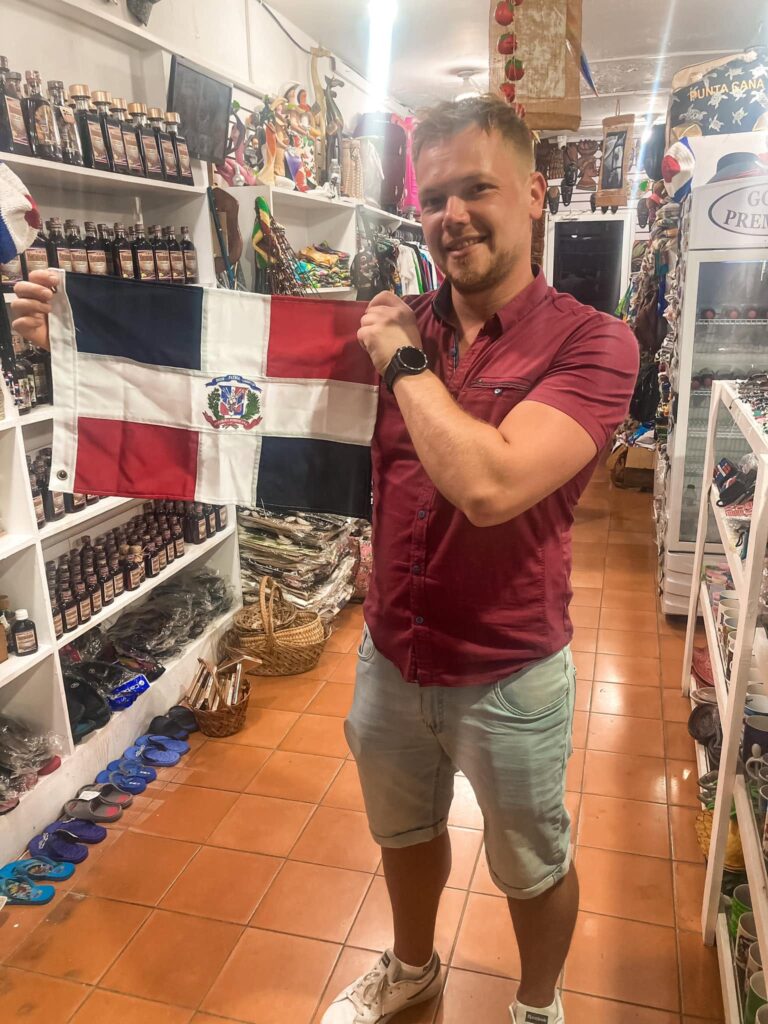
The last two days in Punta Cana were remarkably uneventful. Probably because we didn’t leave the safety of our accommodation even once.
Our transfer was waiting at the agreed time and place, and before we knew it, we were back at the airport.
To be honest, we were all even a little sad to leave. The sun was shining, the weather was beautiful, and our apartment was just so lovely. We would happily have stayed there for a few more days.
But the adventures weren’t over yet
At security at Punta Cana Airport, I hit the jackpot. I was pulled aside for a more thorough security check. At least I got to skip the queue. As expected, everything was fine — no prohibited substances or explosives were found — and I got a stamp on my boarding pass confirming that I was safe to continue my journey.
Connecting through the US was an adventure in itself. After landing, we had to go through immigration, deal with our luggage, change terminals and go through security all over again. Passport control took more than an hour, leaving us barely an hour to do everything else.
And this was a huge airport.
There’s an airport train between the terminals, and when it’s your first time having to take your own luggage to a connecting flight while also trying to figure out where all the signs are sending you…
Luckily, we made it.
By the time we reached the gate, boarding had already started, but at least we weren’t the very last ones. We could finally breathe a little easier.
Next stop: Helsinki.
Practically home.
And then someone started throwing up on the plane
You’d think the adventures would have been over by now.
Nope.
The wheels had barely left the ground when we heard Maarjo behind us go, “Ewww!” and the cabin filled with the smell of vomit. One young guy had somehow managed to throw up so badly that even the woman sitting in front of him had vomit in her hair. Not to mention the state he was in himself. He spent pretty much the next three hours in the plane toilet, while the flight attendants kept checking on him to make sure he was still alive.
Just as he was starting to recover, another passenger began throwing up. We never quite figured out what was wrong with him, but at one point he started having trouble breathing. The flight attendants spent a long time looking after him, and for a moment we were genuinely worried that we might have to make an emergency landing.
Eventually, things calmed down.
Somewhere in the middle of all this, they served us a meal.
Curry chicken with rice.
I’m not a fan of plain boiled white rice, and curry isn’t exactly my favourite either. But I was hungry, so I ate it.
Half an hour later, my stomach started churning, my ears were ringing and I felt absolutely awful. I asked Külvi to let me lie down across the two seats for a moment, but it didn’t help.
Luckily, I at least made it to the toilet.
And just like that, I felt fine again.
I spent the rest of the flight sleeping on and off.
Would I go back to the Dominican Republic?
The climate in the Dominican Republic is amazing, and it was something all of us missed after we left.
The scenery is incredible.
The beaches are beautiful.
And despite everything that happened, by the end of the trip we were actually a little sad to leave.
It was our first long-haul trip without a travel company.
We wanted to see what real life was like.
But we ended up seeing a lot more of it than we wanted to.
Did the trip make us more cautious travellers? Definitely.
Did it make us want to stop travelling independently? Absolutely not.
Today, a little over three years later, I’d say I would definitely go back — but as a much wiser traveller. Our accommodation near Bahía de las Águilas left such a good impression on me, and when I recently checked Booking.com to see what they’ve added and improved since we were there, I genuinely found myself wanting to go back.
Who knows, maybe sometime in the near future?
What did we learn from our trip to the Dominican Republic?
If, for some reason, reading this story has left you with an irresistible urge to explore the Dominican Republic independently, here are a few things we would personally do differently after this trip:
- When choosing accommodation, we would pay much more attention to security, location, recent reviews and how the property itself is monitored or guarded.
- We wouldn’t leave valuables, passports or cash somewhere visible or easily accessible, even inside our accommodation.
- When travelling by rental car, we would plan our route so that we reached unfamiliar areas before dark. Our night drive through the mountains was an experience we definitely wouldn’t choose to repeat.
- You need to be confident when driving in local traffic, but not reckless. Driving culture in the Dominican Republic is very different from what we’re used to in Estonia.
- And if a local is very insistently trying to tell you that you should leave somewhere, after this trip, we certainly wouldn’t stick around to argue.
Most importantly, this was our experience from a single trip, not a judgement on the Dominican Republic as a whole. An absurd number of things simply happened to us in a very short space of time.
You can find more of our Latin America travel stories and destinations here.
Have a great trip!