Porto to Douro Valley by Train: How We Did It Without a Car
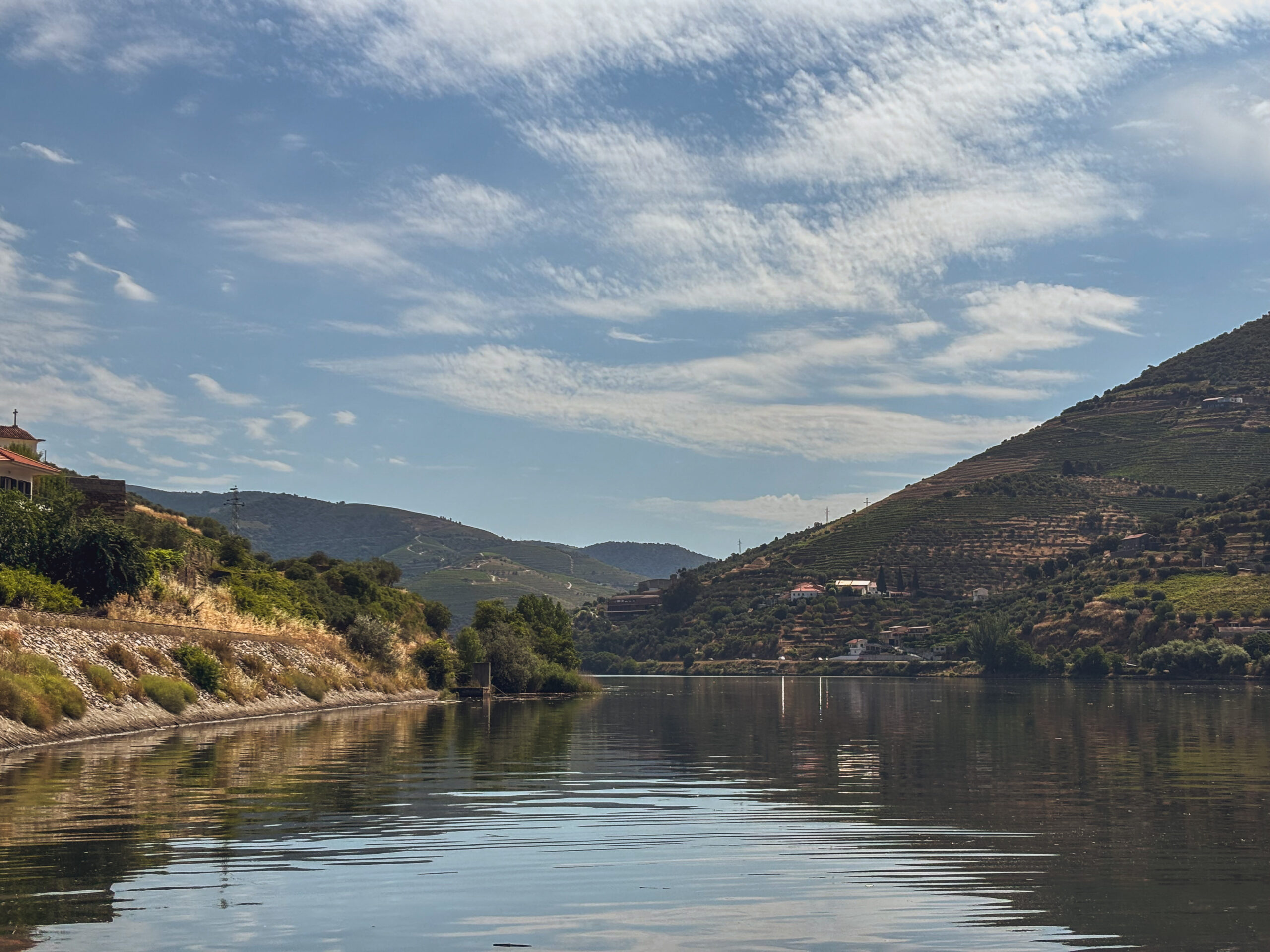
The Douro Valley was one of those places that initially made us wonder whether skipping a rental car was going to make life unnecessarily difficult. Wine estates are scattered across steep hillsides, and once you leave the main towns, public transport becomes much more limited.
We had no car and no organised tour.
In June 2026, we took the Porto to Douro Valley train to Peso da Régua, spent three nights in the valley and returned to Porto by train. Our entire Portugal trip was car-free.
So yes: visiting the Douro Valley without a car is absolutely doable. Getting there by train is easy. The part that needs more planning is what happens after you step off it.
Quick Answer: Porto to Douro Valley by Train
For most independent travellers, visiting the Douro Valley by train is one of the easiest ways to get there from Porto. The Douro Line runs from Porto towards Peso da Régua, Pinhão and beyond.
- São Bento is convenient if you are already staying in central Porto; Campanhã may make more sense if you are arriving by long-distance bus or train.
- For the best river views towards Régua, try to sit on the right-hand side in the direction of travel. On the way back, choose the left.
- Buy your ticket through CP, Portugal’s national railway operator.
- If you are staying at a rural wine estate, plan your transport from the station before you arrive.
Temporary service change: from 3 November 2026 to 24 March 2027, rail services are suspended between Marco de Canaveses and Régua for modernisation works. CP is operating replacement buses on that section. Check the current Douro Line service information before travelling.
Which Porto Station Should You Use?
For the Douro Valley train from Porto, you will mainly see São Bento and Campanhã.
São Bento is in the historic centre. Campanhã is the larger transport hub east of the centre, connecting trains, metro services and long-distance buses.
We arrived from Nazaré by bus, which terminated at Campanhã, so boarding there was the obvious choice. On the way back, our train continued to São Bento, which was only about a 15-minute walk from our Porto accommodation.
Pick the station that fits your wider route rather than assuming São Bento is always the better option.

If Porto is part of the same trip, my 2 Days in Porto itinerary covers how we spent our time in the city.
Our Porto to Douro Valley Train Journey
Our outbound InterRegional 871 left Porto Campanhã at 15:25 on 11 June 2026 and arrived in Peso da Régua at 17:11. We paid €10.90 per person.
Three days later, InterRegional 864 left Régua at 10:33 and arrived at Porto São Bento at 12:35. That ticket cost €11.10 per person.
I bought the outbound ticket more than a month ahead and the return ticket five days before travel.
CP currently sells Regional and InterRegional tickets online and in its app up to 60 days ahead and until 15 minutes before departure.
I would still book once my plans were fixed, especially in summer. Not because the Porto to Douro Valley train is a Taylor Swift concert that disappears in seconds, but because it is one less thing to sort out on the day.
Which Side of the Train Has the Best Douro Views?
From Porto towards Régua, choose the right-hand side in the direction of travel if you can. Heading back towards Porto, choose the left.
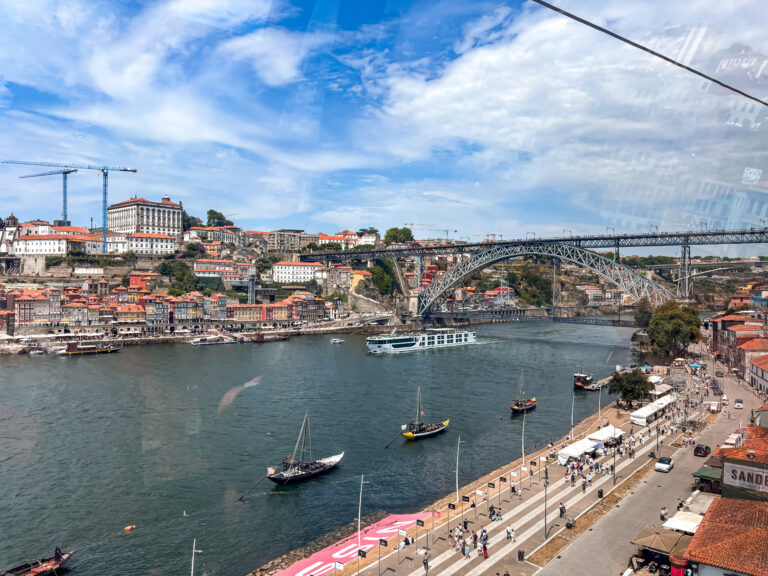
The scenery does not begin the second you leave Porto, but once the railway reaches the Douro, the right-hand side gives you more consistent river views heading east.
The line continues beyond Régua towards Pinhão and Pocinho. We did not ride that section ourselves, so I cannot compare it from first-hand experience. Régua was simply the station that made sense for our accommodation.
One thing to know in summer
Our outbound train was an older-style carriage without air conditioning. It was a hot June afternoon, and even with the windows open the carriage became very warm.
I would take water in summer and not assume every train on this route will have air conditioning. Our train was also busy, so arriving with some time to spare helps if you care about getting a window seat.
The Part That Needs Planning: Régua Station to Your Accommodation
This is the most important part if you want to visit the Douro Valley without a car.
The train can get you into the valley. It may not get you anywhere near your accommodation.
We knew when we booked Casa do Poço – Douro that it was in Vila Seca de Poiares, around 12 km from Peso da Régua, and that we would need a taxi. I had checked with our host in advance that taxis were available at the station.
We did not pre-book the first one. We took a regular metered taxi and asked the driver to stop at a supermarket on the way because we had no intention of turning grocery shopping into a daily taxi marathon.
The 12 km journey took roughly 30 minutes on the winding roads through the vineyards and cost around €25–30.
Bolt did not work for us at the station, and locals told us not to rely on app-based rides in the surrounding countryside.
We still had to make one extra supermarket run during our stay. The return taxi journey cost €50. Split between four people it was manageable, but it is an important budget detail if you stay well outside town.
For departure morning, we booked ahead with the taxi driver who had taken us shopping. He collected us at 09:40 for our 10:33 train from Régua.
All three taxi journeys were metered and we had no problems with the drivers.
My main advice is simple: if you choose a rural stay, work out not only how you will get there, but how much local transport you are likely to need once you arrive.
Where to Stay in the Douro Valley Without a Car
If my priority were the easiest car-free logistics, I would start by looking close to Peso da Régua or Pinhão station.
We deliberately chose a third option: a rural quinta — essentially a wine estate or farm.
We spent three nights at Casa do Poço – Douro, among the vineyards in Vila Seca de Poiares.
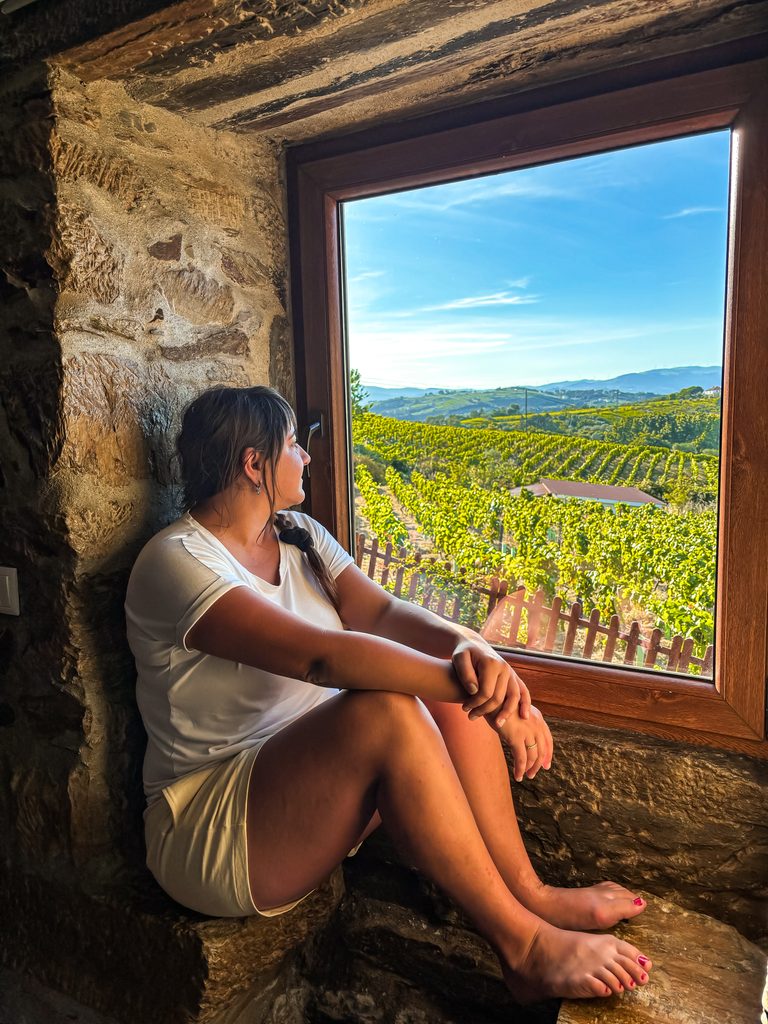
The location was part of the point: sunset views over the vines, a proper outdoor pool and no reason to pretend every hour of the trip needed to be productive.
One of our three Douro days was intentionally planned around the pool, Portuguese sunshine and the extremely demanding task of deciding whether it was time to pour another glass of local wine.
That is why I would not automatically recommend the most central accommodation to everyone. If your plan is to slow down for a couple of days, the property itself can be part of the experience.
Our winery tour at Casa do Poço
We wanted a proper winery visit, and staying at a working wine estate meant we could do it without arranging more transport.
It was not just a tasting. We walked through the vines, visited the cellar and other parts of the production area, and saw a traditional lagar, the wide, shallow vat used for grape treading.
The tour finished with a tasting of the estate’s wines and port.

For me, that was much more interesting than simply being handed a few glasses with tasting notes. We had just seen the vines and the spaces where the wine was made.
Our Douro boat trip
We also wanted a boat trip on the Douro.
Our original plan was to take a taxi to Régua, then the train to Pinhão and arrange one there. Instead, our hosts told us Casa do Poço offered its own boat trips, and ours included transport from the accommodation to the boat and back.
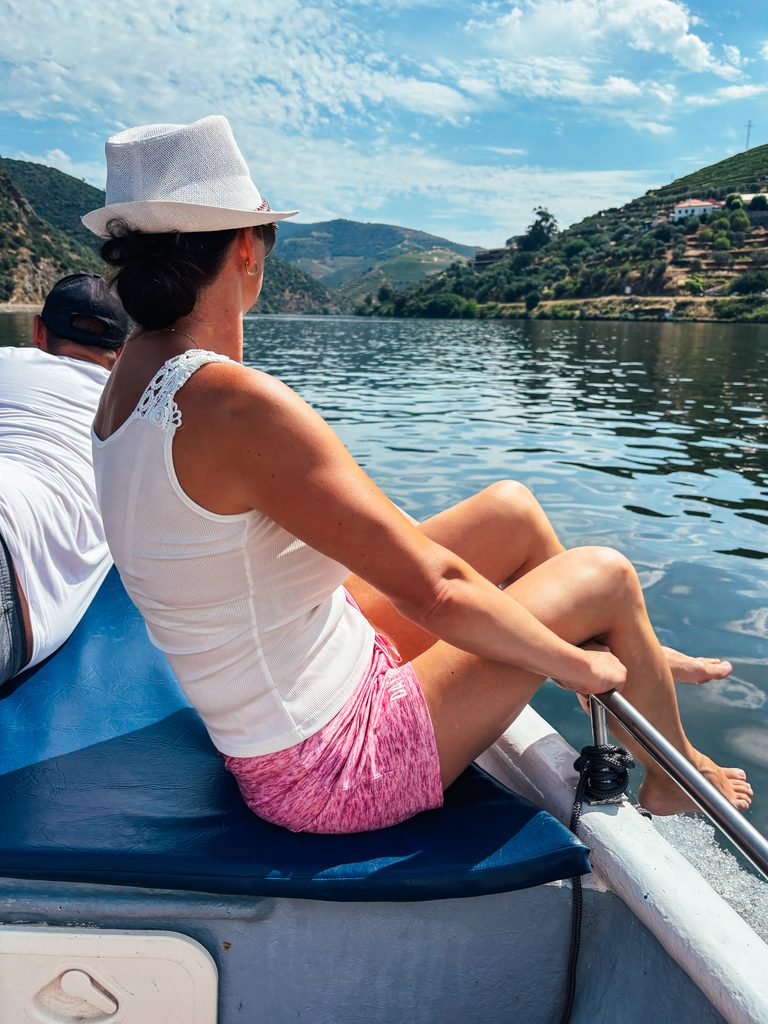
The boat was private for our group of four, with our host as skipper. His English was limited and our Portuguese was non-existent, so Google Translate did some useful work while he pointed out wine estates and other places along the river.
We were also served a cold Porto Tónico — white port and tonic — made with their own port.
It did not become my new favourite drink; bitter flavours and I have a long-standing disagreement. But trying the estate’s own white port while travelling along the Douro with its owner was a very good setting for it.
For a rural Douro Valley without a car trip, experiences that start at your accommodation or include transport can make a big difference.
Would I Visit the Douro Valley Without a Car Again?
Yes — depending on the kind of trip.
I do not regret doing this one without a rental car. The Porto to Douro Valley train was part of the experience, and our three-night stay worked because we deliberately chose a slower trip.
If my next visit were about seeing as much of the wider Douro as possible, I would probably rent a car. Public transport does not give you the same flexibility to reach scattered viewpoints, small villages and wine estates, while repeated taxis would quickly add to the cost.
If I wanted another couple of days at a quinta, with wine, a boat trip and time by the pool, I would happily do something very similar again.
If you want to see more of the valley without driving or piecing together trains and taxis, a guided Douro Valley day tour from Porto is a practical third option. We did not take one ourselves, so I would not present a specific tour as a first-hand recommendation. I would compare the group size, what is included, the winery visits and whether a Douro boat trip is part of the day before choosing one.
Compare Douro Valley day trips from Porto
The Douro Valley without a car works best when your accommodation and your plans fit together.
Practical Tips for the Porto to Douro Valley Train
- Check current CP service information shortly before travelling.
- Buy Regional or InterRegional tickets through CP’s official website or app.
- From Porto towards Régua, try for the right-hand side; towards Porto, choose the left.
- Bring water in hot weather.
- Campanhã may fit your route better than São Bento.
- If you are staying outside town, budget for taxis and plan the journey from the station to your actual accommodation before you book.
If you are staying in Porto before or after the Douro, my Where to Stay in Porto guide explains the areas I would consider for a first visit.
FAQ
Do I need to book the Porto to Douro Valley train in advance?
Not necessarily. CP currently allows Regional and InterRegional tickets to be bought up to 60 days ahead and as late as 15 minutes before departure.
We bought one more than a month ahead and the other five days before travel. If I already knew which summer train I wanted, I would simply book it in advance.
Can I rely on Uber or Bolt in the Douro Valley?
I would not build a rural Douro itinerary around them.
Bolt did not find us a car at Peso da Régua station, and locals told us not to rely on app-based rides in the surrounding countryside.
Regular taxis worked well for us instead.
Porto to Douro Valley Train: Is It Worth It?
For me, yes.
The Porto to Douro Valley train was affordable, straightforward and far less complicated than the wider logistics had looked while we were planning the trip.
For us, exploring the Douro Valley by train meant travelling from Porto to Régua, using taxis when we needed them, spending three slow nights in the valley and taking the train back into central Porto.
I would do that part of the trip the same way again.