10-Day Portugal Itinerary Without a Car: Lisbon to Porto
Ten days in Portugal is enough to build a genuinely varied trip — if you resist the urge to see the entire country.
Our route linked Lisbon, Sintra, Nazaré, the Douro Valley and Porto, all without renting a car. We had city days, a day trip, the Atlantic coast, three nights on a rural wine estate and enough slow time that the holiday never felt like one long transport project.
One important detail before you copy our 10-day Portugal itinerary: we had ten full travel days. We arrived in Lisbon the evening before Day 1 and flew home from Porto the morning after Day 10. If your ten days include both flight days, you will either need to trim the route slightly or choose flights that leave you useful time on arrival and departure days.
Geographically, the route works neatly from south to north. The only slightly awkward stretch is Nazaré to the Douro Valley: without a car, we first took a bus to Porto and then continued by train into the Douro.
This guide follows what we actually did — including the slow days, the plan we changed, the places we skipped and the parts of travelling without a car that were less convenient than they looked on a map.
Our 10-Day Portugal Itinerary at a Glance
For a first 10-day Portugal itinerary, I like this balance. If I had the same ten full days again, I would keep the basic route almost unchanged:
- Days 1–2: Lisbon — one full day in the city and a day trip to Sintra.
- Days 3–4: Nazaré — arrival day plus one deliberately slow day by the Atlantic.
- Days 5–7: Douro Valley — three nights, a winery experience, a boat trip and time to enjoy the quinta itself.
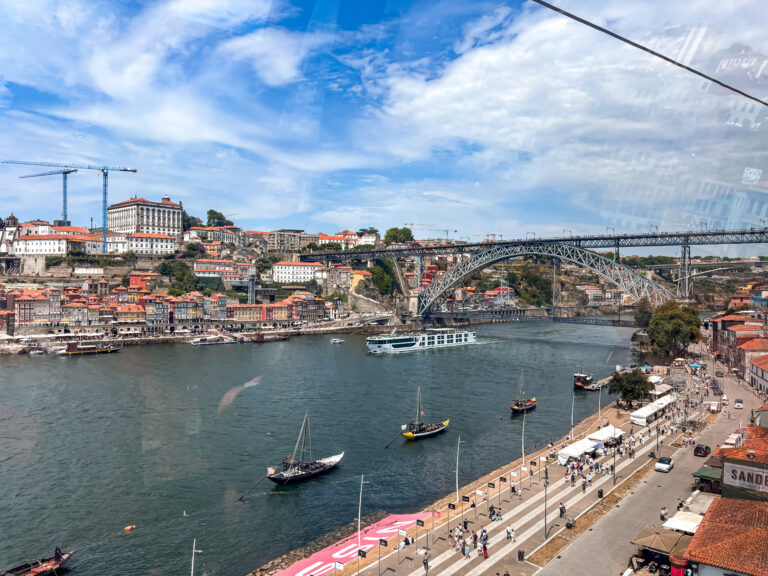
- Days 8–10: Porto — the historic centre, a local walking tour and Foz do Douro on the Atlantic coast.
You do not need a rental car for this route. We used buses and trains between destinations, walked a lot in the cities and relied on local taxis in the rural Douro Valley.
Is 10 Days in Portugal Enough?
Yes — this 10-day Portugal itinerary gives you enough time to see very different sides of the country without changing base every night.
Ten days in Portugal was enough for us to combine two major cities, Sintra, the coast and the Douro wine region without changing accommodation every night or turning every transfer into a race against the clock. If you are trying to see Portugal in 10 days, I think that trade-off matters more than adding another pin to the map.
It is not enough to “do Portugal”, and I would not try. This 10-day Portugal itinerary is deliberately selective: the destinations feel different from one another, while the route still remains manageable.
Our 10-Day Portugal Itinerary Day by Day
Arrival evening: Lisbon
Our flight reached Lisbon on 6 June 2026, and we arrived at our apartment at about 20:05. The evening plan was spectacularly ambitious: drop the bags, find a nearby supermarket and buy breakfast.
We like making some meals ourselves when we travel, and we nearly always have breakfast at our accommodation. After a late arrival, I would not force sightseeing into the schedule just because technically you are already in Lisbon. Check in, get what you need for the morning and start properly the next day.
Day 1: A full day in Lisbon
Our first full Lisbon day was a good example of the pace I would use for a first visit: a morning walking tour with a local guide, a long late lunch, time to wander without a checklist and a 1.5-hour boat trip on the Tagus to finish the day.
We did not try to tick off five museums and ten landmarks. The goal was to get a feel for Lisbon, and that worked much better for us.
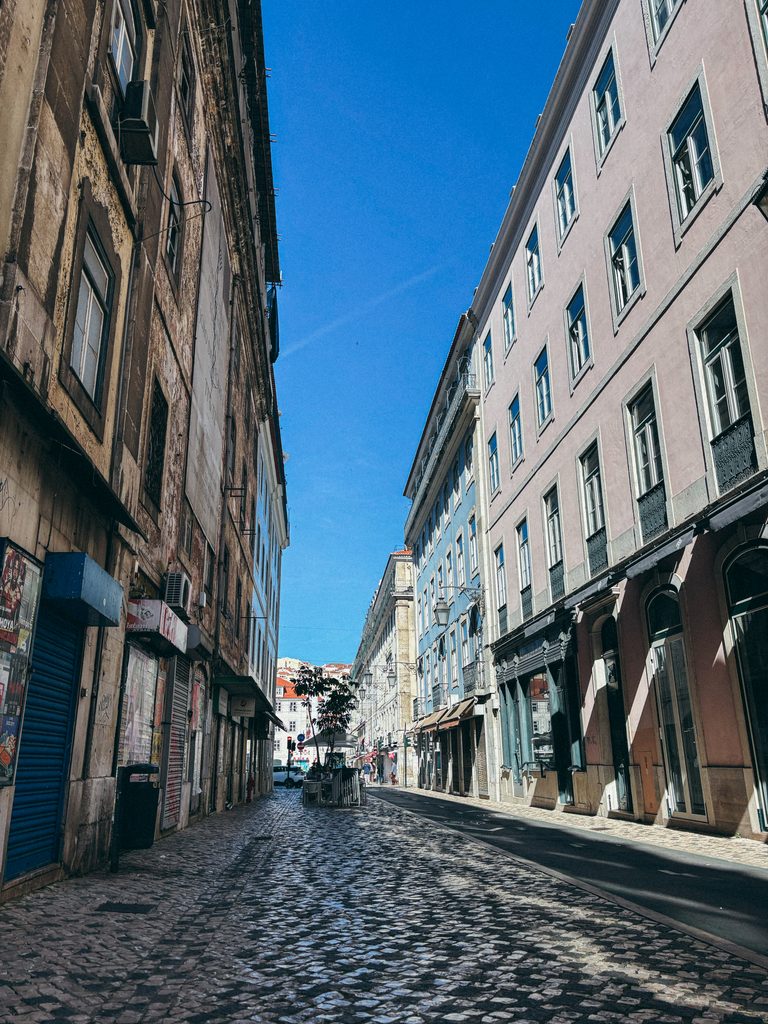
I have the full route and timings in One Day in Lisbon: Our Tried-and-Tested Itinerary for First-Time Visitors.
Day 2: Day trip to Sintra
We spent our second full day in Sintra.
For this itinerary, visiting Sintra as a day trip worked much better than moving accommodation for a single night. We could leave most of our things in Lisbon, spend the whole day exploring Sintra and return to the same apartment that evening.
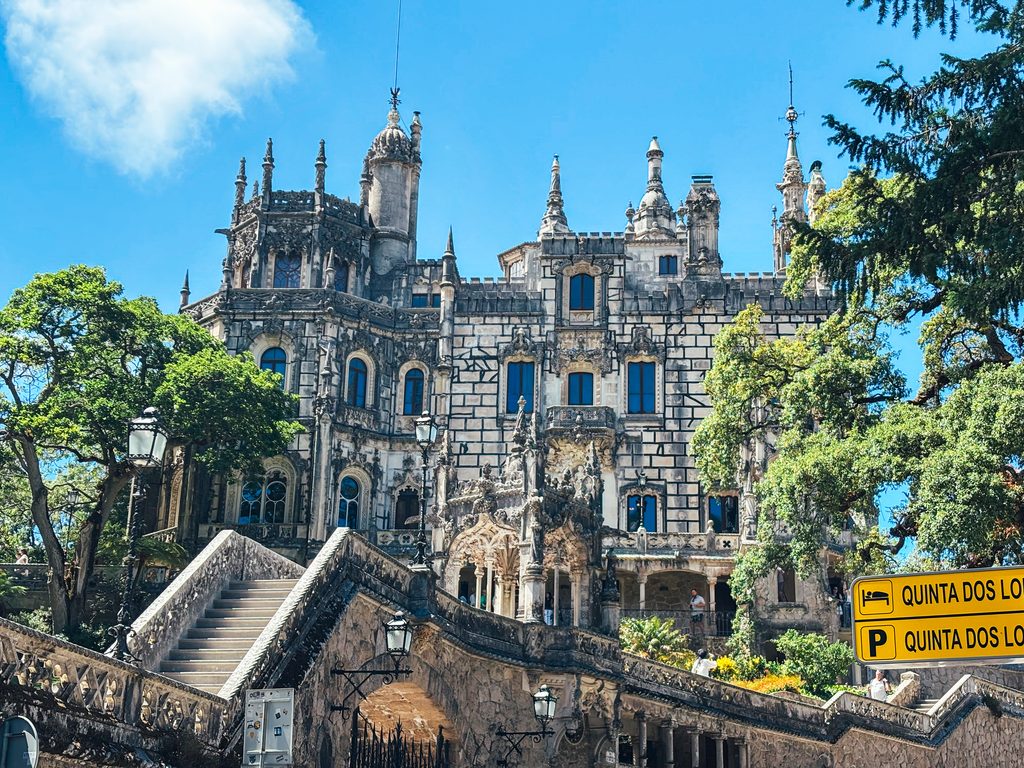
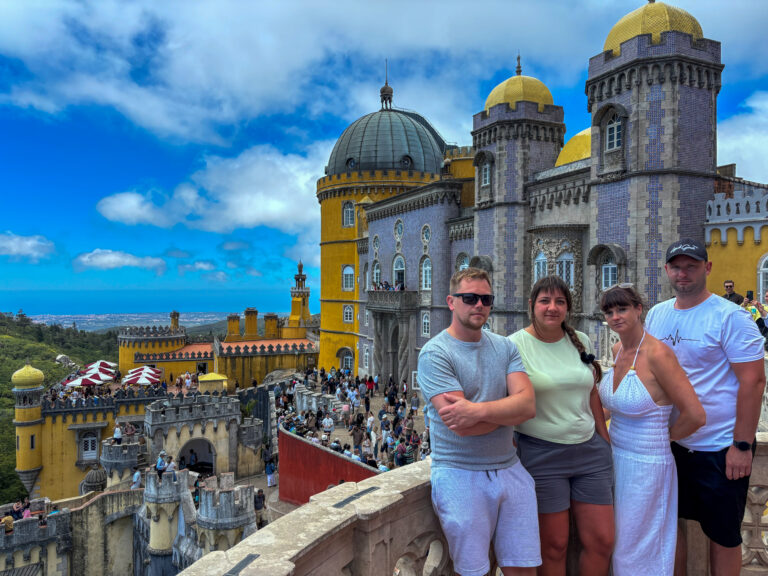
It did require more advance planning than our day in Lisbon, particularly because we wanted to visit both Pena Palace and Quinta da Regaleira. Having those main pieces organised beforehand made the day much easier.
Our exact route, ticket strategy and what I would do differently are in Sintra Day Trip from Lisbon: Our One-Day Sintra Itinerary.
Day 3: Lisbon to Nazaré
On Day 3, we took a pre-booked Bolt from our apartment to Lisboa Sete Rios bus station. Our Rede Expressos bus left at 12:00 and arrived in Nazaré at 13:50, so the journey took just under two hours.
We arrived before check-in, but our apartment was right by the promenade, so we headed in that direction, found somewhere we liked for lunch and took our time.
Once we had the keys, we did very little — deliberately. We sat on the balcony, looked at the Atlantic and enjoyed not having another attraction to get to after two fairly busy days in Lisbon and Sintra.
That is exactly why Nazaré worked so well in this 10-day Portugal itinerary. It changed the rhythm of the trip rather than becoming another place we had to “complete”.
Day 4: Our very windy beach day in Nazaré
The plan for the day was simple: the beach.
That morning, we happened to come across a local procession involving firefighters and emergency services. It was one of those travel moments you could never have scheduled in advance.
Then we went to the beach despite a surprisingly cold and very strong wind. The sun itself was hot, but sand was blowing everywhere and after roughly an hour and a half I announced that I was absolutely freezing and going back to the apartment. Nobody put up much of a fight.
A few hours later, we realised that the cold wind had been slightly misleading: all of us had very obvious tan lines.
We bought groceries, made lunch at the apartment, had a nap and watched the sunset from the balcony.
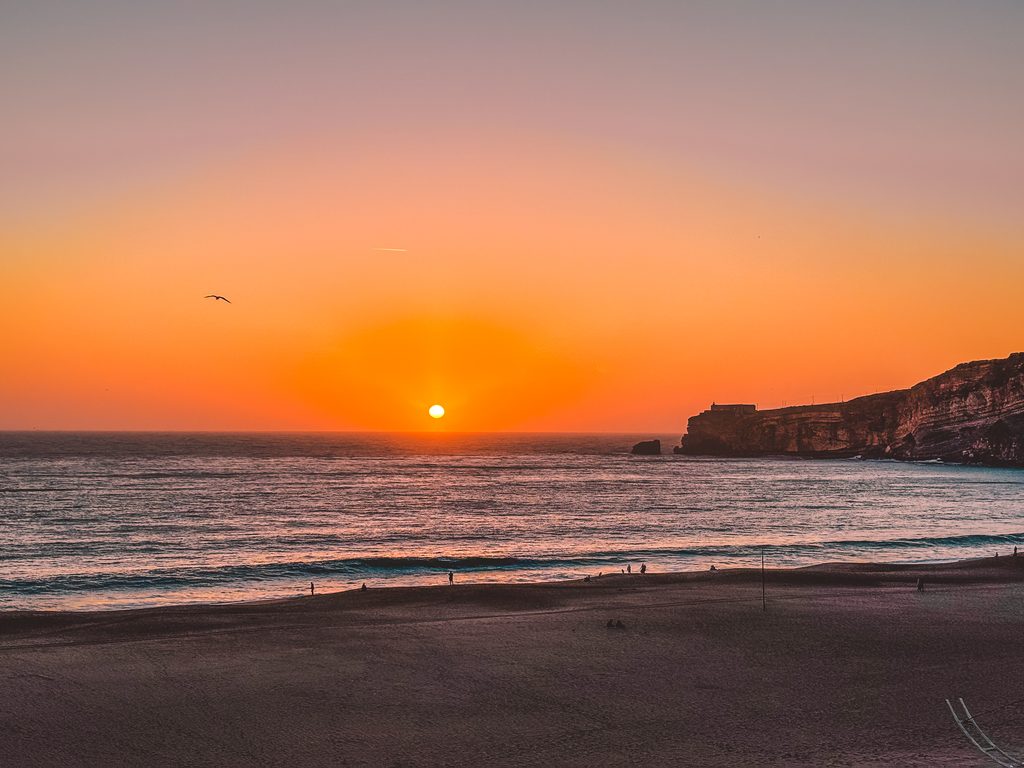
It was not the kind of day that produces a “15 things you must do in Nazaré” article, but I would not replace it with a packed sightseeing schedule.
Day 5: Nazaré to the Douro Valley
This was the longest logistical day in our 10-day Portugal itinerary.
We took a bus from Nazaré to Porto, a journey of about 2 hours 45 minutes. I no longer have the exact departure time, but more importantly, we had deliberately left more than an hour between the bus and our 15:25 train from Porto Campanhã.
That buffer turned out to be useful. Our bus was delayed, but we still had enough time to make the train rather than watching our Douro plans disappear from a bus window somewhere outside Porto. If you are booking separate bus and train tickets for this route, I would definitely leave a decent connection window rather than planning around the shortest possible transfer.
Our train left Porto Campanhã at 15:25 and reached Peso da Régua at 17:11. From the station, we took a local taxi and stopped at a large supermarket before continuing to our rural quinta.
The supermarket stop was planned from the beginning. We intended to cook some of our meals at the quinta and already knew we were staying well outside town, so we bought what we would need before heading there rather than relying on having a shop nearby.
We reached the quinta at about 18:50. It had been a long day, so dinner and a glass of wine under the outdoor shelter were enough. The view across the vineyards as the sky changed colour did not exactly make us feel we were missing out.
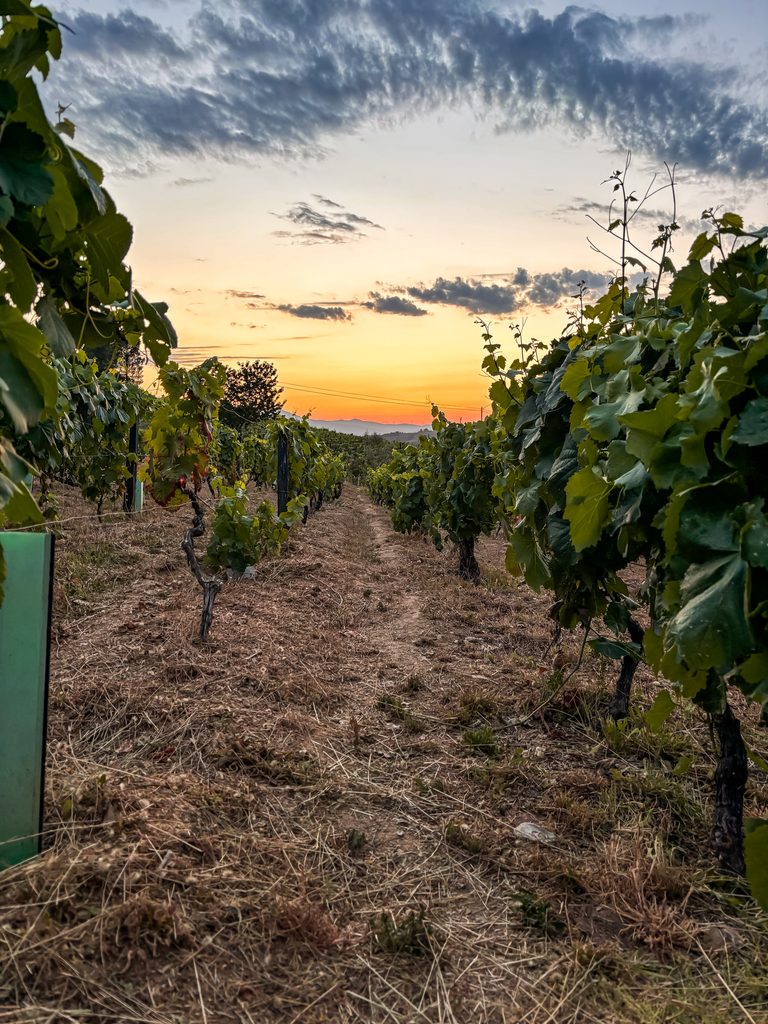
If you are planning the same route, Porto to Douro Valley by Train: How We Did It Without a Car covers the train, stations, tickets and taxi reality in much more detail — including why “12 km from Peso da Régua” does not necessarily mean a quick journey in the Douro.
Day 6: Pool, quinta and our favourite wine experience
We had deliberately left Day 6 slow. The pool, the sun and the quinta itself were the morning plan.
We asked our host whether they offered tours of their vineyard and winemaking facilities. They did, so we arranged a tour and tasting for 15:00.
The whole experience lasted almost two hours. We saw the vineyard and winemaking areas, tasted several wines and Port, and tried local olive oil with snacks.
Oddly enough, the thing I remember best is not a particular wine. It is sitting around the table afterwards talking to our host about her family, Portuguese wine culture and ordinary life.
Those are the travel experiences I tend to remember most: not only the polished version of a destination presented to visitors, but the people who actually live there. I would not trade that afternoon for three wineries squeezed into one day.
Day 7: We skipped Pinhão and took a boat trip from our quinta instead
Our original plan for Day 7 was to take a taxi to Peso da Régua, continue by train to Pinhão, see its azulejo-covered station and take a boat trip from there.
The day before, we discovered that our hosts also organised Douro boat trips. We chose the easier option.
That meant the experience effectively started and ended at our accommodation, with no need to coordinate a taxi, train and boat departure.
There were only the four of us on the boat plus our host, who was also the captain. He pointed out different quintas along the river and served us Porto Tónicos.
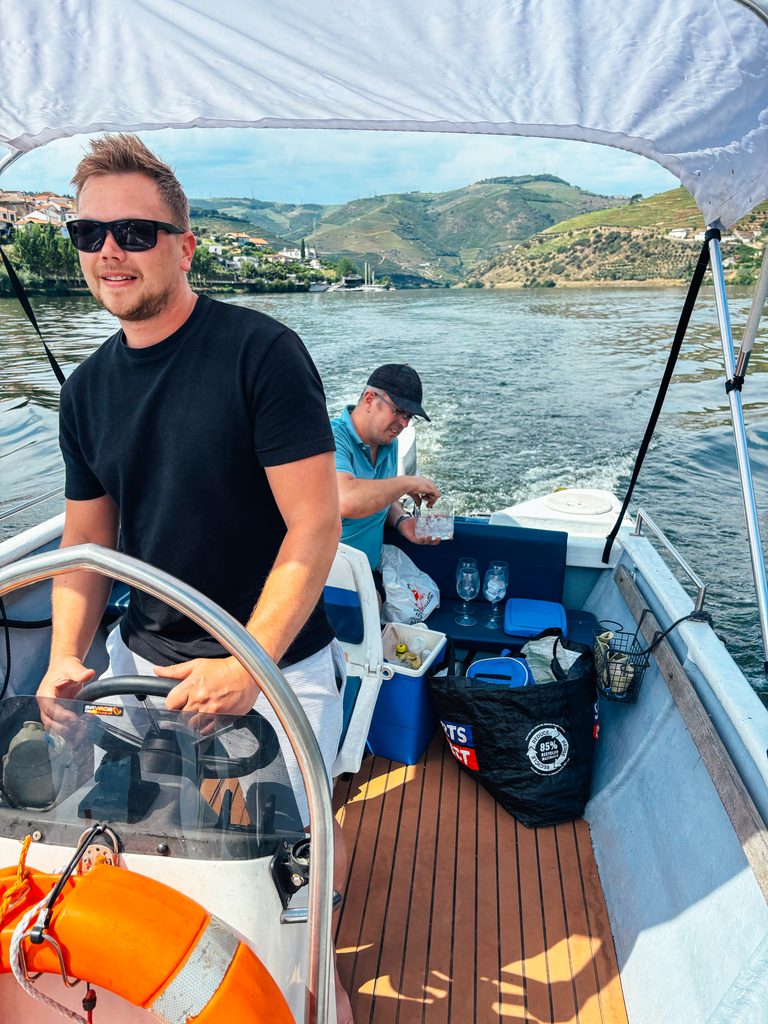
The men in our group have experience handling small boats and the relevant licences back home, so they even got a turn at the helm on the Douro. Unsurprisingly, they considered this a major success.
For me, the best part was simply not sharing the boat with another 20 strangers. We could enjoy the river at our own pace.
We never made it to Pinhão on this trip, so I am not going to write about it as if we did. I would still like to do that railway section next time.
I have written more about the winery, river experience and what I would genuinely prioritise in Things to Do in the Douro Valley: What’s Actually Worth Your Time.
Our original Pinhão plan would also have taken us through Peso da Régua, where we had expected to pick up more groceries on the way back. Once we swapped that day for the boat trip, the shopping stop disappeared with it — but we still needed supplies.
Our hosts helped us arrange a taxi into Peso da Régua and back, and we paid €50 for that return supermarket run.
It is exactly the sort of extra cost worth remembering if you choose a rural Douro stay without a car.
Day 8: Douro Valley to Porto
We had arranged with the previous evening’s taxi driver to collect us from the quinta and take us to Peso da Régua station.
It was pouring with rain in Régua, so we made a fairly undignified dash from the taxi to the train. Fortunately, we could get straight on.
Our train left at 10:33 and arrived at Porto São Bento at 13:35.
Our Porto accommodation let us leave our backpacks before check-in, which gave us the rest of the afternoon free.
This is why I do not automatically treat transfer days as lost days. A well-timed connection can still leave you with half a day to use.
Day 9: Porto — including a very unproductive morning
On Day 9, we did something most itineraries are strangely reluctant to recommend: we stayed in the apartment for part of the morning, watched a film and recovered from the holiday.
Could we have used those hours more efficiently? Absolutely. Did we want to? No.
Aveiro had originally been one of our options for a Porto day trip, but once we were there we decided we did not want to spend our final days travelling out of the city and back again.
Instead, we joined a GuruWalk in the afternoon. Having a local guide put Porto’s history and centre into context much better than simply walking between landmarks would have done.
If you prefer a faster pace, our two Porto days are easy to rearrange: do the walking tour on the morning of Day 9, continue to Foz after lunch and keep Day 10 free for Aveiro.
Day 10: Foz do Douro and the Atlantic
For our final full day, we left Porto’s historic centre and headed towards Foz do Douro, where the river meets the Atlantic.
We used the historic tram for part of the journey and rented an e-bike and electric scooters once we reached the coast.
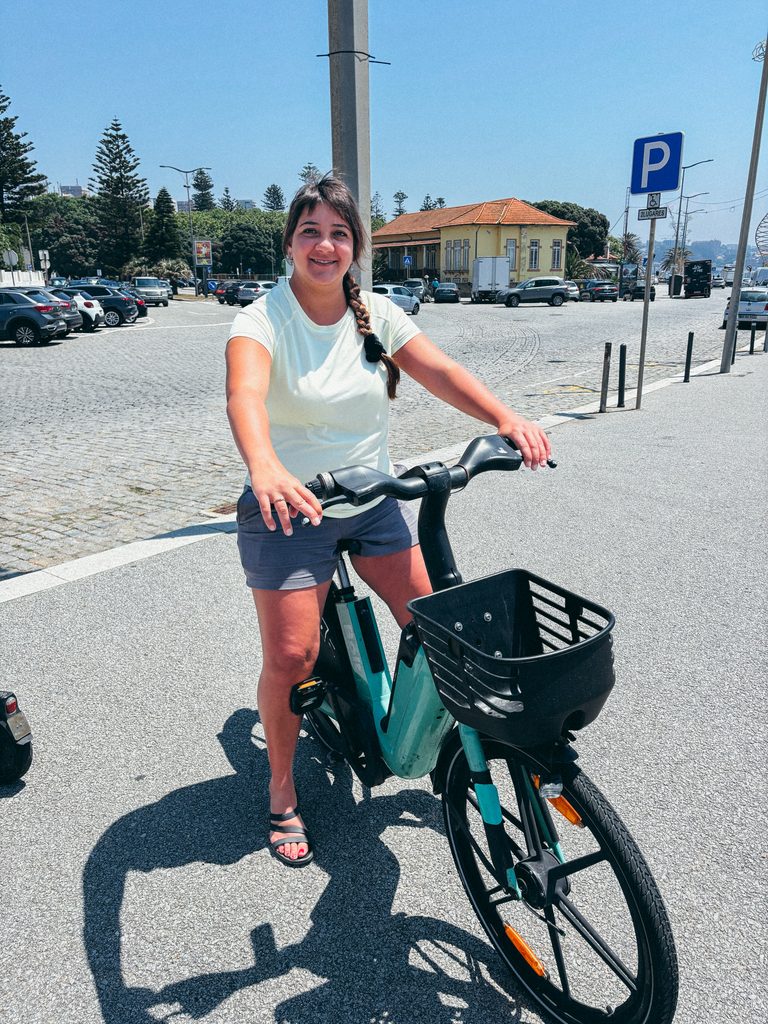
The point was not simply to get from A to B faster: we wanted to cover much more of the waterfront than we could comfortably manage on foot while still being outside and actually experiencing the coast as we went.
We followed the promenade, stopped whenever we felt like it and had lunch by the ocean without much of a schedule.
Looking back, this confirmed that skipping Aveiro had been the right decision for our pace. Foz showed us a completely different side of Porto without adding another intercity journey.
Our fuller Porto route is in 2 Days in Porto, Portugal: The Itinerary I’d Recommend.
Departure morning
The next morning, we had a pre-booked ride to the airport at 07:20 for our 10:00 flight.
Where to Stay on This 10-Day Portugal Itinerary
Once the route is decided, accommodation becomes a much easier decision. This 10-day Portugal itinerary works best when each base keeps the next travel day simple.
With four bases in ten days, location matters — particularly when you are not driving. I would rather pay for a well-placed stay than save a little on the room and spend the difference in time and local transport.
Lisbon
We stayed at Astonishing View Mouraria Apartment. The location worked well for us, and the apartment had two bedrooms, a kitchen and a washing machine. The major drawback was that it was on the fifth floor with no lift.
If I were shortlisting Lisbon stays for a similar trip now, I would start with these two:
Ouro Rossio Hotel — my hotel pick for a straightforward, central first stay in Lisbon.
Páteo Saudade Lofts — an apartment-style alternative if a kitchenette and more independence matter to you.
For a proper comparison of areas, see Where to Stay in Lisbon: Best Areas for First-Time Visitors.
Nazaré
We stayed at T2 Dina’s Place.
The promenade location worked particularly well for us: we had a kitchen, plenty of space and an ocean view from the balcony. On our very windy beach day, it was also nice to have an apartment we actually wanted to spend time in.
If you prefer a hotel to an apartment, I would look at Hotel Praia as a clearly different alternative to our self-catering stay.
Douro Valley
In the Douro, the first decision is whether you want the accommodation itself to be part of the experience or you would rather have the easier logistics of staying in Pinhão.
We chose the first option and stayed at Casa do Poço – Douro.
It was one of the strongest accommodation choices of our trip. We stayed for three nights, did our wine tour and tasting there, and arranged our boat trip through the property. The trade-off was location: getting to Peso da Régua required a taxi.
If you would rather stay in Pinhão for a more practical first visit, I would look at The Vintage House – Douro.
For more options in Pinhão, Peso da Régua and the rural wine estates, see Where to Stay in the Douro Valley: 5 Best Areas + Hotels.
Porto
We stayed in Miragaia. I would happily choose the area again, but I would not book the same apartment again.
For a short first visit, I would personally favour Baixa / Aliados / São Bento and start with these two:
The Mila Porto — my hotel pick for a central first stay.
Lemago Porto Apartments – Sé — an apartment option if you want a kitchenette and more independence without giving up a very central location.
In Porto, do not judge accommodation by map distance alone. Hills, stairs and whether a taxi can actually reach the door can matter more than being a few hundred metres closer to a landmark.
I compare the areas in more detail in Where to Stay in Porto: Best Areas for First-Time Visitors.
Getting Around Portugal Without a Car on This 10-Day Itinerary
Getting around Portugal without a car worked well for us because we simply used whichever form of transport made the most sense for each part of the route.
Lisbon to Nazaré and Nazaré to Porto were long-distance bus journeys. Porto to Peso da Régua and back was by train. We also took the train for our Lisbon–Sintra day trip, walked extensively in the cities and used Bolt or local taxis when they were the more practical option.
Overall, our experience of public transport in Portugal was good. The connections we used were practical, the buses and trains were generally clean, and the fares felt reasonable. For Nazaré in particular, the bus was simply the sensible choice rather than something we used as a second-best alternative to rail.
The one place where travelling without a car became noticeably less convenient was the rural Douro Valley. If you choose a quinta outside town, check the actual road distance from Peso da Régua or Pinhão, whether the property can arrange transfers, and how you plan to handle meals and groceries. In our case, we knew from the start that we would cook some of our meals ourselves, so supermarket stops were part of the logistics rather than an afterthought.
One other first-hand detail: our Porto–Régua train was an older train without air conditioning. That does not mean every train on the route is the same, but in hot weather I would carry plenty of water rather than assuming the carriage will be cool.
Would I Rent a Car for This 10-Day Portugal Itinerary?
Not for the whole trip.
In Lisbon and Porto, a car would have felt more like an extra responsibility than an advantage, and we handled the intercity sections comfortably by public transport.
The Douro is the exception. If I returned and wanted to spend a day linking several viewpoints, Lamego and harder-to-reach wine estates, I would seriously consider renting a car in Peso da Régua for that day only.
There is also a practical advantage to not driving on a wine-focused day: nobody in the group has to sit out the tasting because they are responsible for driving afterwards.
If you want to spend 10 days in Portugal without a car, this route is very workable. Just budget for some local taxis if you choose a rural Douro stay.
How I Would Adjust This 10-Day Portugal Itinerary
With the same ten full days, I would honestly keep the basic route almost exactly as we did it.
The one real choice is Porto. If Aveiro is more important to you than having two relatively relaxed Porto days, I would combine the walking tour and Foz do Douro into one day and use the other for an Aveiro day trip. For us, keeping Porto slower was the better decision.
If I had an eleventh day, I would give it to Nazaré. Our only planned beach day was extremely windy, so an extra night would give the coast a little more flexibility without changing the rest of the route.
I would also still like to reach Pinhão on another Douro visit. I do not see skipping it this time as a mistake, though: replacing our original plan with the small boat trip organised by our quinta made the day much easier and gave us one of the best experiences of the trip.
The Algarve was deliberately not part of this itinerary. I would not simply bolt it onto these ten days — if I wanted to include southern Portugal, I would either add several more days or build a different route around it.
Would I Do This 10-Day Portugal Itinerary Again?
Yes.
It gave us two very different cities, Sintra, the Atlantic coast and the Douro wine region without making the trip feel like one long sequence of check-outs and transfers.
Porto was our favourite city, the Douro gave us some of the most memorable experiences of the trip, and Nazaré was exactly the pause we wanted after Lisbon and Sintra.
So the basic route can stay.
I would just ask Nazaré to turn the wind down a little.