Things to Do in the Douro Valley: What’s Actually Worth Your Time
The Douro Valley is one of those places where it is very easy to over-plan a trip.
One winery. Another winery. A viewpoint. Another viewpoint. A boat trip. Pinhão. Régua. Lamego. And somewhere in between, you are apparently supposed to find time for lunch.
We did the opposite.
We spent three nights in the Douro Valley, travelled without a rental car and deliberately kept things slow: a scenic train journey from Porto, a stay at a rural quinta, a proper winery tour and tasting, a boat trip, and one day whose biggest achievement was drinking local wine by the pool.
Looking back, I do not feel as though we somehow “did the Douro wrong”. Quite the opposite.
If you landed here after searching for “things to do in Douro Valley”, you probably do not need another list of 25 places to squeeze into three days. You need to know which experiences are actually worth making time for.
So that is what this guide focuses on: the things to do in the Douro Valley I would genuinely prioritise, including what we did ourselves, what we skipped, and what I would add next time.
In a Rush? The Best Things to Do in the Douro Valley:
- A winery tour and tasting — the most obvious Douro experience, but for good reason.
- A Douro River boat trip — the valley looks completely different from the water.
- Part of the Douro railway journey — especially useful if you are coming from Porto without a car.
- A few slow hours, or even a full day, at a rural quinta — the Douro does not need to become a competition to see how many wineries you can visit.
- One genuinely good viewpoint — particularly if you have a car or can organise transport in advance.
7 Things to Do in the Douro Valley That Are Actually Worth Your Time
If you searched for “best things to do in Douro Valley”, this is the part I would pay attention to: for us, the best experiences were not the ones that helped us tick off the most places. They were the ones that gave us a proper sense of the wine, the river and the landscape.
If I had only one day, I would not try to squeeze everything in. I would choose one proper wine experience, a boat trip and one scenic viewpoint — and leave the rest.
1. Take a proper winery tour, not just a wine tasting
If I had to choose just one experience in the Douro Valley, I would make it a proper winery visit.
And I do not mean sitting on a terrace, being handed three glasses of wine and moving on.
Our winery experience at Casa do Poço – Douro started in the vineyards, continued through the cellar and other winemaking areas, and included a look at a traditional lagar — the wide, shallow tank used for treading grapes.
Only after that did we sit down for the tasting, where we tried both their wines and Port.
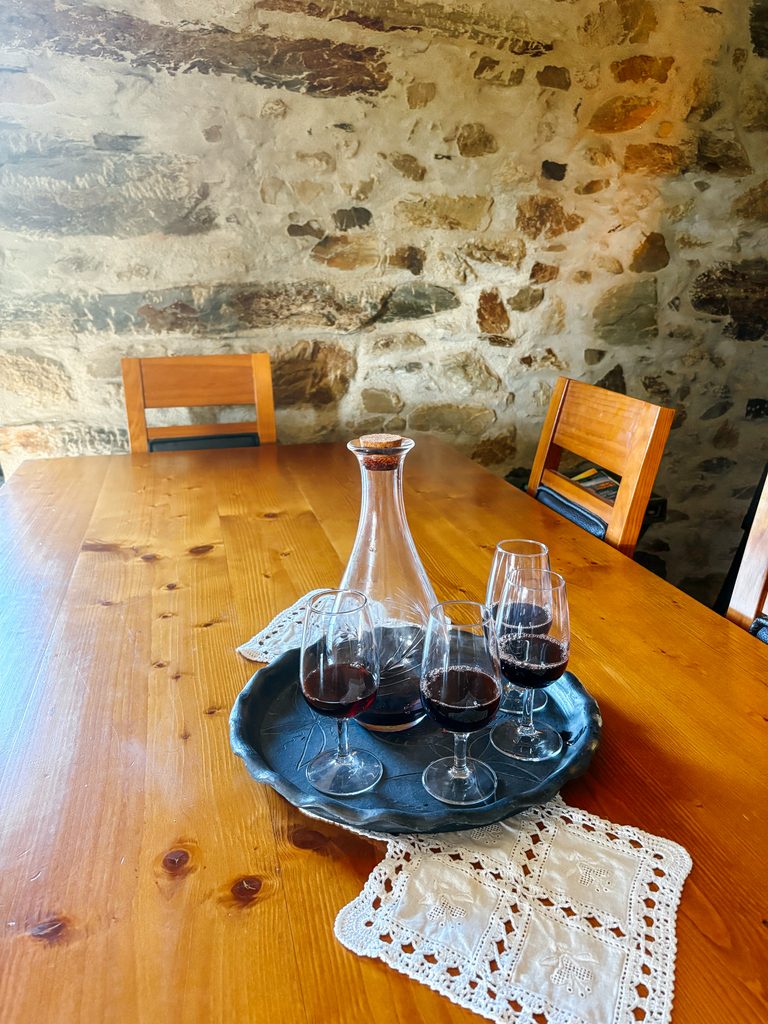
The wines came with local cheeses, bread and olive oil, which I found dangerously easy to keep dipping the bread into long after I was technically finished. It was a small detail, but it made the tasting feel much more like a proper local experience than a line-up of glasses to work through.
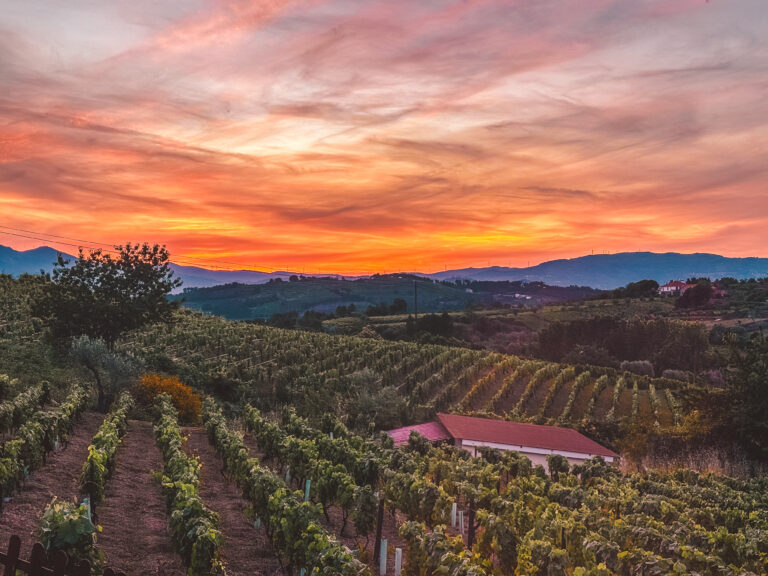
More importantly, the tour made the landscape make sense. Afterwards, the vines climbing up the terraces were no longer just a very pretty backdrop. We had a much better idea of what was actually happening there.
If you are travelling without a car, choose your winery carefully. Look for somewhere you can realistically reach from Pinhão or Peso da Régua, organise a taxi in advance, or stay at a quinta where the winery experience happens on site.
A lot of Douro estates are up in the hills. They are not places where you necessarily get off the train and “just walk the rest”.
If you want to book a winery experience in Pinhão in advance, Quinta do Bomfim offers a guided winery tour and tasting.
2. See the Douro from the river
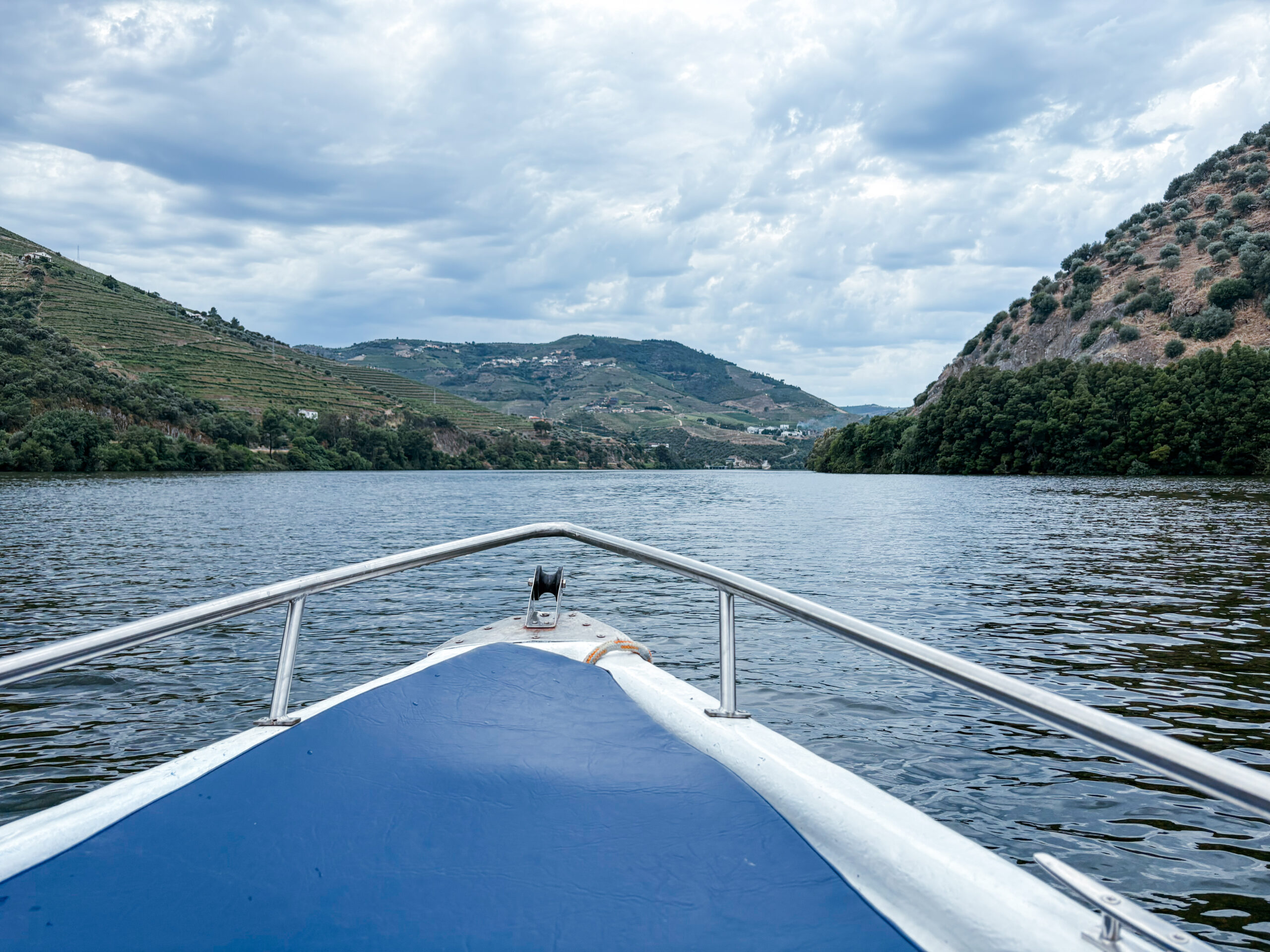
The train shows you one version of the valley. The river shows you another.
Our original plan was to take a taxi to Peso da Régua, catch the train to Pinhão and take a boat trip from there.
Instead, we discovered that Casa do Poço – Douro could organise a Douro boat trip for us, including transport from the property to the boat and back. That made far more sense for our no-car trip.
There were only four of us on the boat, plus the owner of our accommodation, who was also our captain.
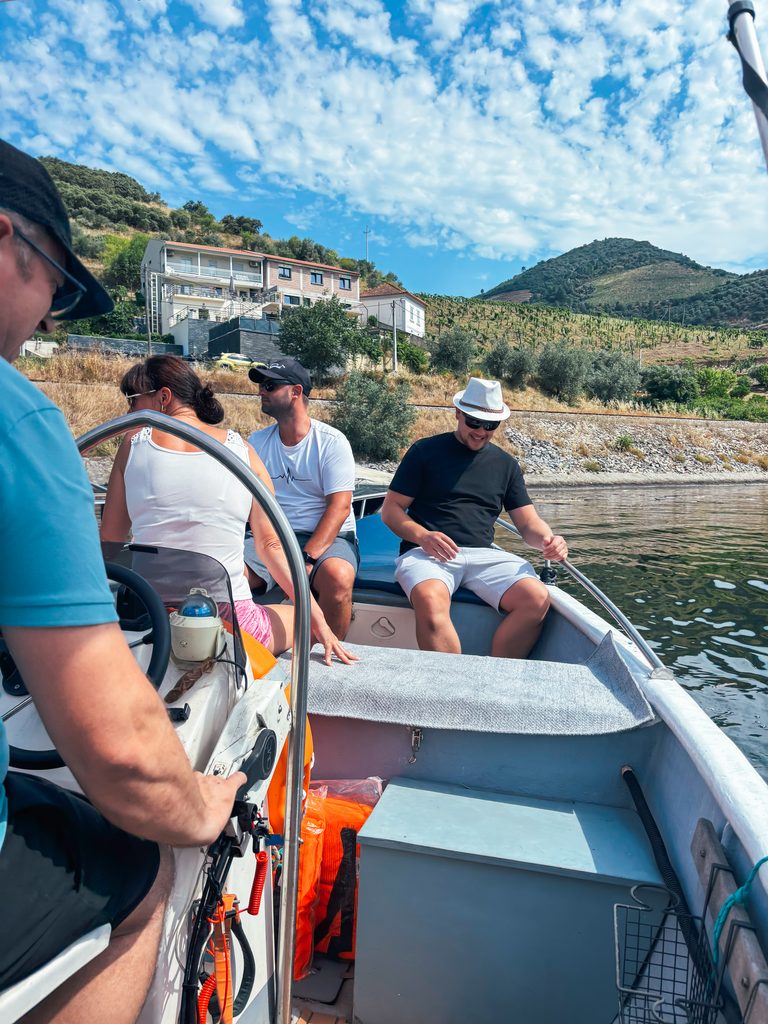
His English was limited and our Portuguese was essentially non-existent, so Google Translate finally got its moment to shine.
He pointed out wineries and places along the river and served us cold Porto Tónicos — white Port with tonic, made using the property’s own Port.
I am not a fan of bitter drinks, so this did not become my new personality. But drinking a local Porto Tónico on the Douro itself was still exactly the kind of experience I had hoped for, and I would happily recommend the boat trip.
If you are searching for “what to do in Douro Valley” and travelling without a car, a river cruise is one of the easier experiences to arrange. Boats depart from places including Pinhão and Peso da Régua, or you can do what we did and choose a quinta that organises the transport for you. If you prefer to book independently from Pinhão, this Douro River solar boat tour also includes a wine tasting.
3. Ride at least part of the Douro railway line
For us, the train was not simply transport into the Douro. It was part of the trip.
We travelled from Porto to Peso da Régua and took the same route back a few days later.

Our train was an older InterRegional service and, at least on our June journey, there was no air conditioning.
It was hot. Properly hot.
But once the river starts appearing beside the tracks and the vineyard terraces begin climbing the hillsides, it becomes fairly obvious why people recommend the journey.
If you are looking for things to do in the Douro Valley without renting a car, I would count the train ride itself as one of the experiences rather than just a way of getting from A to B.
The one practical warning is that arriving by train does not mean your accommodation is suddenly easy to reach. Our quinta was only around 12 km from Peso da Régua, but on winding roads that translated into roughly a 30-minute taxi ride.
If you are planning to travel the same way, my Porto to Douro Valley by Train: How We Did It Without a Car guide covers the Porto stations, tickets, which side of the train has the better views and what happens when the train drops you in Régua but your accommodation is actually somewhere up in the hills.
4. Stay at a rural quinta — and leave time to do absolutely nothing
This may not sound like a classic item on a list of things to do in the Douro Valley, but it was one of my favourite parts of our stay.
If you are paying to wake up among vineyards, it seems slightly ridiculous to spend the entire day somewhere else.
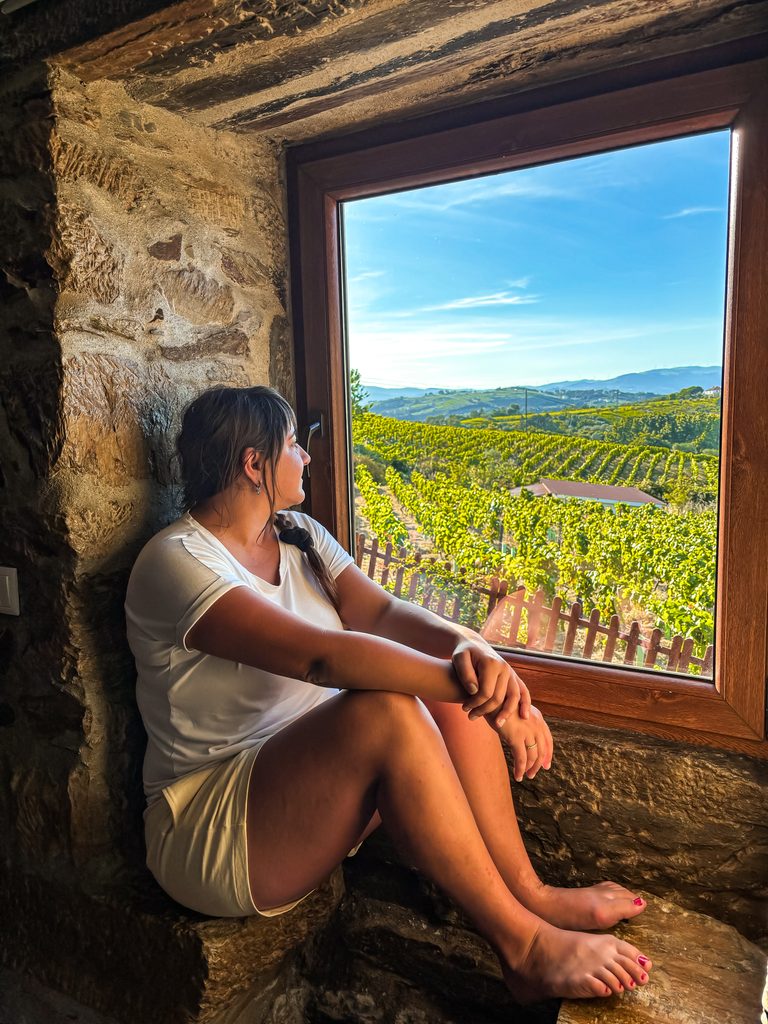
We deliberately left one of our three Douro days without a programme.
Pool. Portuguese sunshine. Local wine.
That was it.
And no, I do not wish we had replaced it with a fifth winery or a third village.
A rural quinta works particularly well if the property itself offers wine tastings, winery tours, meals or boat trips. It cuts down the amount of transport you need and makes a slower Douro stay much easier without a car.
We stayed at Casa do Poço – Douro, a rural property in the vineyards outside Peso da Régua. This was also where we did our winery tour and tasting, and they arranged our boat trip and transport to the river for us.
The catch is location. Check the logistics before you book. Casa do Poço – Douro is only around 12 km from Peso da Régua, but on winding roads that translated into roughly a 30-minute taxi ride for us.
If you are still deciding where to base yourself, my Where to Stay in the Douro Valley: 5 Best Areas + Hotels guide breaks down the different areas and who each one suits best.
5. Spend a few hours in Pinhão
This is one of the things to do in the Douro Valley that we did not properly do ourselves.
Pinhão was in our original plan, but once our boat trip was arranged through Casa do Poço – Douro, there was no longer much reason for us to make a separate journey there.
Next time, I would.
Pinhão is one of the easiest places to get a taste of the Douro without a car. The train stops in the village, the river is right there, and boat trips and wine experiences are clustered around the area.
The railway station itself is also worth a short stop for its azulejo panels depicting vineyard work and local landscapes.
I would not build an entire Douro trip around Pinhão alone, but a few hours or one night makes a lot of sense, especially if you are travelling by train.
Without a car: easy.
If you stay in Pinhão: even easier.
6. Choose one good viewpoint, not five
It is very easy for a list of Douro viewpoints to become a project of its own.
I would not try to collect them all.
Two places I would consider next time are São Leonardo de Galafura, near Peso da Régua, and Casal de Loivos, above Pinhão.
We did not visit either on this trip, so I am not pretending to rank one against the other from personal experience. Both are known for the kind of Douro view most people picture before they arrive: the river down in the valley with vineyard-covered slopes around it.
If viewpoints are high on your list of things to do in the Douro Valley, the practical issue matters more than how many you can save on Google Maps. Without a car, these are not the easiest stops to add casually.
I would organise a taxi in advance or choose a guided Douro Valley tour where scenic viewpoints are already part of the route.
I also would not spend an entire day driving from lookout to lookout. One great view, a winery and lunch sounds much more enjoyable to me than six stops and a Google Maps marathon.
7. Add Lamego if you have a car or more time
Lamego sits slightly outside the core wine-and-river experience.
It is not on the Douro railway line, which is the main reason we left it out of our own no-car itinerary.
If I had a car or one extra day, though, I would consider adding it.
The main reason is the Santuário de Nossa Senhora dos Remédios and its monumental Baroque staircase, but Lamego also adds something different to a Douro trip: more town, history and architecture, rather than another variation on wine and river scenery.
If your search was “what to do in the Douro Valley” and you only have one or two days, however, Lamego would not be my first priority.
I would do the wine, the river and Pinhão or Peso da Régua first.
Lamego is the kind of place I would add once the core Douro experiences are already covered, not something I would force into an already packed day.
Do You Need a Car in the Douro Valley?
No — but having one changes what you can do comfortably.
We managed three nights without a rental car perfectly well because we:
- took the train from Porto to Peso da Régua;
- used local taxis;
- stayed somewhere that offered its own winery experience;
- booked a boat trip through the same property, including transfers;
- and did not try to visit four different places every day.
For the kind of trip we wanted, a car simply was not essential.
That approach also worked as part of our wider trip. Our 10-day Portugal itinerary without a car shows how we fitted three nights in the Douro between Nazaré and Porto while travelling the full route by public transport and local taxis.
If, however, you want to combine several hilltop wineries, viewpoints, Lamego and smaller villages in one day, a rental car or organised transport starts to make much more sense.
One option I would seriously consider next time is renting a car in Peso da Régua for just one day rather than for the whole Douro stay. That would let us travel into and out of the region by train, but use one day for the places that are awkward to reach without a car.
The worst option, in my view, is the middle ground: booking a remote rural quinta without a car and simply assuming Bolt will solve everything.
Our experience suggests that it may not.
What I Would Do Differently Next Time
I would not change the basic logic of our first Douro trip.
I would do another proper winery visit. I would go back onto the river. And I would still leave one day intentionally slow.
What I would add is Pinhão and one good viewpoint.
I would also very likely rent a car in Peso da Régua for a single day, use it for the viewpoints and harder-to-reach places, then keep the rest of the trip car-free.
That is probably the biggest lesson I took from our time here: you do not need to see everything for the Douro Valley to be worth the trip.
There are plenty of things to do in the Douro Valley, but trying to fit all of them into one trip would miss the point. Choose a few experiences that give you the wine, the river and the landscape — then leave enough time to actually be there.