Tallinn in Winter: What to Expect and When to Visit
Featured photo: Kaupo Kalda / Tallinn Strategic Management Office, Tourism Department / visittallinn.ee
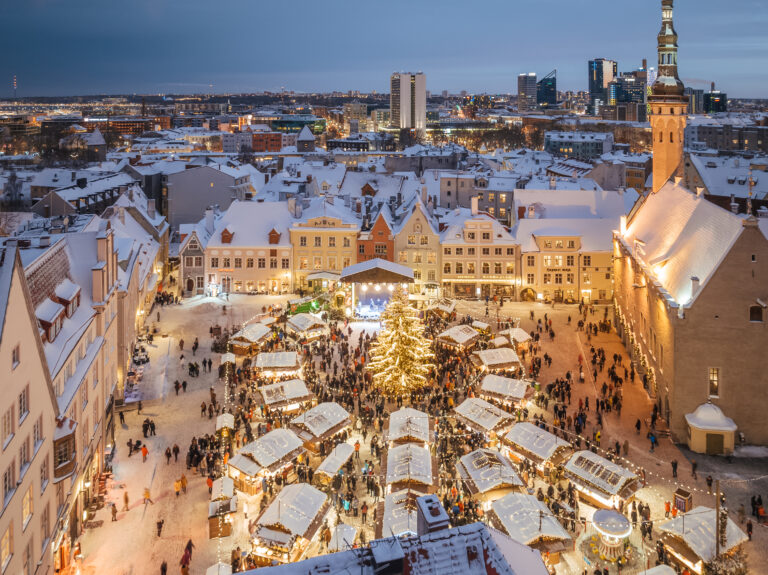
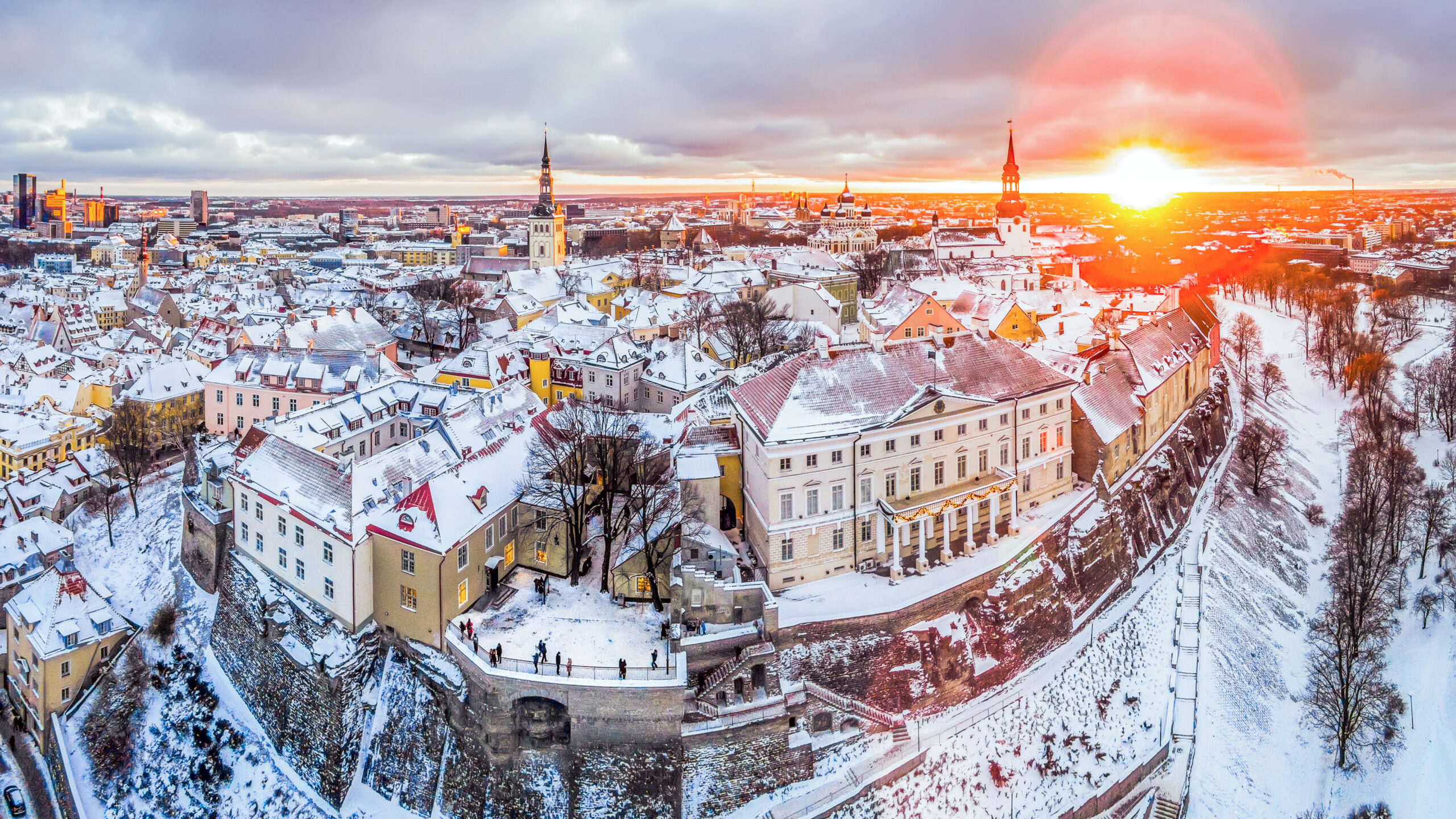
If you’re lucky, Tallinn in winter can turn into a postcard-perfect city covered in snow, with its medieval Old Town looking almost unreal and the Tallinn Christmas Market glowing in the middle of Town Hall Square.
If you’re less lucky, you might get sleet, rain, icy wind and several grey days in a row. December is the darkest time of year in Estonia, and the weather can make those short days feel even darker.
Still, even though nobody can promise you snow or sunshine, I think Tallinn is absolutely worth visiting in winter.
When is winter in Tallinn?
By the calendar, Estonia has four distinct seasons. Winter is December, January and February; spring is March, April and May; summer is June, July and August; and autumn is September, October and November.
Ask an Estonian when winter actually starts and ends, though, and you’ll probably get a different answer: November to March.
According to the 1991–2020 climate normals from the Tallinn-Harku weather station, February is the coldest of these months on average. The temperature ranges below show the long-term average minimum and maximum temperatures. Daylight is an approximate mid-month figure, while the likelihood of snow is my personal estimate based on living in Tallinn.
| Month | Typical temperature range* | Daylight around mid-month | My estimate of snow chances | My quick take |
|---|---|---|---|---|
| November | −0.2 to +4.1°C | around 7 hrs 40 mins | low / very unpredictable | Dark, wet and, in my opinion, the least pleasant month of the year |
| December | −3.1 to +1.2°C | around 6 hrs | possible, but definitely not guaranteed | Christmas lights make the darkness much more enjoyable |
| January | −5.5 to −0.7°C | around 7 hrs | good | Quieter, more wintry and the days start getting longer |
| February | −6.2 to −1.0°C | around 9 hrs | very good | Your best chance of a proper Estonian winter, but also the coldest month |
| March | −3.7 to +2.8°C | around 12 hrs | possible, but decreasing | Winter and spring can take turns from one day to the next |
* These ranges show the average minimum and maximum temperatures at Tallinn-Harku during the 1991–2020 climate period. Actual temperatures can be considerably colder or warmer.
These are long-term averages, not temperatures you should expect every single day. Cold spells with temperatures below −10°C can occur in January and February, and during a more severe cold snap temperatures can fall much lower.
November
November is dark and damp and, in my opinion, the most miserable month of the year weather-wise.
It feels like it is dark all the time, the wind blows and sometimes the rain seems to fall horizontally. Snow can happen, but it usually does not stay on the ground for very long.
If I had a completely free choice, I would not choose November for my one and only trip to Tallinn.
Tallinn in December
December is Christmas month.
Although it is the darkest time of year in terms of daylight, the Christmas atmosphere makes Tallinn in December much more enjoyable than November, at least for me. The streets are decorated, the famous Tallinn Christmas Market fills Town Hall Square and, if the weather cooperates, we may even get snow.
There is absolutely no guarantee of that, though.
Around the shortest days of December, Tallinn gets only about six hours between sunrise and sunset. On 21 December 2026, for example, the sun rises at around 9:17 am and sets at around 3:20 pm.
But the early darkness is not necessarily a bad thing. Christmas lights, Town Hall Square and the Harju Street ice rink all look their best after dark.
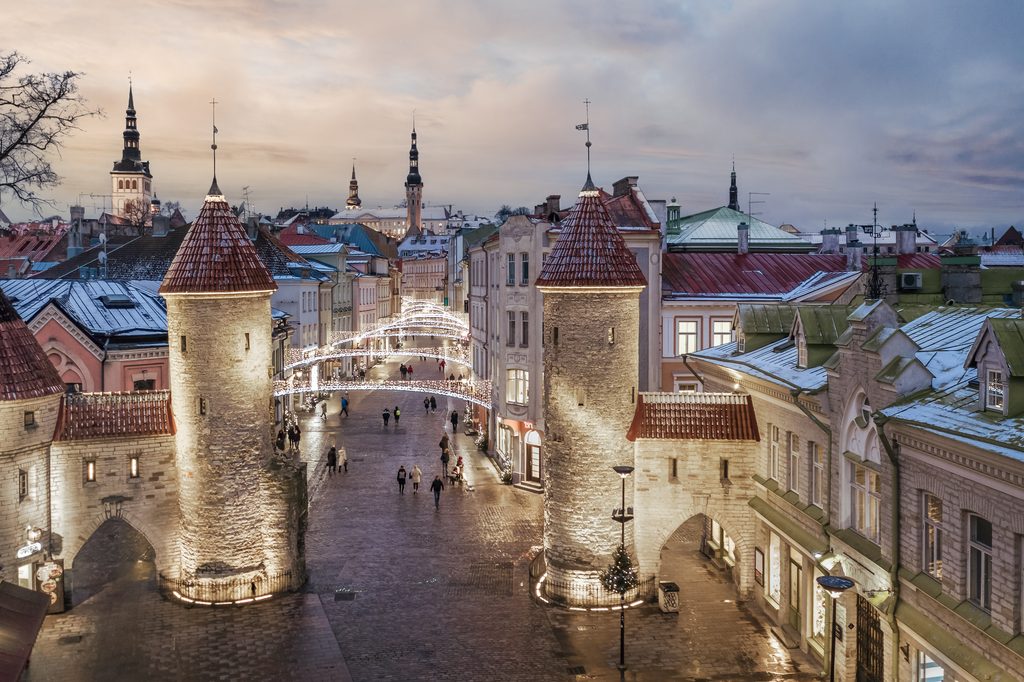
January
The days slowly begin to lengthen again in January.
According to the Tallinn-Harku climate normals, January has a long-term average temperature of −2.9°C and an average daytime maximum of around −0.7°C.
Those averages can make a Tallinn winter sound deceptively mild. Winter temperatures fluctuate a lot, and during colder periods they can easily fall well below −10°C. Cold snaps can bring much lower temperatures, while wind and humidity often make it feel colder than the thermometer suggests.
By the end of January, Tallinn has more than two additional hours of daylight compared with Christmas. That does not mean the sun shines every day, but you have noticeably more time for outdoor sightseeing.
February
February is the coldest winter month in Tallinn according to the long-term Tallinn-Harku climate normals, with an average temperature of −3.6°C and an average daytime maximum of around −1°C.
Again, that average can make winter sound much milder than it sometimes feels. Temperatures vary considerably, and colder spells can bring temperatures well below −10°C. Add humidity and a biting wind and it can feel significantly colder.
That said, February is actually one of the best months to experience Tallinn in winter if you are hoping for proper snow and cold.
In my experience, the chance of snow is high, while there is already considerably more daylight. Around the middle of February you get roughly nine hours of daylight, increasing to more than ten hours by the end of the month.
By then, the average Estonian is thoroughly fed up with winter and desperately waiting for summer.
Personally, I have spent the last several years escaping somewhere warm in February for a little energy boost and some actual sunshine.
March
The snow gradually begins to melt in March, but that does not mean winter is necessarily over.
At Tallinn-Harku, the long-term average temperature in March is −0.6°C, while the average daytime maximum has already climbed to +2.8°C. Nights are still below freezing on average, which means you can easily have a spring-like afternoon and a very wintry morning on the same day.
Tallinn gets around 10.5 hours of daylight at the beginning of March, almost 12 hours by the middle of the month and close to 13 hours by the end.
Estonia switches to daylight saving time on the last Sunday of March, when the clocks move forward by one hour. In 2027, for example, this happens on 28 March at 3:00 am, when the clock jumps to 4:00 am.
What is the winter weather like in Tallinn?
One thing to know about Tallinn in winter is that the weather can change surprisingly quickly.
You might go to bed when everything outside looks like autumn and wake up to a thick layer of snow.
Or you might watch huge snowflakes fall in the morning, only for everything to melt by evening and turn into rain or slush.
If the day is wet or slushy and the temperature drops below freezing overnight, the streets can become extremely slippery by morning.
If you are planning to drive in Tallinn or elsewhere in Estonia, you should also be aware of the winter tyre requirements. For passenger cars, winter tyres are compulsory from 1 December until 1 March. Studded tyres can normally be used from 15 October until 31 March and, in winter road and weather conditions, from 1 October until 30 April.
How much daylight does Tallinn get in winter?
When planning a trip to Tallinn in winter, daylight deserves at least as much consideration as the temperature.
For outdoor sightseeing and photography, I would plan around the brightest part of the day. The middle of the day is usually the best time for exploring and photographing the Old Town, Kadriorg and Tallinn’s viewpoints.
Afternoons and evenings work well for museums, the Christmas Market and the ice rink.
Town Hall Square, the Christmas lights and the Harju Street ice rink actually look even better after dark, in my opinion.
Does it snow in Tallinn in winter?
Yes, Tallinn gets snow in winter.
The harder question is whether there will actually be snow on the ground during your trip — and that is impossible to know months in advance.
If snow is one of the reasons you want to visit Tallinn in winter, your best chance of seeing a snowy city is roughly from the second half of December until the middle of February. Even then, snow is never guaranteed, and it is perfectly possible to get snowy weather in March as well.
Tallinn is a coastal city, and snow conditions can vary even within a relatively short distance. You can sometimes find thick snow on the ground a few dozen kilometres outside Tallinn while the city centre has only a thin dusting or wet slush.
One of the best ways to understand how unpredictable winter in Estonia can be is to look at the same place at almost exactly the same time of year, 15 years apart. The snowy photo below was taken on 25 December 2010, while the green-grass photo was taken in the same place on 26 December 2025. These photos were not taken in Tallinn, but they show perfectly why I would never promise anyone a guaranteed snowy winter trip in Estonia.
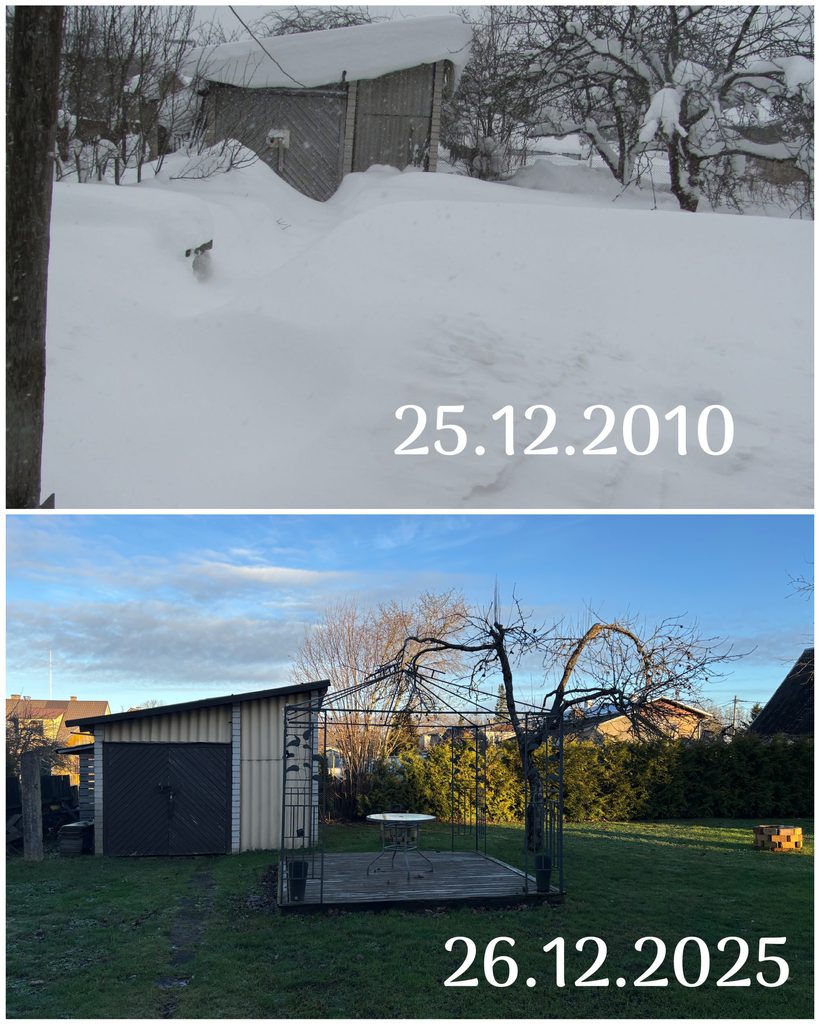
If a lot of snow falls in a short period, not every pavement and smaller street can be cleared immediately. For most pedestrians this simply means slower and less comfortable walking, but fresh, deep snow can be genuinely difficult with a pushchair, wheelchair or other mobility aid. Main roads and major pavements are generally cleared more quickly, while quieter areas may take longer.
So when planning a winter trip to Tallinn, be prepared for both possibilities. You might arrive to find the medieval Old Town buried under snow and looking like a Christmas card — or you might get wet streets, sleet and hardly any snow at all.
A snowy winter wonderland is never guaranteed, but if you visit at the right time of year, there is a very real chance of seeing one.
Best things to do in Tallinn in winter
What you should do in Tallinn in winter depends a lot on the weather and what kind of trip you enjoy.
If you’re looking for ideas beyond the winter season, I’ve also put together a guide to the best things to do in Tallinn, including the main attractions and some of my own local favourites.
If you are also deciding how long to stay, my How Many Days in Tallinn? 1, 2 & 3 Day Itineraries guide gives you a realistic first-visit route that you can adjust for shorter winter daylight.
On a crisp, snowy day, I would spend as much time outside as possible, while rain, sleet or strong wind are a very good excuse to explore some of Tallinn’s museums, cafés and indoor attractions.
The good thing is that you can easily combine both. Many of Tallinn’s best outdoor areas are close to museums, restaurants and cafés, so you do not have to commit to spending an entire winter day either outside or indoors.
Walk through the Old Town, Kadriorg and along the waterfront
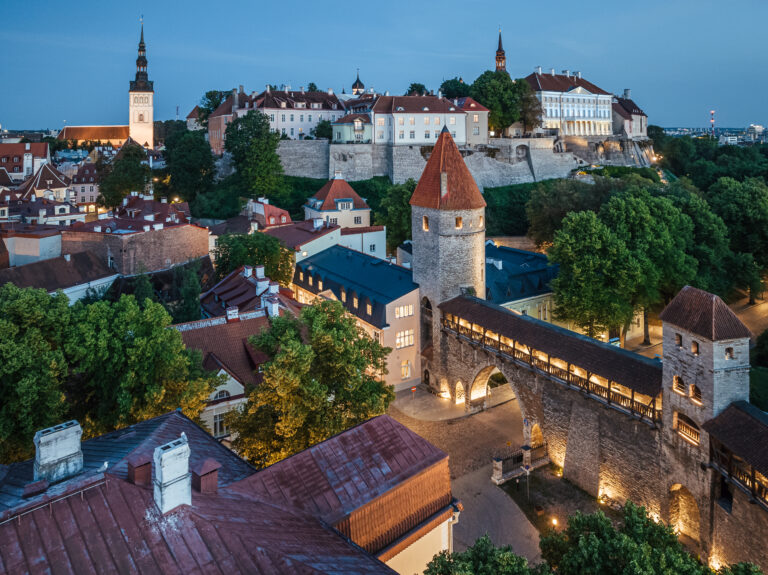
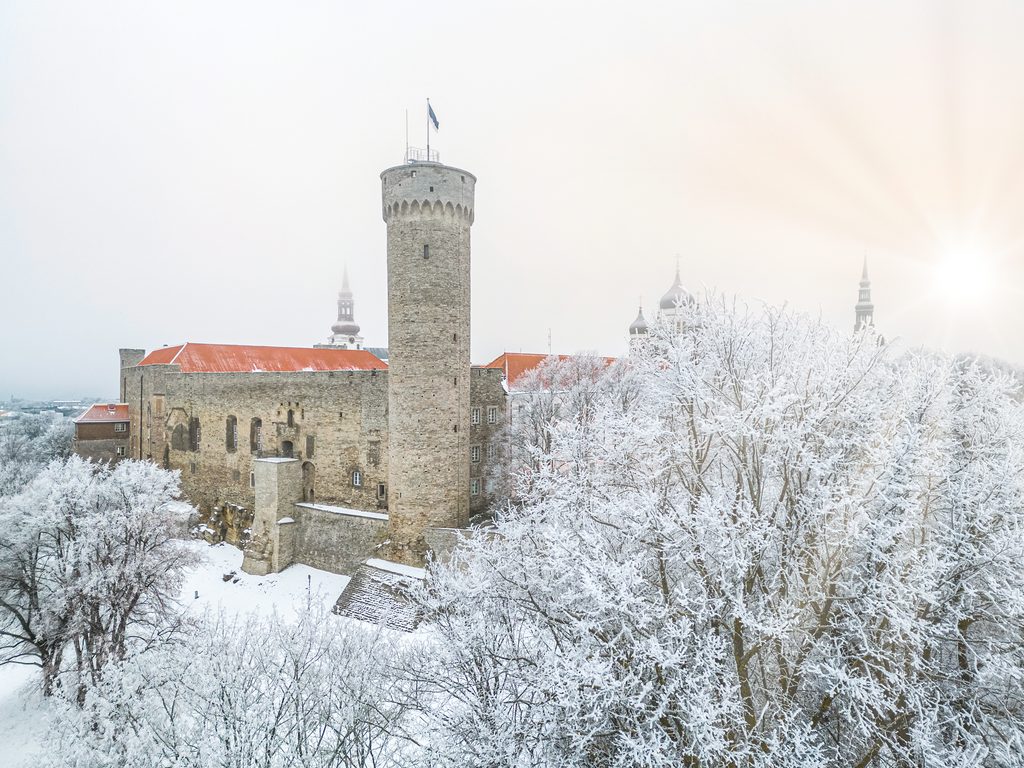
When snow is on the ground, Tallinn’s medieval Old Town looks and feels completely different from how it does in summer.
Snow-covered cobbled streets, old city walls and viewpoints can become some of the most memorable parts of the entire trip on a beautiful winter day.
I would also recommend walking through Kadriorg Park. It is especially peaceful and beautiful under snow, and if you start getting cold you can combine your walk with a visit to Kumu Art Museum or Kadriorg Art Museum.
For Tallinn’s waterfront, I would head to Noblessner. You can walk along the promenade, look out over the winter sea and stop at one of the cafés or restaurants nearby.
Just keep in mind that the wind by the sea can make the temperature feel considerably colder than the thermometer suggests.
If the weather is good, I would not spend the entire day inside museums. Tallinn is compact enough that most areas visitors are interested in can be explored on foot.
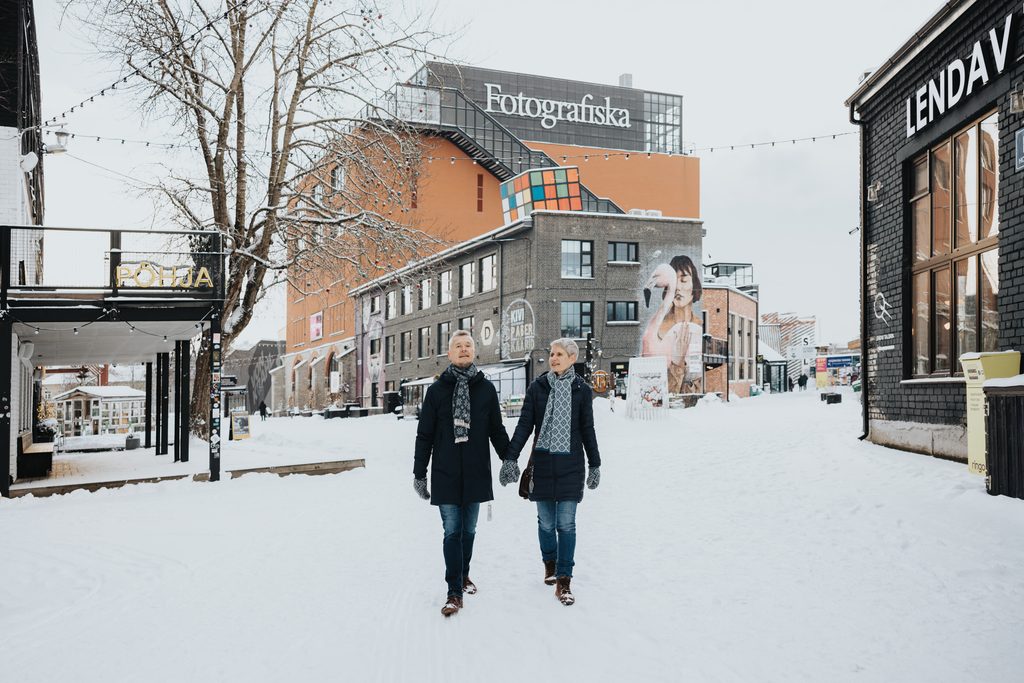
Rotermann Quarter and Telliskivi are also worth a walk if you want to see a more modern side of Tallinn alongside the medieval Old Town.
Visit Tallinn Christmas Market
If you visit Tallinn during the Christmas season, the Christmas Market in Town Hall Square is one of those places you are almost guaranteed to pass through anyway.
The market takes place in the heart of Tallinn’s UNESCO-listed Old Town. A huge Christmas tree stands in the middle of Town Hall Square, surrounded by small wooden stalls selling handicrafts, gingerbread, hot drinks and traditional Estonian Christmas foods such as blood sausage and sauerkraut.
In 2026, Tallinn Christmas Market runs from 20 November until 6 January 2027. The dates change from year to year, so always double-check them before your trip.
I would definitely visit the market at least once after dark. The medieval square, Christmas tree and lights feel completely different after sunset — and this is one occasion when Tallinn’s long, dark winter evenings actually work in your favour.
If you are travelling to Tallinn specifically for the Christmas Market, I have written a separate detailed guide, Tallinn Christmas Market 2026: A Local’s Guide, covering opening times, prices, food, drinks and practical tips.
Go ice skating on Harju Street
The Old Town Ice Rink on Harju Street, next to St Nicholas’ Church, is one of my favourite things to do in Tallinn in winter.
It is a seasonal outdoor rink, and you can rent skates there if you do not have your own. Opening dates and ticket prices can vary from season to season, so I would check the current information before visiting.
Tallinn Card holders currently receive a 50% discount on one hour of skating, with skate rental charged separately. I explain what the Tallinn Card is and whether it is worth buying further down in this guide.
Try an Estonian sauna and winter swimming at Iglupark
If you want to try something genuinely Estonian while visiting Tallinn in winter, go to a sauna.
I personally love going to the sauna. I do not have one at home, but I still try to find an opportunity to use a friend’s sauna at least once every week or two.
For me, going to the sauna in Estonia is not some special spa experience. It is simply a normal part of life.
Iglupark sits directly on the waterfront in Noblessner, next to the Seaplane Harbour, and you can book a sauna right beside the sea.
After getting properly hot in the sauna, the braver visitors can cool down in the sea — yes, even in the middle of winter. Swimming is at your own risk and only in the designated area.
You can book a regular sauna visit, but Iglupark also offers Estonian sauna rituals led by a sauna master. These include sauna heat, stories about Estonian sauna culture, traditional whisking with sauna branches and, if you want, a dip in the sea.
Available times and prices depend on the date and service you choose, so I would check the current options when booking.
If you’re in Tallinn on Shrove Tuesday, go sledding and eat vastlakukkel
Shrove Tuesday, known in Estonian as vastlapäev, falls on a different date each year, usually in February or March.
In 2027, vastlapäev is on Tuesday, 9 February.
The date changes every year because it is connected to Easter and the beginning of Lent.
One of Estonia’s oldest Shrove Tuesday traditions is sledding. People once believed that the longer your sled ride was, the longer the flax would grow that summer.
Flax was an important crop because it was used to make linen, so getting a good long slide down the hill was apparently serious business.
Most Estonians are no longer particularly concerned about the quality of their flax harvest, but we still go sledding on vastlapäev.
If there is enough snow, Tallinn Song Festival Grounds is one of the most popular places in the city for sledding.
Another traditional part of vastlapäev is pea soup, or hernesupp in Estonian. Traditionally, people ate rich food on this day before the beginning of Lent, and pork trotters cooked with peas or beans were common. Today this tradition survives in the form of thick pea soup, usually made with peas, vegetables and smoked pork.
It is hearty, filling and particularly good after spending time outside in the cold.
And at least as important as the pea soup is the vastlakukkel — a soft, sweet bun filled with a very generous amount of whipped cream. The classic version contains either whipped cream alone or jam and whipped cream, although Tallinn cafés now sell everything from marzipan and berry versions to all kinds of creative fillings.
Bakeries usually start selling them several weeks before Shrove Tuesday, so if you visit Tallinn in early February, keep an eye out in cafés even if your trip does not fall exactly on 9 February.
If the weather is truly awful, go to a museum
If sleet is flying horizontally outside and it is not your only day in Tallinn, I would take the opportunity to have an indoor day.
Tallinn has plenty of museums, but these are the three I would particularly consider on a winter trip.
Seaplane Harbour
The Seaplane Harbour, or Lennusadam in Estonian, is my first recommendation for anyone who does not necessarily want to spend the day in a traditional art museum.
The museum is housed inside historic seaplane hangars and focuses on Estonia’s maritime history. You can climb inside the real submarine Lembit, see a seaplane and try various interactive exhibits and simulators.
The historic steam-powered icebreaker Suur Tõll is moored outside the museum and can also be visited with the same ticket. I would allow at least two hours for the whole visit.
Admission is included with the Tallinn Card.
Kumu Art Museum
If you enjoy art or want to understand Estonia’s history through its art, I recommend Kumu Art Museum.
Kumu is the main building of the Art Museum of Estonia and one of Estonia’s most important art museums. Its exhibitions cover different periods of Estonian art, alongside contemporary and international exhibitions.
The building itself is worth seeing too, and because it sits right next to Kadriorg Park, it is particularly easy to combine with a winter walk.
Admission is included with the Tallinn Card.
Tallinn TV Tower
Tallinn TV Tower is a slightly different option for a bad-weather day. Its observation deck is around 170 metres above the ground and offers panoramic views over Tallinn and the Gulf of Finland.
On an exceptionally clear day, you may even be able to make out the Finnish coastline on the horizon. I would not plan your trip around seeing Finland from Tallinn, but the possibility is there.
There is also a café-restaurant on the 22nd floor, where you can enjoy the view while eating.
And there is one particularly useful feature for unpredictable Tallinn winter weather: if visibility is poor during your visit, ask about the TV Tower’s Good Weather Guarantee. With the appropriate stamp on your ticket, you can currently return once within the next two months free of charge.
Admission to the TV Tower is also included with the Tallinn Card.
What is the Tallinn Card, and is it worth it?
The Tallinn Card is Tallinn’s official sightseeing pass. It includes free admission to more than 50 museums and attractions, unlimited use of Tallinn’s public transport during the card’s validity period, and discounts on selected tours, activities, restaurants and shops.
The Seaplane Harbour, Kumu Art Museum and Tallinn TV Tower are all included.
The card is available for 24, 48 or 72 hours. One useful thing to know is that these are actual hours rather than calendar days: the validity period starts when you first use the card at an attraction or on public transport.
Whether the Tallinn Card is worth buying depends on how many paid attractions you plan to visit. If you are mainly going to walk around the Old Town and visit one museum, you may be better off buying tickets separately. If you plan to visit several attractions, however, the savings can add up quite quickly.
For example, based on 2026 prices, adult admission to the Seaplane Harbour, Kumu Art Museum and Tallinn TV Tower would cost a combined €57.
A 24-hour digital Tallinn Card costs €43, so if those three attractions fit into your 24-hour period, you would already save €14 — and public transport is included as well.
In 2026, an adult digital Tallinn Card purchased online costs:
- 24 hours – €43
- 48 hours – €63
- 72 hours – €76
Before buying one, I would use the official Tallinn Card Calculator. You can add the museums and attractions you actually want to visit and see immediately whether the card would save you money.
What to wear in Tallinn in winter
What you need to wear in Tallinn in winter depends heavily on the weather, so I recommend starting to check the Estonian weather forecast a couple of weeks before your trip — not because you should trust a two-week forecast completely, but because checking it regularly gives you a good idea of the overall trend.
You will start to see whether Tallinn is going through a cold spell, a thaw, a snowy period or one of those lovely stretches of endless sleet.
I would still make my final clothing decisions a few days before arrival.
Dress in layers. A warm, preferably wind-resistant coat, scarf, gloves and hat are fairly standard winter essentials. Depending on how easily you get cold and the actual temperature, you may also want a thermal base layer or thermal leggings under your trousers.
Layers are useful because cafés, museums and public transport in Tallinn are generally quite warm.
For footwear, I would prioritise waterproofing and grip just as much as warmth. The cobbled streets of Tallinn Old Town can become extremely slippery when snow, ice and slush combine, and wet feet are not exactly the nicest way to explore the city.
Warm, waterproof boots with a decent tread make a big difference.
One more very Estonian recommendation: get yourself a reflector.
Estonian traffic law requires pedestrians walking on the road in darkness or poor visibility to wear a reflector or use a light source. You can read more about reflectors in Visit Tallinn’s practical information. Small reflectors — helkur in Estonian — are sold in supermarkets, kiosks, souvenir shops and plenty of other stores, and usually cost very little.
During winter, when darkness arrives in the afternoon, they are genuinely useful.
Public transport is generally warm. If you are travelling for more than a few stops, unzip your coat and take your gloves off. Otherwise you may get too hot inside, which makes stepping back out into the cold feel even worse.
Getting around Tallinn in winter
Getting around Tallinn in winter is generally straightforward. Tallinn city centre, the Old Town, Kadriorg, Noblessner and the areas between them are all very walkable.
I prefer walking whenever possible because you see more of the city and get a much better feel for everyday Tallinn.
Just keep in mind that snow, ice and slush can make walking slower in winter.
If it is genuinely freezing outside or you simply do not feel like walking, Tallinn has a convenient and relatively inexpensive public transport system.
According to Tallinn’s official public transport information, a one-hour ticket currently costs €2. Tallinn public transport tickets and prices
You do not need to buy a ticket beforehand. When you board public transport, simply tap your contactless bank card on the validator near the front of the vehicle.
Whenever you change to another vehicle, tap the same card again.
If you use the same contactless bank card for your own journeys throughout the day, the system automatically caps the cost of your one-hour tickets at the price of a day ticket. This means you will not pay more than €5.50 during one Tallinn transport day.
A transport day runs from 4 am until 4 am the following morning.
If you are staying longer and expect to use public transport regularly, longer-duration tickets are also available:
- 72 hours – €9
- 120 hours – €11
Unlike the daily €5.50 cap, these longer passes are not automatically applied when you pay with a contactless bank card. They need to be purchased separately, for example through the Pilet.ee ticketing system.
If you have a Tallinn Card, unlimited public transport is already included for the duration of the card. You still need to validate the card every time you board.
Bolt and taxis
Another convenient option is Bolt.
I recommend downloading the Bolt app before your trip and ordering rides through the app. Enter your destination and you will see an estimated fare and journey time before booking.
The price shown in the app is an estimate rather than an absolute guarantee. The final fare can change because of heavy traffic, roadworks, weather or changes to the route or destination.
Bolt also uses dynamic pricing when demand is high, for example during rush hour, major events or particularly bad weather.
And by the way — did you know Bolt is Estonian?
The company was founded in Estonia in 2013.
Is Tallinn more expensive in winter?
Tallinn in winter is not generally more expensive than at other times of the year, although Christmas and New Year are the obvious exceptions. There are more visitors during that period, and accommodation prices can be higher than usual.
If your trip is not tied to the Christmas and New Year period, you may actually find cheaper accommodation in January and February than around Christmas or during the summer high season.
If you’re still choosing where to stay, my guide to where to stay in Tallinn compares the Old Town, city centre and other areas that work well for visitors.
The Old Town is generally more tourist-oriented and has plenty of restaurants and cafés where prices can be higher.
If you want to eat in areas where you are more likely to see locals alongside visitors, I would look at places such as Telliskivi, Noblessner or Rotermann Quarter.
That does not necessarily mean they are cheap — all three areas have some excellent and fairly expensive restaurants too — but the choice is more varied and less exclusively aimed at tourists.
Food, drinks and other everyday costs do not change dramatically by season in my experience. A cappuccino does not suddenly become cheaper in January simply because there are fewer tourists.
Taxi prices are more affected by real-time demand, such as rush hour, bad weather, weekend nights or a large event.
When is the best time to visit Tallinn in winter?
If I had to recommend one period for visiting Tallinn in winter, my answer would depend on the kind of winter experience you are looking for.
If your main goal is the Christmas Market, festive decorations and that classic fairytale Christmas atmosphere, I would visit in mid-December.
Snow is not guaranteed, but the festive atmosphere is. This is when the Old Town feels most Christmassy and Tallinn Christmas Market is in full swing.
If Christmas is not particularly important to you and you would rather experience a more typical Estonian winter, I would personally choose roughly mid-January to mid-February.
By then, the Christmas and New Year visitor peak has passed, the city is quieter and, in my experience, your chances of seeing a snowy Tallinn are better than in early December.
The days are also noticeably longer by then, which makes exploring the city outdoors much easier.
Pros and cons of visiting Tallinn in winter
Tallinn in winter definitely has its own charm, but it is not for everyone.
Pros:
- fewer tourists outside the Christmas and New Year peak season;
- the chance to see the medieval Old Town covered in snow;
- Christmas lights, Tallinn Christmas Market and a wonderfully cosy atmosphere in December;
- potentially cheaper accommodation in January and February than at Christmas or during the summer high season;
- sauna, ice skating, sledding and other winter activities.
Cons:
- short days, particularly in December;
- unpredictable weather — you can experience cold, wind, rain, snow, ice and slush during the same trip;
- snowy and icy streets can be slippery and make walking slower;
- some seasonal attractions and outdoor activities are not available in winter;
- snow is never guaranteed, even in the middle of winter.
Is Tallinn worth visiting in winter?
Yes — I think Tallinn in winter is definitely worth visiting, but I would not automatically say that winter is the best time to visit.
If you have always dreamed of visiting Tallinn, snow and the Christmas Market are not particularly important to you, and you will probably only come here once in your life, I would personally choose summer instead.
That is completely subjective. I am not a huge fan of winter myself, and I do not particularly enjoy cold weather or snow.
But winter shows you a completely different side of Tallinn. Snow-covered medieval streets, Christmas lights, outdoor ice skating and sauna create an atmosphere you simply cannot experience in summer.
The one month I would personally avoid, if you have complete freedom over your dates, is November. It is usually dark, wet and grey, while the things that make winter in Tallinn special — proper snow and the full Christmas atmosphere — may not have arrived yet, especially earlier in the month.
Ultimately, it comes down to what kind of Tallinn you want to experience.
Winter may not be my personal favourite season in the city, but with the right expectations, it can be an incredibly memorable time to visit.